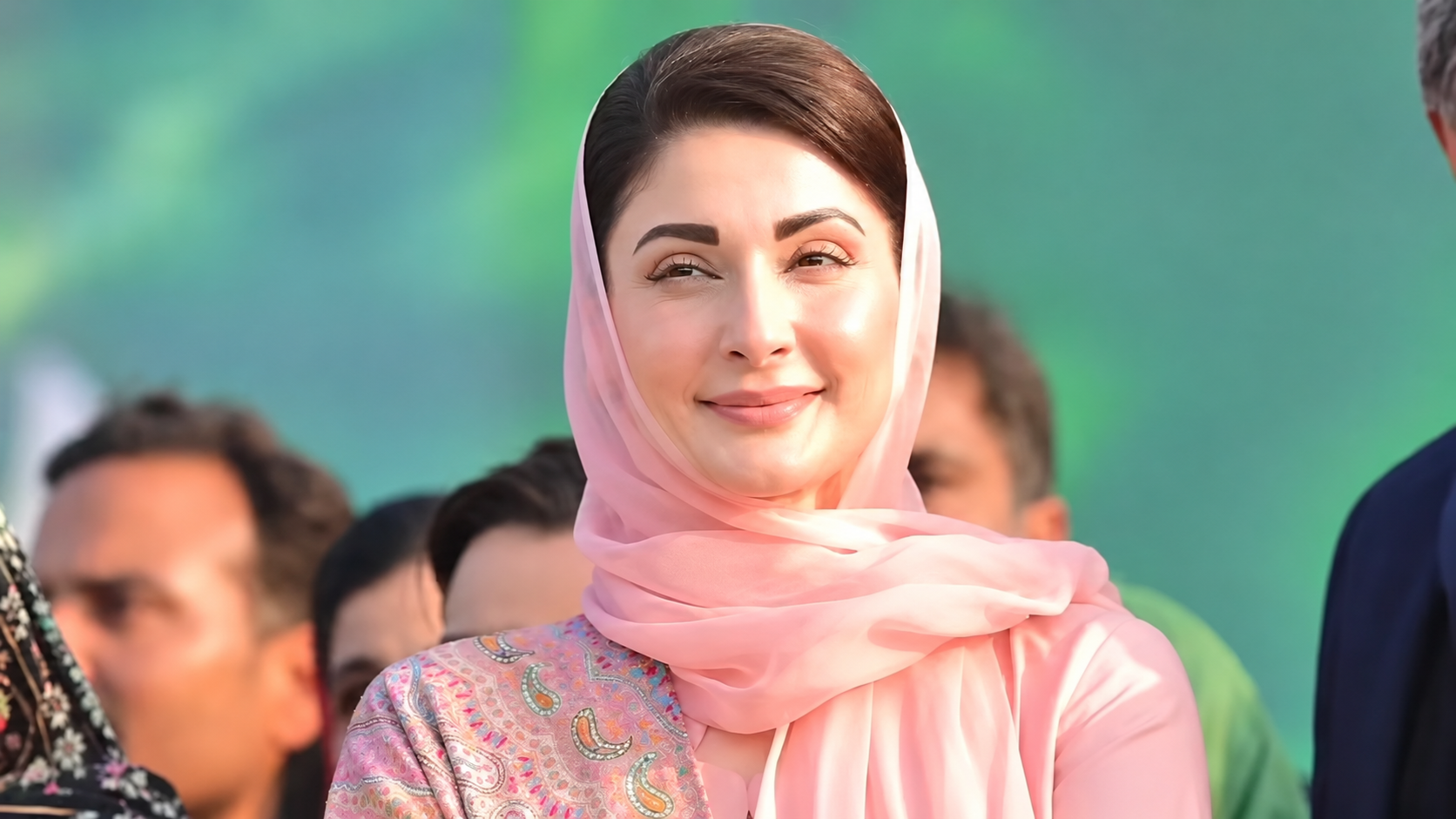
Lahore: Punjab Chief Minister Maryam Nawaz has directed officials to prepare legislation establishing what the provincial government describes as Pakistan's first film royalty law, alongside approving a rebate policy for Punjabi and Urdu films produced in the province.
The announcement was made by Senior Minister Marriyum Aurangzeb during the inaugural meeting of the Punjab Film Authority in Lahore, according to a government press release issued on Sunday.
Under the approved policy, Punjabi language films produced in Punjab would qualify for a 35 percent rebate, while Urdu language productions would receive a 20 percent rebate.

The government said the incentives were intended to reduce production costs, encourage filmmaking and attract investment into the sector. Aurangzeb said the proposed royalty legislation would be presented at the authority's next meeting. Details of the law, including how royalties would be calculated, collected and distributed, have not yet been disclosed.
The government has also not specified the expenditure eligible for rebates, the application process, funding limits or the conditions filmmakers would need to meet. These details will determine how the incentives operate and which productions can benefit from them.
Film industry revival and the role of government
Government involvement in Pakistan's film industry has a history extending back to the early decades after independence. During President Ayub Khan's administration, from 1958 to 1969, the government established a Film Fact Finding Committee to examine the industry's challenges. Its report, published in 1962, considered financing, technology, professional training and institutional support.
Although many recommendations were not implemented, film production expanded during the period. Research on Pakistani cinema records an increase in annual production from 11 to 48 films during Ayub Khan's rule. Government involvement also extended to documentaries and newsreels, while filmmakers continued to operate under censorship restrictions.
The Punjab initiative represents a different form of intervention, focused on production incentives, infrastructure and proposed legal protections for creative work.
Alongside the rebate policy, the Punjab Film Authority announced plans to inaugurate a Film City in Lahore on December 15. The proposed facilities include film studios, a film and music school, a museum, post production services and a convention centre.
The authority also approved plans for an online facility to assist filmmakers with shooting locations, cinema restoration, digital ticketing and training programmes involving international experts.
A proposed budget exceeding Rs 589 million for the 2026 to 27 financial year has been referred to a financing committee for review.
The policy comes as film production is increasingly being considered within Pakistan's wider creative economy rather than solely as a source of entertainment. Film projects generate economic activity through production crews, performers, technical services, equipment rental, transport, hospitality, post production and distribution.
If the incentives lead to additional productions, they could support employment, business revenue and investment in related services. The extent of that impact will depend on how many films qualify, the level of private investment attracted and whether productions recover their costs.
At the federal level, Pakistan has already established a Film and Drama Finance Fund to support productions through grants and concessional financing. The National Centre for Films also has a mandate covering industry incentives, international cooperation and professional development.
Provincial initiatives, including efforts in Sindh to develop cultural and screen related activity, form part of the wider discussion about supporting filmmaking beyond traditional production centres. However, comparable details of a current Sindh rebate programme have not been established.
Cinema, streaming platforms and cultural reach
The expansion of over the top (OTT) streaming services has also changed how films reach audiences. Where theatrical distribution depends on cinema screens and ticket sales, digital platforms can provide additional routes to domestic and international viewers.
For Pakistani producers, access to streaming distribution could create opportunities to reach audiences beyond the country's cinema market. However, production incentives do not automatically secure agreements with streaming platforms or guarantee commercial returns.
Films can also contribute to Pakistan's international cultural visibility by presenting local languages, locations and stories to overseas audiences. This is one of the objectives reflected in existing federal film support programmes. The Punjab government's proposed royalty framework may become particularly relevant as films are distributed across cinemas, television and digital services, where payments to rights holders and creators can involve different contractual arrangements.
The next meeting of the Punjab Film Authority is expected to provide further information about the proposed legislation. For now, the rebate percentages have been approved and the royalty law has been directed for drafting, but its provisions and implementation timetable have yet to be announced.