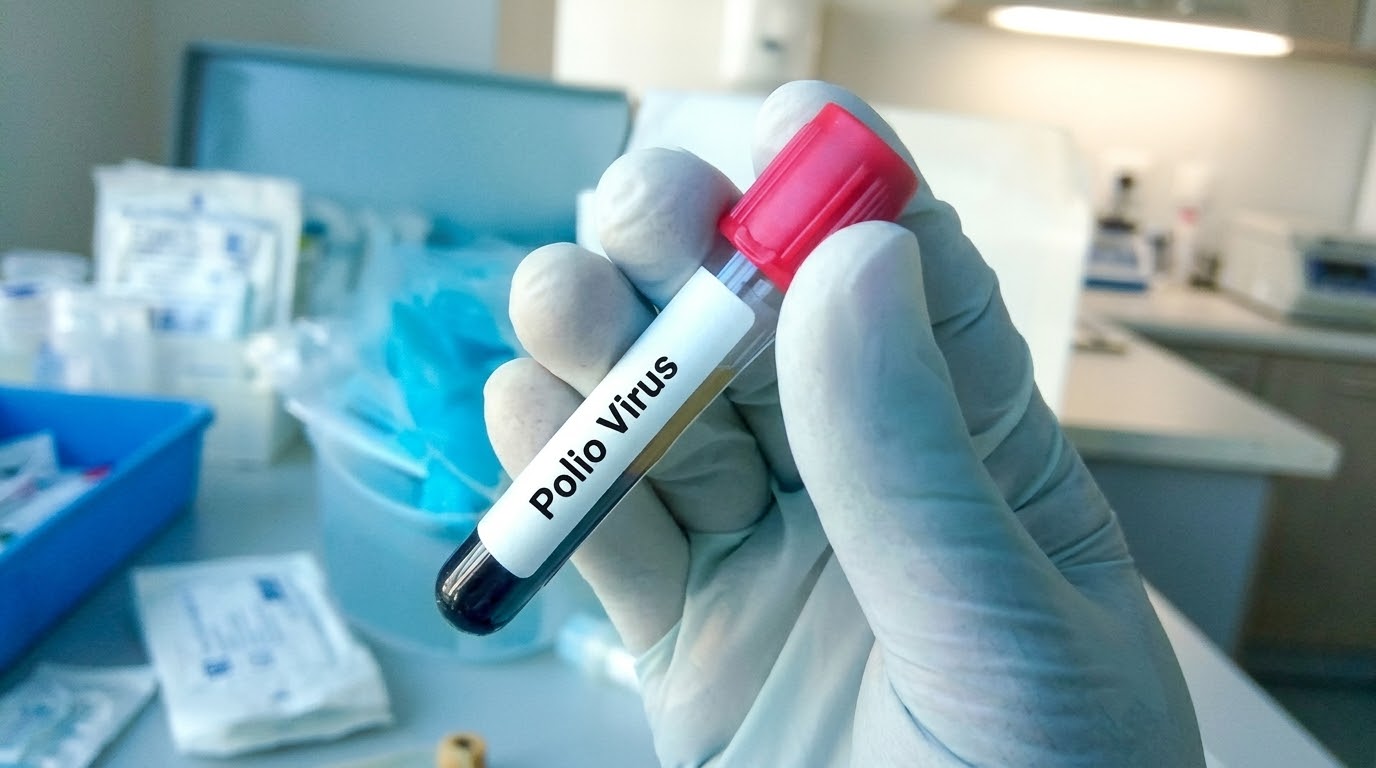
Peshawar: Pakistan has reported its 10th polio case of 2026 after a 14 month old girl tested positive for the virus in Karak district of Khyber Pakhtunkhwa, marking the first confirmed infection in the district in six years.
The National Emergency Operations Centre (NEOC) for Polio Eradication confirmed the case on Wednesday, November 25, identifying the child as a resident of Shanawa Gudi Khel union council.
According to the programme's surveillance data, eight cases have been reported from Khyber Pakhtunkhwa and two from Sindh this year, with southern districts accounting for four of the provincial infections.
Health officials said genetic analysis linked the latest infection to poliovirus circulating in southern Khyber Pakhtunkhwa, indicating that transmission has continued despite vaccination campaigns.
The detection follows months of environmental surveillance in neighbouring Bannu district, where wild poliovirus type 1 (WPV1) has been found in sewage samples over the past eight months.
The findings suggest that the virus has continued to circulate in communities even where no cases of paralysis have been reported.
Environmental surveillance involves testing wastewater to identify poliovirus circulation before or without confirmed infections in children. It allows health authorities to identify areas where vaccination coverage may need to be strengthened.
Southern KP remains a concern for polio eradication
The latest case has drawn attention to southern Khyber Pakhtunkhwa, where health officials have been monitoring virus transmission through both clinical cases and environmental samples. Bannu and surrounding districts have remained under surveillance because of repeated detections of the virus.
The genetic connection between the Karak infection and virus circulating elsewhere in the region indicates that transmission is not necessarily confined to districts where children have tested positive.
Polio is an infectious disease that primarily affects children under five. It can cause paralysis and, in some cases, death. There is no cure, but vaccination can prevent the disease. Pakistan and Afghanistan remain the only two countries where wild poliovirus transmission has not been interrupted.
Although Pakistan has reduced the number of cases through vaccination and surveillance, continued transmission in affected communities remains an obstacle to eradication.
Nationwide vaccination campaign scheduled for December
The detection comes ahead of Pakistan's final nationwide anti polio vaccination campaign of 2026, scheduled to run from December 12 to 18. According to the polio eradication programme, the campaign aims to vaccinate more than 45 million children under five across the country.
Health authorities have urged parents and caregivers to ensure that children receive polio drops during each campaign, even if they have previously been vaccinated.
The campaign is also expected to involve coordination with Afghanistan as both countries work to prevent cross border transmission. Pakistan's eradication programme combines door to door vaccination, routine immunisation and environmental monitoring to identify areas where the virus remains in circulation.
The latest infection underscores why the absence of reported cases does not necessarily mean the virus has been eliminated from a district. Although Karak had not recorded a case for six years, the detection indicates that children remain vulnerable where poliovirus continues to circulate.
Health authorities have not disclosed the child's vaccination history or announced any additional district specific vaccination measures following the confirmation.
The upcoming vaccination campaign and subsequent surveillance results will help determine whether transmission can be interrupted in the affected areas.