Geneva: A COVID 19 variant known as PJ.2.1 is spreading across several countries, prompting scientists to examine its transmission patterns, mutations and potential impact on public health as the virus continues to evolve. First identified in a sample collected in Ontario, Canada, on May 2, 2026, the variant has since been detected in the US, Australia, Singapore and Spain, according to research and surveillance reports.
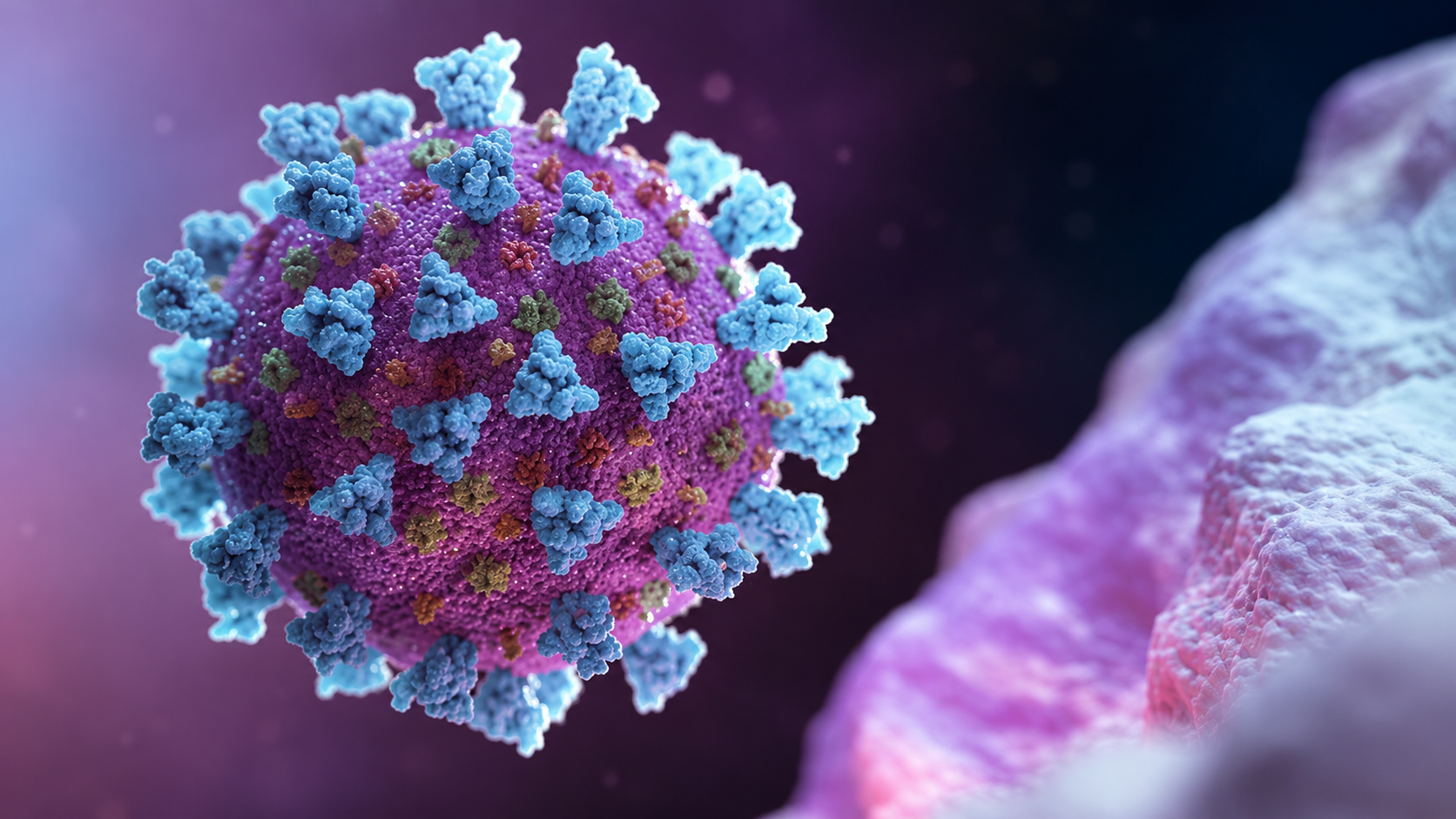
PJ.2.1 belongs to the JN.1 lineage of SARS CoV 2, the virus responsible for COVID 19. Researchers describe it as a saltation variant, meaning it has accumulated a substantial number of genetic changes compared with its ancestors. A study published in the Journal of Infection on October 24 examined the variant's biological characteristics, including changes to its spike protein, which allows the virus to enter human cells.
Researchers found that PJ.2.1 showed increased cell entry efficiency in certain laboratory experiments. However, the findings do not establish that the variant spreads more readily between people or causes more severe illness. The study also found no substantial increase in its ability to evade antibodies generated by the variant adapted vaccines examined.
The findings have drawn attention from health experts because changes in the spike protein can influence how the virus interacts with human cells and responds to existing immunity.
Surveillance data from Public Health Ontario, published on November 2, showed that PJ.2.1 accounted for 25.2 per cent of 523 sequenced cases between September 20 and October 17, compared with 16.9 per cent during the preceding four week period.
The figures indicate that the variant's share among sequenced infections is increasing in Ontario, although they do not establish a corresponding increase in hospital admissions or deaths.
Symptoms and health risks
There is currently no evidence that PJ.2.1 produces symptoms distinct from those associated with other circulating COVID 19 variants. Patients may experience fever, cough, sore throat, fatigue, headache, nasal congestion and muscle aches. Some may also develop breathing difficulties.
Because these symptoms overlap with influenza and other respiratory infections, the variant cannot be identified through symptoms alone. COVID 19 testing can confirm infection, while genetic sequencing is generally required to determine which variant is responsible.
Health experts say the available evidence does not indicate that PJ.2.1 causes more severe disease than earlier variants. However, researchers continue to assess its transmission characteristics and potential implications for people at greater risk of complications, including older adults and individuals with weakened immune systems.
The World Health Organization (WHO) continues to track changes in SARS CoV 2 through international surveillance networks. Its published classification lists JN.1 as a variant of interest, but does not separately designate PJ.2.1 as a variant under monitoring or a variant of concern. The distinction matters because identifying a variant does not automatically mean it presents an increased public health threat.
Vaccination and prevention
Health authorities continue to recommend vaccination as a measure to reduce the risk of severe COVID 19, particularly among people vulnerable to complications. Current research has not established that PJ.2.1 substantially reduces the protection provided by updated vaccines against severe illness.
Experts advise people experiencing respiratory symptoms to consider testing, avoid close contact with others while unwell and seek medical attention if symptoms worsen.
Ventilation, hand hygiene and measures to reduce exposure in crowded indoor settings can also help limit respiratory virus transmission. Scientists are continuing to study whether PJ.2.1 will become more prevalent or remain one of several circulating lineages.
What the variant means for global health
The emergence of PJ.2.1 comes nearly seven years after COVID 19 was first identified in Wuhan, China, in late 2019. The WHO declared COVID 19 a pandemic in March 2020. The disease subsequently caused more than seven million reported deaths worldwide and disrupted healthcare systems, trade, education and economic activity.
According to the International Monetary Fund (IMF), the global economy contracted by approximately three per cent in 2020 as governments introduced restrictions to contain transmission.
Although the WHO ended the COVID 19 public health emergency of international concern in May 2023, the virus has continued to circulate and produce new variants. Successive mutations have changed the virus's transmission patterns, while vaccination and population immunity have altered the impact of infections.
Scientists say continued genomic surveillance remains necessary to identify variants that may affect transmission, vaccine effectiveness or disease severity. The identification of PJ.2.1 illustrates that SARS CoV 2 continues to evolve, but its emergence alone does not indicate the beginning of another pandemic scale wave.
Its impact will depend on how widely it spreads, whether it changes patterns of severe illness and how effectively existing immunity protects against infection and complications. For now, the evidence supports continued monitoring rather than conclusions that PJ.2.1 poses a greater threat than other circulating variants.