By Fatima Rizwan
“It’s the closest I have seen my home.”
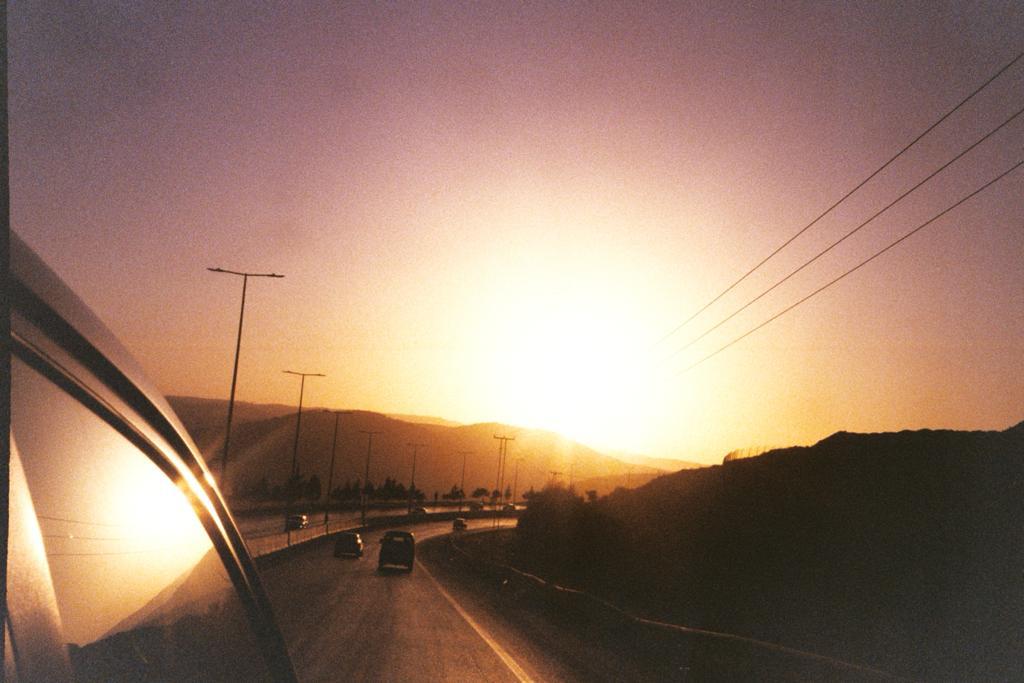
Every summer, Zeina Al Qawasmi packs her bags for a road trip to Jordan with her family. Although Jordanian markets are decorated with traditional Palestinian embroidered dresses, this family drives nearly 1700 km from Qatar for one purpose: to reach the King Hussein Bridge and catch a glimpse of their homeland, Palestine.
Singing along to Falasteeni music in the car, they reach the bridge.
Zeina turns the volume down, hurriedly takes out her phone, and rejoices at a text message that says, “Welcome to Palestine.”
For Zeina, a Palestinian, this is the closest she has ever stepped to her homeland.
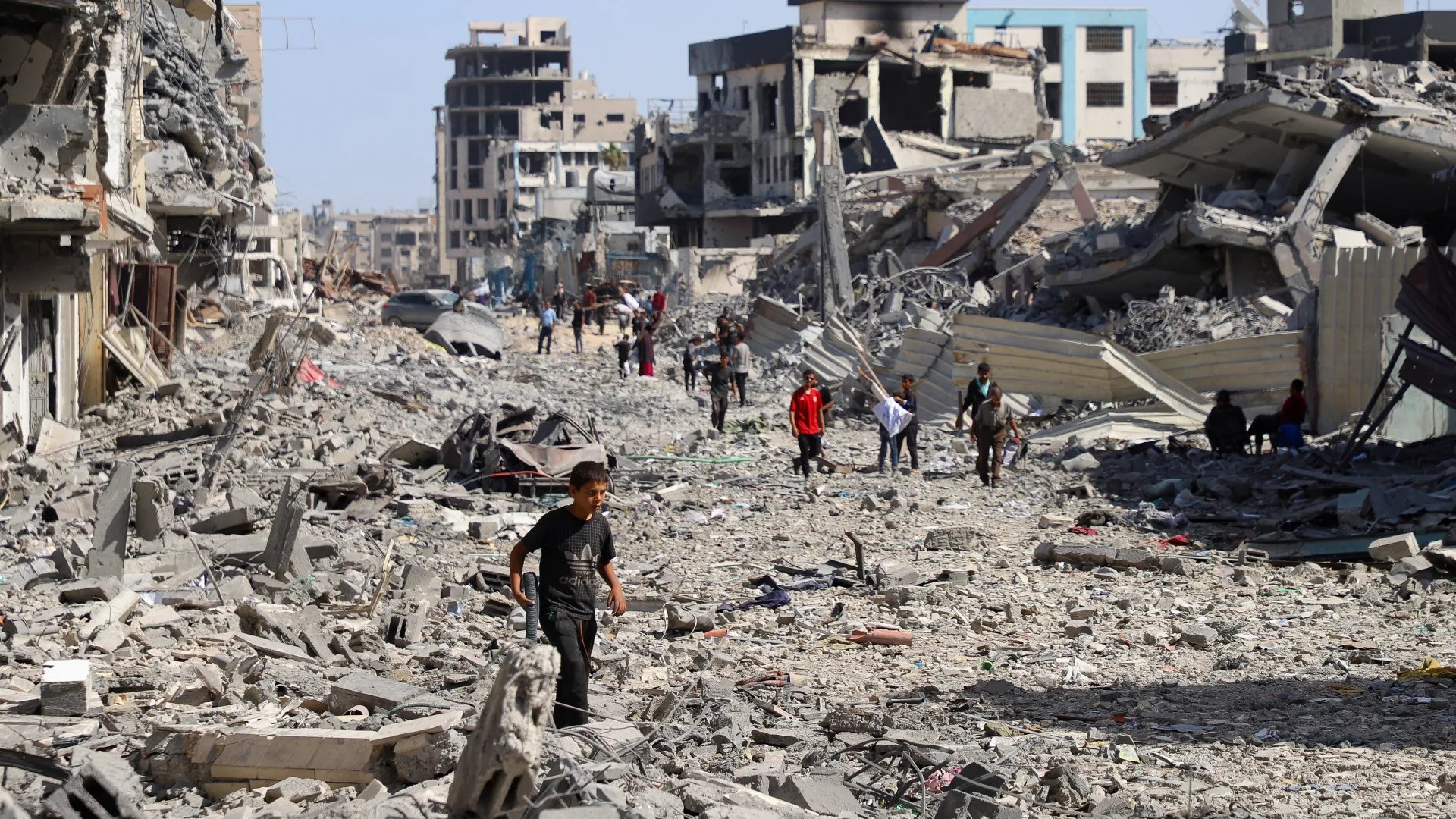
Today marks three years in the ongoing genocide of Gaza by the apartheid state Israel, and the numbers have outrun our feeds. Gaza’s health ministry reports 74237 Palestinians killed and more than 175000 wounded, at least 1454 of them killed after the ceasefire of October 2025.
UNICEF says over 90 percent of Gaza’s schools have been damaged or destroyed, and children only returned to in-person lessons last month. The list of restricted items includes musical instruments and toys, and little moments of joy such as kite flying are seen as a threat by Israel.
Much has been said, and yet it doesn’t seem to be enough. Today, Sheikh Omar Suleiman's words ring in my ears: “Palestine is a test of our human consciousness.”
I vividly recall sitting in my classroom, 3 years ago, with a pin drop silence broken by a fellow student who said, “Palestinians are not allowed to grieve. We are made to defend our hurt. We are killed and then asked why we should be treated with dignity.”
That silence was a small copy of a much larger one. It has stretched over three years and across continents, and it is why I keep returning to Suleiman's words. A test is not a verdict on the one who suffers; it is a mirror held up to everyone watching.
Palestine has sorted us, gently at first and then without mercy, into those who stand with the truth and those who stay silent. Some are progressive on everything but Palestine, who speak about justice and rights of women until Palestine becomes the conversation.
The test has also exposed the limits of the language we use to describe justice. A politics that speaks fluently about women's liberation, human rights and freedom can become strangely selective when those same words are invoked in the context of Palestine.
Women’s liberation in the Middle East becomes a tool to justify waging wars on the land, and freedom from Hamas becomes an acceptable reason to kill civilians and amputate children with advanced precision targeted drones.
Narrative warfare does not always require convincing the world that Palestinians are lying. Sometimes it is enough to keep the world arguing about what happened long enough for what is happening to disappear beneath the argument.
Professor Mohammed Elmasry (2023) describes Israel’s “post atrocity routine”: first denial, then a claim to have “solid evidence that Palestinians committed the crime,” and, when it is proven guilty, an acceptance of responsibility that arrives after the world has already moved on.
While the media went on a goose chase to play pin the blame, the attacks on Palestinians continued, and that is exactly the point. It is a tool of distraction, used to frame the genocide away from reality.
Journalist Sana Saeed (AJ+, 2023) sees the same thing in the endless demand for condemnation – when we spend our time on a question reserved for one group of one people, Israeli war crimes against a besieged population become “a secondary concern” and, worse, a necessity.
The genocide in Gaza that continues to take place is live streamed on social media, yet political reprimand is faced by those who speak up about it.
Arundhati Roy put the bind plainly: “the only moral thing left to Palestinian civilians, it seems, is to die, and the only legal thing left to the rest of us is to watch them do it in silence, because speaking means we “risk our scholarships, grants, lecture fees and livelihoods.”
There are also those who spoke, who held the sign, filmed the rubble and signed the letter, and who faced harsh consequences for it.
And some never stopped telling the story: the Committee to Protect Journalists has documented 189 Palestinian journalists and media workers killed in Gaza. At the same time, no international reporter has been allowed in independently since the war began.
With three years on, and 75 long years of an illegal occupation, a small yet significant hope comes from the people. Gallup reported in February this year that 41 percent of Americans sympathised more with Palestinians, compared with 36 percent who sympathised more with Israelis.
While it is not a statistically significant increase, it is the first time since the question was introduced in 2001 that Israelis did not hold the lead.
Israel’s narrative to justify its occupation and war operations has largely been upheld by an overwhelming amount of public support from the West.
If anything is to change, as we see it is, it will be through a media that is willing to create space for the Palestinian narrative and a personal effort to treat the case of Gaza as a litmus test for humanity’s consciousness.
I met a Palestinian girl, Noor, a few years ago. Her Gaza was olive trees around the house, grapevines spilling over the balconies, cousins to chase through the orange trees. She wanted to “climb the palm trees” her father grew in Khan Younis, a town that has been drastically demolished and whose home no longer exists.
Her hometown, Khan Younis, has been broken. Satellite researchers estimated that more than half of the buildings in the Khan Younis area had been destroyed or damaged by April 2024, and the war went on for eighteen months after that.
The UN now counts 82 percent of all structures in Gaza as damaged. Noor’s family of nine lost their home and their entire neighbourhood and are sheltering in a university in the south.
Today, Zeina and Noor join millions of Palestinians who grieve for their homeland, who long to walk in the streets of Gaza but are refused due to an illegal occupation and genocidal force.
Perhaps that is what it means to treat Palestine as a moral compass: not to ask what Palestine can teach the world after the fact, but to ask what our response to Palestine reveals about us now.
Fatima Rizwan is a journalist and a documentary filmmaker. Her work focuses on decolonising frameworks of the Global South, and bylines in Gulf Times, Caravan, and Doha News.
Disclaimer: Views expressed in opinion articles are solely those of the authors and do not necessarily represent the editorial position of QOM.