
Islamabad: Pakistan has said the Makkah Defence Alliance with Saudi Arabia and Türkiye remains defensive in nature, while ruling out any immediate expansion of the three country arrangement.
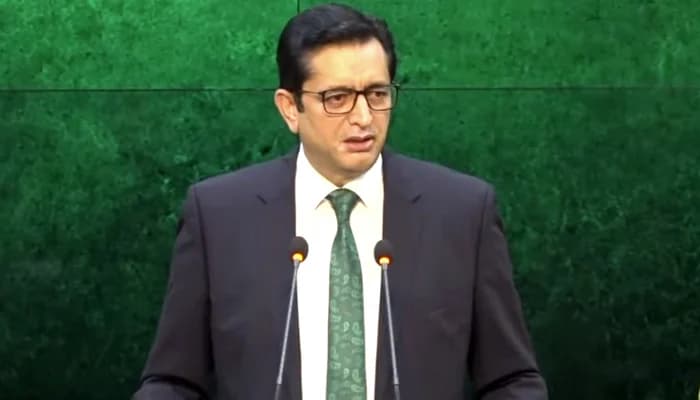
Foreign Office spokesperson Sajjad Haider Khan said on Thursday that the alliance was primarily intended to strengthen regional security through deterrence. He said Pakistan, Saudi Arabia and Türkiye would first need to consolidate their cooperation before considering membership for other countries.
“At this stage, there are no discussions regarding the expansion of the Makkah agreement,” Khan said during the Foreign Office's weekly briefing.
The agreement, signed in Makkah on August 7, provides that an armed attack against any one of the three members will be regarded as an attack against all three. It also calls for closer defence cooperation.
The alliance has already begun developing an institutional framework. At its first Strategic Political and Defence Committee meeting in Istanbul on August 31, the three countries agreed to establish a permanent secretariat in Saudi Arabia, with a Pakistani secretary general serving an initial three year term.
They also agreed to strengthen defence capabilities through joint activities, defence industry cooperation and technology development.
Khan said detailed work was still required to finalise the alliance's structure, procedures and mechanisms. He added that the agreement was already in effect and Pakistan would fulfil its responsibilities under its terms.
The clarification comes amid a sharp deterioration in regional security. Houthi attacks on Saudi Arabia have injured dozens of people and targeted infrastructure, while Pakistan has urged Iran to restrain the Yemeni group. Islamabad has maintained that its role under the Makkah pact is defensive and focused on Saudi territory.
Defence Minister Khawaja Asif had separately said the previous day that aggression against any member could invoke the pact's mutual defence provision. The Foreign Office's latest comments, however, place the emphasis on institutional consolidation rather than immediate expansion or wider military involvement.
For Pakistan, Saudi Arabia and Türkiye, the next phase will therefore be less about adding members and more about determining how the new alliance works in practice.
The pact has been signed. Its institutions are taking shape. Its real test will be whether the three countries can turn a mutual security commitment into a functioning regional mechanism without widening the conflicts it was created to deter.