
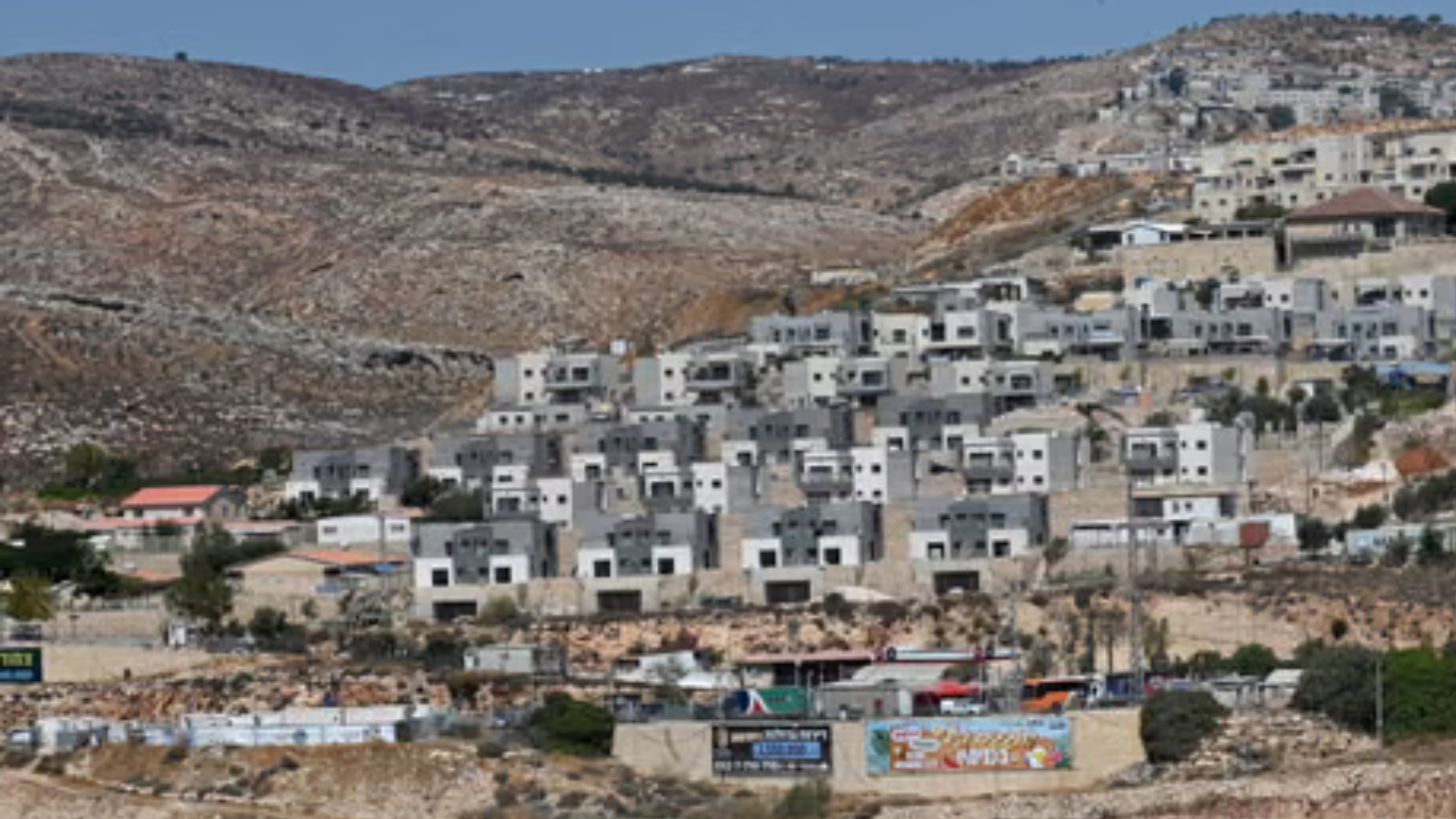
Jerusalem: Israeli authorities are considering plans to construct 1,670 new housing units in Jewish settlements across the occupied West Bank, according to a statement released late Wednesday by the Palestinian Wall and Settlement Resistance Commission.
The commission noted that the proposal comes shortly after 12 Western nations decided to impose trade restrictions on products originating from Jewish settlements and called on Israel to halt further settlement expansion.
According to the commission, the government of Israeli Prime Minister Benjamin Netanyahu has approved 104 new Jewish settlements and established 160 agricultural settlement outposts since taking office in late 2022.
The latest plans, which have reached the final approval stage, outline the construction of 365 housing units in the Maale Amos settlement southeast of Bethlehem and 200 units in the Talmon settlement northwest of Ramallah.
In addition to expanding existing sites, the project proposes establishing three new settlement areas from scratch: Amihai on the Ramallah-Nablus border, Ein Yitav in Jericho, and Maoz Tzvi in the Jenin area. Together, these three locations would encompass 749 housing units across 1,125 dunams (278 acres) of land.
Further expansion plans detailed by the commission include adding 95 units to the Peduel settlement and 259 units to Alei Zahav in Salfit, alongside two additional units planned for the Givat Zeev settlement northwest of Jerusalem.
The commission stated that these measures demonstrate an effort by Israel not only to enlarge existing settlements but also to establish new, permanent settlement centres throughout the West Bank.
Under international law, the transfer of an occupying power’s civilian population into occupied territory is considered illegal. The West Bank, occupied by Israel since 1967, is internationally recognised as part of the territory designated for a future Palestinian state. Despite international legal frameworks, Israel has continued to accelerate the expansion of existing settlements and the establishment of new outposts across the region in recent years.