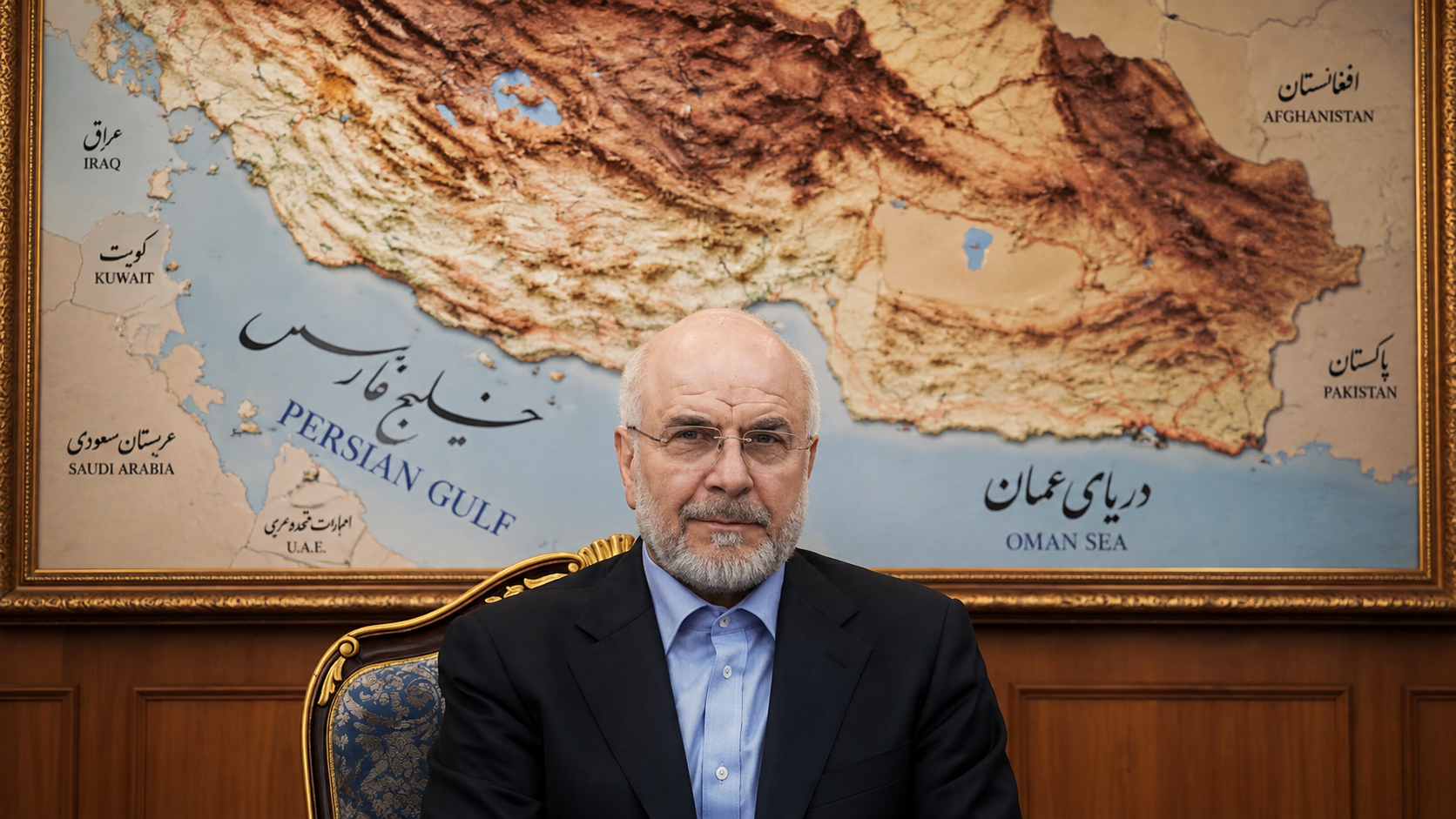
Tehran: Iranian Parliament Speaker Mohammad Bagher Ghalibaf has accused the United States of maintaining a state of neither war nor peace with Iran, arguing that Tehran must strengthen its defence capabilities while pursuing negotiations to prevent further conflict.
His remarks on Monday, November 23, came as Iran's Islamic Revolutionary Guard Corps (IRGC) Navy reported that three oil tankers had struck naval mines and caught fire in the Strait of Hormuz, where shipping remains disrupted by the conflict between Iran, the United States and Israel.
Speaking in comments carried by Iran's Tasnim news agency, Ghalibaf said the existing situation could not continue and called for measures that would allow Iran to deter threats against its territory.
He argued that diplomacy and military capabilities were both means of achieving deterrence, which he described as necessary to end the threat of further attacks.
Ghalibaf said Iran needed to determine what measures would resolve the current situation and which institutions would be responsible for implementing them.
His comments reflect Tehran's position that negotiations alone may not guarantee security unless accompanied by measures intended to discourage further military action.
The remarks follow months of conflict that began when the United States and Israel launched military strikes against Iran on February 28, 2026. Iran responded with attacks targeting Israel and US military facilities across the Middle East, expanding the confrontation beyond Iranian territory.
Washington and Tehran signed a framework agreement on June 18 intended to halt hostilities and establish a basis for negotiations.
However, implementation stalled over disagreements concerning the Strait of Hormuz, sanctions and the movement of commercial vessels. Fighting has continued intermittently since July despite diplomatic efforts to reach an agreement.
The disagreement over maritime access has become a barrier to negotiations. Iran announced the closure of the Strait of Hormuz on July 12 after the United States resumed military operations.
Washington subsequently reimposed a naval blockade affecting Iranian oil exports on July 14. Tehran has demanded an end to the blockade, relief from sanctions and guarantees against further attacks before restoring unrestricted navigation through the waterway.
The US position has centred on freedom of navigation and preventing Iran from controlling international shipping routes. On Monday, Iranian Foreign Ministry spokesperson Esmaeil Baghaei said Tehran would use available measures to challenge the American blockade, which Iran considers an act of military aggression.
He also indicated that Iran remained prepared to implement its commitments if Washington met its conditions.The tensions intensified after the IRGC Navy announced that three oil tankers had struck mines in the Strait of Hormuz on Monday night.
According to the Iranian account, two vessels encountered mines in the eastern part of the strait, while a third was also damaged during an attempted passage.
The explosions caused fires aboard the tankers, the IRGC said. Iranian authorities alleged that the vessels had used routes without permission and had disregarded maritime warnings.
The IRGC also said American military aircraft operating in the area had failed to prevent the incidents. The Iranian account could not immediately be independently verified, and the identities of the tankers, their crews and the extent of the damage were not established in the initial reports.
There was also no confirmation of casualties.
The IRGC said it would release footage of the explosions and warned vessels against travelling through routes not authorised by Iranian authorities.The incidents follow a series of attacks and reported mine explosions involving commercial vessels in and around the strait.
Iranian forces have maintained that shipping cannot return to normal while the US blockade remains in place. Maritime security organisations have warned vessels operating in the Gulf, Strait of Hormuz and Gulf of Oman about the risks associated with naval activity, mines and attacks on ships.
A November 18 advisory from the Joint Maritime Information Centre warned that ships could encounter increased monitoring by Iranian forces and possible attacks while navigating the region.The Strait of Hormuz connects the Persian Gulf with the Gulf of Oman and is a route for oil and liquefied natural gas exports from Gulf producers.
Disruptions to shipping through the passage affect energy traders, shipping companies and countries that depend on imported fuel. Vessels attempting to use alternative routes may face longer journeys and higher insurance and transport costs.
The consequences extend beyond Iran and the United States because energy supplies from the Gulf serve markets across Asia and other regions. Despite the security risks, international oil prices fell on Tuesday as expectations of increased global supplies outweighed some concerns over the conflict.
Reuters reported that oil was trading near three-month lows, demonstrating that market prices were being influenced by broader supply conditions as well as developments in the strait. The latest developments also highlight the difference between the positions expressed by Tehran and Washington.
Iran maintains that restrictions on its oil exports and threats of renewed military strikes prevent a resolution of the conflict. The United States has insisted on maritime access and has warned against Iranian actions affecting commercial vessels and American forces.
Ghalibaf's call for deterrence indicates that Iranian officials continue to consider strengthening military capabilities alongside diplomatic negotiations. However, he did not announce a change in government policy or identify measures that would immediately end the confrontation.
No agreement has been announced on lifting the blockade or establishing an internationally accepted navigation arrangement for the Strait of Hormuz. The dispute therefore remains unresolved, with negotiations affected by continued military activity and the risks facing commercial shipping.
For the countries involved, the next steps will depend on whether negotiations can produce guarantees addressing both Iran's security demands and access to international shipping routes.