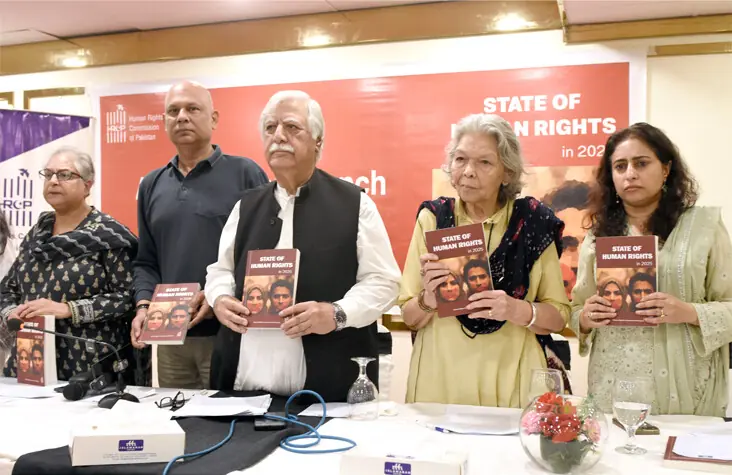
Islamabad: Religious minorities in Pakistan continue to face discrimination, violence, forced marriages and restrictions on religious freedom despite legislation aimed at protecting their rights, according to a report released by the Human Rights Commission of Pakistan (HRCP) on Thursday.
The commission's seventh annual report on freedom of religion or belief, titled Sanctuary Denied: Freedom of Religion or Belief in 2025/26, examined violations affecting minority communities and identified gaps in the implementation of laws intended to protect them.
The report documented the misuse of blasphemy laws, allegations of forced conversions, hate speech, employment discrimination and attacks on places of worship.
According to HRCP, people accused of blasphemy remain caught in legal proceedings, while allegations concerning an organised network accused of trapping individuals in blasphemy cases have yet to be investigated.
The report also recorded attacks against the Ahmadi community, including incidents in Chenab Nagar in October 2025 and June 2026. It highlighted restrictions affecting Ahmadis' participation in public and commercial life.
Christian and Hindu girls continued to face abductions, forced marriages and religious conversions, with poverty and inadequate police responses contributing to their vulnerability, the commission reported.
During the report's launch, HRCP Director Farah Zia expressed concern over the state's treatment of religious minorities, warning that government policies and practices were becoming increasingly exclusionary.
Minority rights activist Nabila Feroz Bhatti referred to the case of Kamran Gill, a Christian medical practitioner from Sheikhupura, whose dispensary was set on fire by a mob on October 9 following allegations involving social media content.
HRCP Punjab Vice-Chair Raja Ashraf said blasphemy accusations were being used to exploit and threaten vulnerable individuals.
Former HRCP chairperson Hina Jilani also raised concerns about discrimination within institutions, arguing that democratic governance should not distinguish between citizens on the basis of religious identity.
The commission acknowledged legislative developments, including the National Commission for Minorities Act 2025 and laws in Punjab and Balochistan establishing 18 as the minimum marriageable age.
However, it noted that the National Commission for Minorities had not been constituted despite the passage of the legislation.
HRCP urged the federal government to establish the commission, appoint its chairperson and members, and introduce the rules required for its operation.
It also called on the Khyber Pakhtunkhwa government to introduce legislation setting the minimum marriageable age at 18 for both men and women.
The report recommended publishing annual data on blasphemy cases, mob violence, forced conversion complaints and prison conditions to improve transparency and allow scrutiny of government responses.
It called for investigations into allegations of organised entrapment in blasphemy cases and recommended that inquiries under Section 295-C of the Pakistan Penal Code be conducted by officers of senior rank.
HRCP further proposed training for police and investigative agencies, including the Federal Investigation Agency, to improve their handling of cases involving religious freedom.
Addressing employment discrimination, the commission called for an end to recruitment practices that disproportionately restrict members of religious minorities to sanitation work.
It also recommended reforms to the Evacuee Trust Property Board to improve accountability and ensure representation of minority communities in decisions concerning their properties and religious sites.
The report urged authorities to monitor institutions linked to allegations of forced conversions and underage marriages, recommending that religious conversions take place before a court or government official.
On education, HRCP called for a review of school curricula to address religious prejudice and promote inclusion and respect for different beliefs.
The commission also recommended action against incitement to violence, particularly through social media, while maintaining constitutional protections for freedom of expression under Article 19.
It urged authorities to strengthen policing measures to prevent mob violence and protect human rights defenders, lawyers and journalists working on minority rights.
HRCP called for the implementation of the Supreme Court's 2014 judgement on religious freedoms, including protection of places of worship and the reopening of those closed over public order concerns.
The report further stated that no place of worship should be demolished without a court order issued after hearing the parties involved.
The commission concluded that legislation alone would not address violations unless accompanied by enforcement, institutional accountability and measures ensuring equal treatment of citizens regardless of religion.