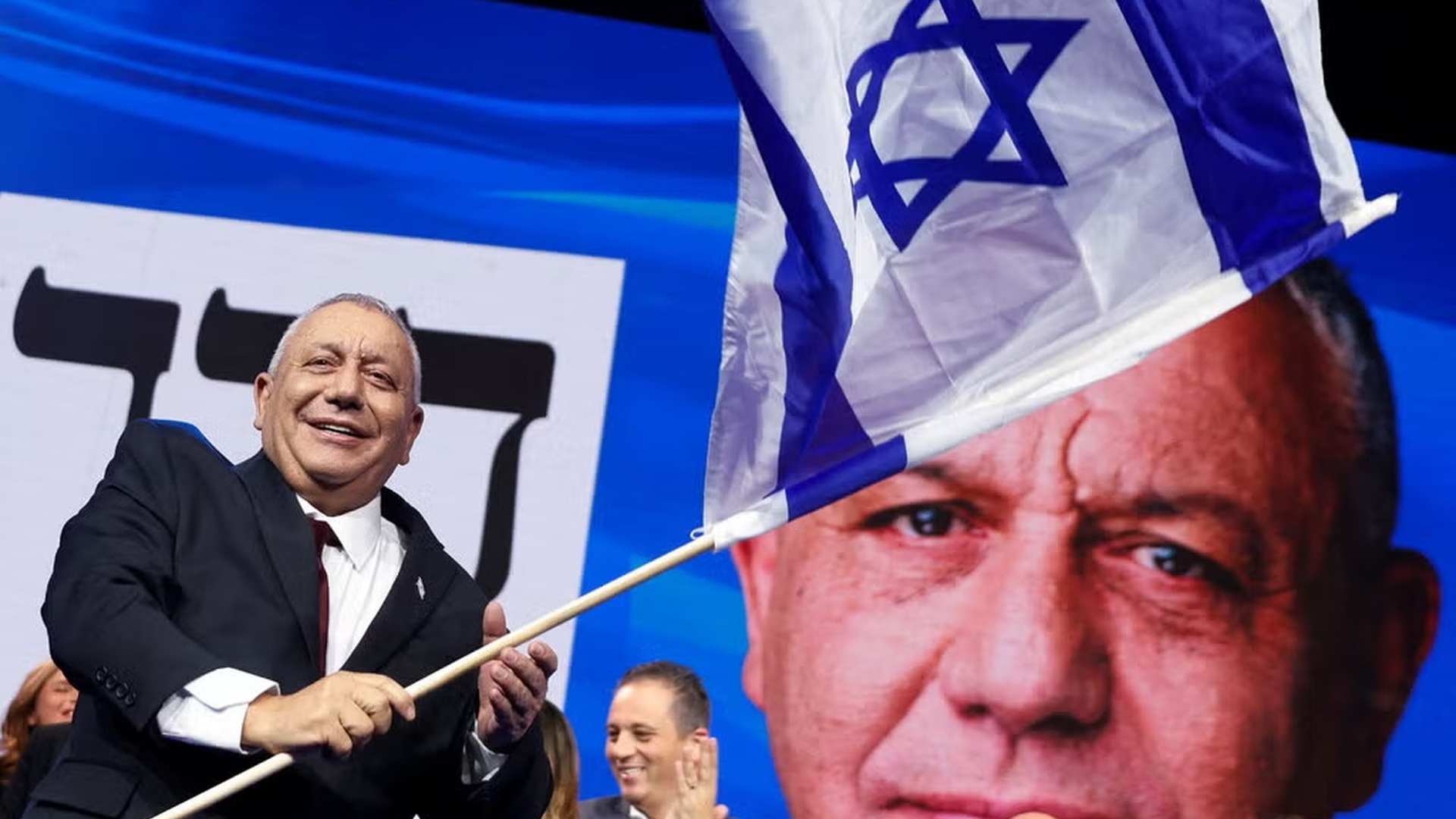
Tev Aviv: Israeli President Isaac Herzog has selected opposition leader Gadi Eisenkot to attempt to form the country's next government, dealing a political setback to Prime Minister Benjamin Netanyahu after the October 27 general election failed to produce a parliamentary majority.
Herzog announced his decision on Saturday, November 7, following consultations with political parties represented in the 120 member Knesset. Eisenkot, a former military chief who leads the Yashar party, is scheduled to receive the formal mandate on Sunday.
According to the president's office, parties representing 67 lawmakers recommended Eisenkot for the position, compared with 46 who supported Netanyahu. Another seven lawmakers, belonging to United Torah Judaism, declined to endorse either candidate.
Eisenkot will have 28 days to negotiate a governing coalition, with the possibility of a 14 day extension. However, receiving the presidential mandate does not guarantee that he will become prime minister. He must still assemble a coalition capable of securing parliamentary confidence.

Election results leave both blocs short of majority
The October 27 election produced a divided parliament, with neither Netanyahu's alliance nor Eisenkot's opposition bloc winning the 61 seats required for an outright majority. Netanyahu's religious-nationalist alliance secured 53 seats, while Eisenkot's four party bloc won 48.
Two Arab led parties representing Palestinian citizens of Israel won a combined 19 seats, increasing their potential influence over government formation. Although these parties recommended Eisenkot during presidential consultations, their endorsement does not automatically mean they will join his coalition.
Eisenkot has previously ruled out forming a government with the Arab-led parties, while some of his political allies oppose relying on their parliamentary support. This creates a distinction between the 67 lawmakers who recommended Eisenkot for the mandate and the number willing to support a government led by him.
Coalition negotiations present political obstacles
Eisenkot faces several possible routes to forming a government, although each would require compromises between parties with different political positions. One option involves negotiating with ultra-Orthodox parties that have traditionally supported Netanyahu.
Another possibility is establishing a minority government with parliamentary support from Arab-led parties without formally including them in the cabinet. A broader coalition involving Netanyahu's Likud party has also been discussed, although disagreements between the two leaders make such an arrangement difficult.
The negotiations are expected to involve disputes over military service exemptions for ultra Orthodox men, the role of religious parties and the future direction of Israeli security policy. Netanyahu has warned against a government dependent on Arab led parties, while Eisenkot's supporters argue that the election result provides an opportunity to replace the incumbent administration.
Gaza war remains central to political divisions
The election took place against the background of the war in Gaza, which began in October 2023 and has shaped Israeli political debate over security, governance and accountability.
Netanyahu has faced criticism over his government's handling of the conflict and the security failures preceding it. Eisenkot, who served as Israel's military chief from 2015 to 2019, previously participated in Netanyahu's wartime cabinet before emerging as a political rival.
He has criticised aspects of Netanyahu's conduct of the Gaza campaign and violence by settlers against Palestinians in the occupied West Bank. However, Eisenkot's emergence as a possible prime minister does not necessarily indicate a fundamental change in Israeli policy towards Palestine.
His political positions remain rooted in Israel's security establishment, and he has also advocated measures against Hamas. The composition of any future coalition would therefore be important in determining whether government policy changes on Gaza, the occupied West Bank and relations with Palestinians.
Despite Herzog's decision, Netanyahu will continue serving as caretaker prime minister until a new government is formed. If Eisenkot cannot secure sufficient parliamentary support within the permitted period, the president may give another lawmaker an opportunity to form a government. Failure to establish a coalition through the available procedures could eventually result in another general election.
The political uncertainty comes after years of divisions over Netanyahu's leadership, the role of religious parties and the conduct of the war. For Eisenkot, the immediate challenge is to convert the support received during presidential consultations into an agreement among parties willing to govern together.
The coming weeks will determine whether Israel undergoes a change in leadership or remains under Netanyahu's caretaker administration while coalition negotiations continue.