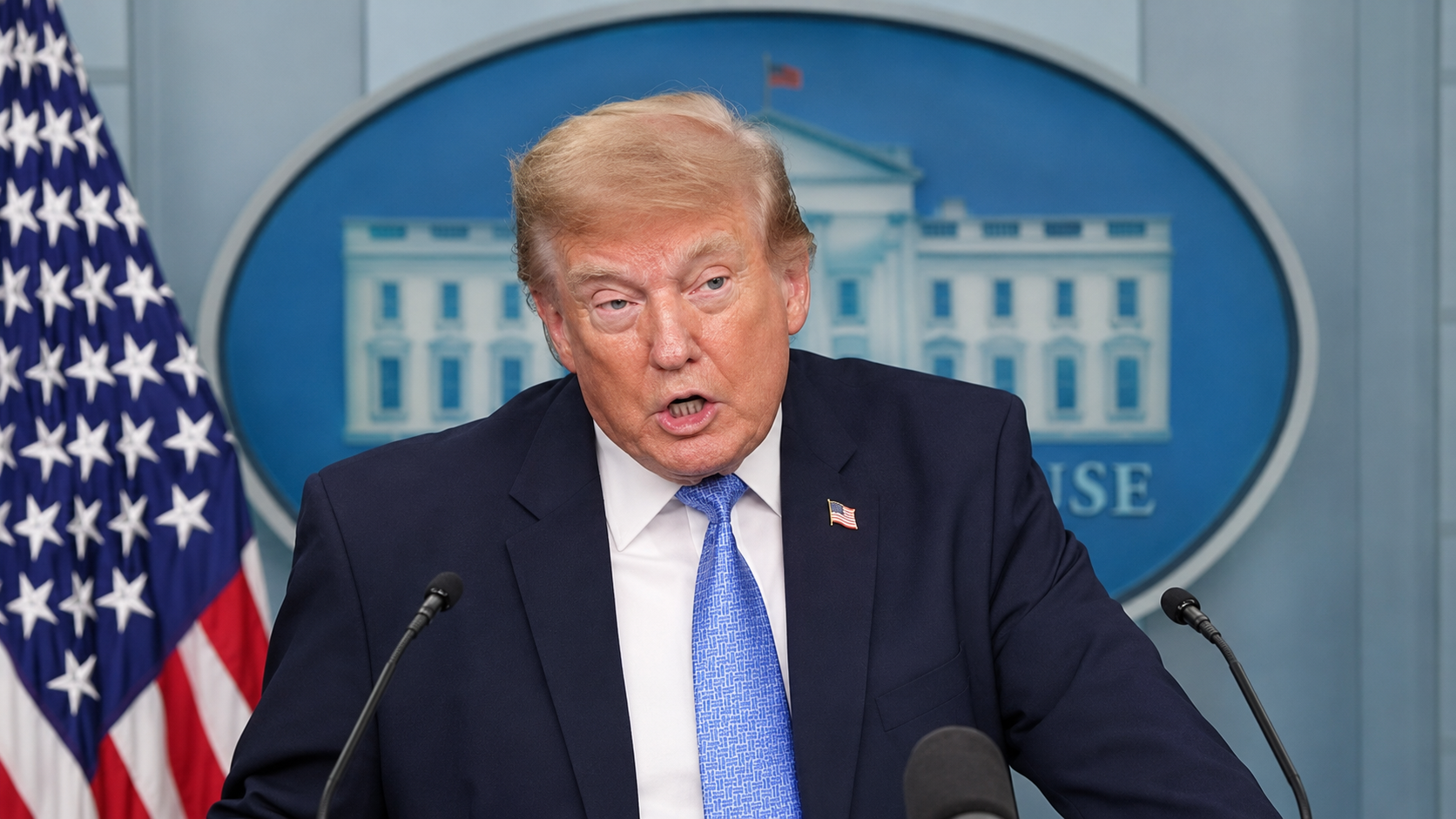
Washington: US President Donald Trump declared that the war against Iran is effectively over militarily, signaling a possible shift toward diplomacy after discussions with Qatar’s prime minister, despite ongoing disagreements with Tehran over the terms for ending the conflict.
Speaking at the White House on Monday, Trump claimed that Iran’s military capabilities were severely weakened and suggested that further American military operations were becoming less necessary.
He said the United States was seeing positive momentum toward ending the conflict, while acknowledging that renewed military action remained possible.
The remarks followed discussions with Trump, Vice President JD Vance, and Qatar’s Prime Minister and Foreign Minister, Sheikh Mohammed bin Abdulrahman Al Thani, who was mediating between Washington and Tehran.
Gulf states favour maintaining current restrictions
Trump said Gulf countries, including Qatar, Saudi Arabia, the United Arab Emirates, Bahrain, and Kuwait, favored maintaining existing restrictions rather than escalating the conflict.
However, he clarified that the current arrangement would include continuing the American naval blockade of Iranian ports.
Washington also intends to maintain its newly announced Task Force Iron Gate, aimed at restricting trade routes into Iran by land and through the Caspian Sea.
The president presented these measures as part of continued pressure on Tehran while diplomatic discussions proceed.
Although Trump suggested that major new military operations were unlikely, he maintained that American forces remained prepared to respond if circumstances changed.
His statements therefore did not amount to a formal declaration ending the war or lifting existing military and economic restrictions.
Qatar reports positive diplomatic discussions
After the White House meeting, Qatar’s prime minister said discussions focused on regional developments and ways to advance US Iran negotiations.
He described the talks as constructive and expressed appreciation for efforts to reach an agreement and restore regional peace.
Qatar played an important mediating role in the conflict, maintaining communication with both governments as regional states seek to prevent further military escalation.
However, no agreement or timetable for formally ending hostilities was announced following the meeting.
Iran rejects Trump’s account of negotiations
Tehran responded skeptically to Trump’s remarks.
Iran’s Supreme National Security Council Secretary Mohsen Rezaei rejected suggestions that negotiations were progressing, accusing Washington of presenting misleading claims about diplomatic engagement.
Iranian President Masoud Pezeshkian, meanwhile, said Tehran remained open to negotiations but would not accept an agreement imposed through military or economic pressure.
According to Iranian media, he also called for an end to the prolonged uncertainty between war and peace.
With Washington maintaining its blockade and Tehran insisting on acceptable terms for a settlement, Qatar’s diplomatic efforts remain central to the possibility of a negotiated resolution.