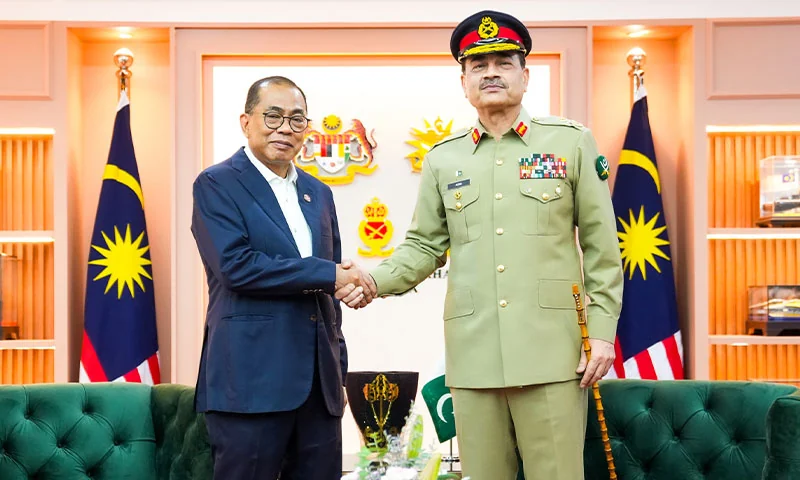
Putrajaya: Pakistan's Chief of Army Staff and Chief of Defence Forces, Field Marshal Syed Asim Munir, met Malaysian Prime Minister Anwar Ibrahim in Putrajaya during an official visit aimed at expanding defence cooperation between the two countries.
According to the Inter Services Public Relations (ISPR), the meeting focused on bilateral relations, military cooperation and developments affecting security in the region and internationally.
The two sides agreed to maintain consultations between their armed forces, increase exchanges of military delegations and strengthen cooperation on matters of mutual security interest. The visit follows months of engagement between Pakistan and Malaysia over defence relations and regional developments.
During the meeting, Anwar acknowledged the relationship between the two countries and expressed Malaysia's intention to expand cooperation in defence and security. Munir, meanwhile, recognised Malaysia's role in promoting peace and stability in Southeast Asia and reaffirmed Pakistan's commitment to developing institutional links between the two armed forces.
Both sides emphasised the importance of maintaining communication and cooperation to address security concerns. The discussions did not result in the announcement of a defence treaty or a specific military procurement agreement. The details of any future joint training programmes, exercises or defence projects were also not disclosed.
During the visit, Munir was presented with a guard of honour at Malaysia's Ministry of Defence. The ceremony was attended by senior Malaysian military officials, including the country's Chief of Armed Forces and the chiefs of the army, navy and air force. The military reception formed part of the programme arranged for the Pakistani defence chief.
The visit comes as Pakistan and Malaysia seek to expand cooperation through existing military and diplomatic channels. On October 14, the two countries held the 16th meeting of their Joint Committee on Defence Cooperation in Rawalpindi. According to Malaysia's Ministry of Foreign Affairs, the meeting addressed military cooperation, institutional exchanges and opportunities for collaboration between their defence industries.
The committee provides a mechanism for both countries to review existing arrangements and identify areas where cooperation can be developed. Relations were also discussed during Malaysian Home Affairs Minister Saifuddin Nasution Ismail's visit to Pakistan in August.
During that visit, the Malaysian minister met Munir at General Headquarters in Rawalpindi, where the two sides exchanged views on security developments and cooperation. Malaysia's foreign ministry said the discussions reflected the countries' commitment to maintaining security related engagement.
The November visit also follows discussions between Anwar and Prime Minister Shehbaz Sharif. During a telephone conversation on October 1, Anwar expressed hope that Munir's visit to Malaysia would take place after being postponed on several occasions.
The two prime ministers also discussed bilateral relations and developments affecting regional security. Pakistan and Malaysia maintain relations across trade, investment, education and defence, with their military cooperation forming part of broader diplomatic engagement.
Both countries have also supported dialogue as a means of addressing conflicts. Malaysia's defence minister, Mohamed Khaled Nordin, met Munir during the visit and expressed support for Pakistan's diplomatic efforts concerning the conflict involving the United States and Iran, according to Malaysian media.
The meeting provided another opportunity for the two sides to discuss regional security and their approaches to resolving conflicts through negotiations. The latest engagements indicate that Islamabad and Kuala Lumpur intend to develop their military relationship through regular consultations and institutional cooperation.
However, the extent of any expansion will depend on subsequent decisions concerning training, exchanges, defence industry projects and other arrangements. For now, the visit has produced commitments to continue cooperation, with no timetable announced for implementing additional defence initiatives.