
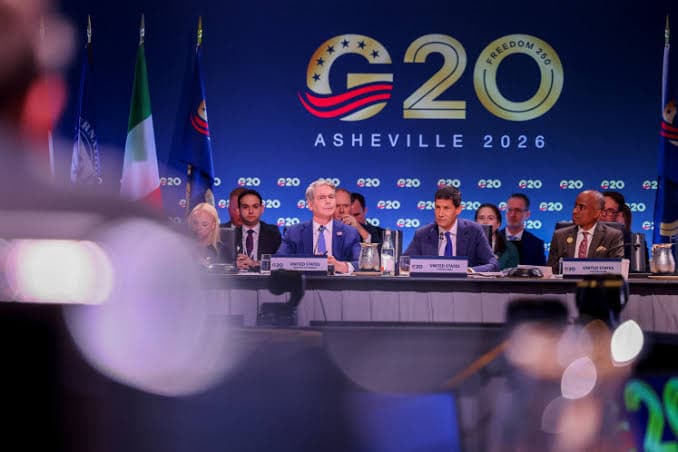
Asheville: The US faced a wave of frustration from European allies at the G20 Finance Ministers and Central Bank Governors meeting in North Carolina on Monday, as Washington bypassed Western efforts to isolate Russia and restricted access for select American news outlets.
The two day summit in Asheville was intended to showcase US Treasury Secretary Scott Bessent’s agenda on global economic growth, deregulation, and artificial intelligence investment. However, the presence of Russian Finance Minister Anton Siluanov attending his first in-person G20 session since the escalation of the Ukraine conflict in 2022 dominated discussions behind closed doors.
While European delegates expressed dismay over Siluanov’s return to the table, the host nation maintained a pragmatic approach. Bessent held a bilateral meeting with Siluanov focused on President Donald Trump’s proposed peace framework for Ukraine. US officials indicated that structural economic agreements remain linked to an end to the conflict, but Washington's willingness to engage directly with Moscow highlights a clear shift away from Europe's policy of total diplomatic exclusion.
European officials resisted participating in the traditional G20 "family photo," which was ultimately staged without the Russian representative. Polish Finance Minister Andrzej Domanski and German Finance Minister Lars Klingbeil publicly criticized Moscow's inclusion, noting that Europe is currently preparing further unilateral sanctions.
"I would have wanted greater clarity from the American side," Klingbeil remarked regarding Siluanov's presence, reflecting growing European concern over Washington's independent diplomatic course.
Adding to the friction, the US Treasury denied press credentials to specific journalists from major Western outlets, including Bloomberg News, the New York Times, and the Wall Street Journal. US Treasury representatives defended the decision, citing standards of factual reporting while noting that over 300 media members were accredited. Klingbeil called the exclusions "unacceptable," signaling broader European discomfort with how the US managed the summit's access.
Beyond political friction, discussions turned to global trade imbalances and high debt levels. Bessent criticized China’s export-heavy model and urged G20 members to push Beijing toward domestic consumption. French Finance Minister Roland Lescure pushed back slightly, emphasising that Western nations, including the US with its mounting fiscal deficit, also need to address their own structural economic issues.
As G20 deliberations continue, the Asheville summit highlights a widening tactical rift between Washington and its traditional European partners over diplomatic engagement, trade priorities, and media management.