
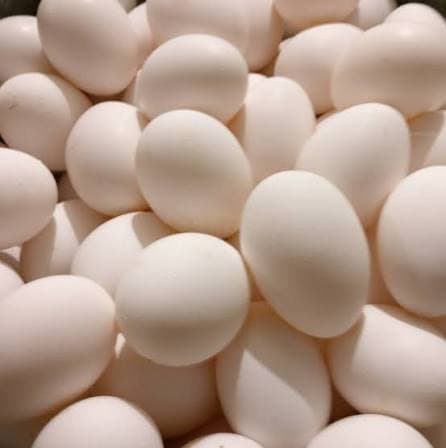
Islamabad: In the meeting of the National Assembly's Standing Committee on National Food Security, the poultry industry has revealed that Pakistani eggs are included in the negative list of some Gulf countries including Qatar, Kuwait and Oman, due to which exports are affected.
The committee meeting held under the chairmanship of MNA Syed Hussain Tariq, briefed by representatives of the poultry industry regarding negative propaganda on chicken and eggs in social media. They said that the negative propaganda badly affects the market, adding that legislation is mandatory for controlling such social media content. Representatives of poultry exporters said that Pakistani poultry exports face a five percent duty in the UAE, compared with three percent on Indian poultry exports.
They said that for increasing Pakistani poultry exports, effective government support and incentives are necessary. They urged the government to play its role in opening the Qatari market to Pakistani poultry products. The exporters further said poultry products were on the negative list for exports, preventing the sector from receiving benefits and incentives available to other export-oriented industries.
They proposed the establishment of special zones for poultry and agricultural exports in Pakistan. They said that with adequate government support and incentives, the country could export 1,000 containers of poultry products annually.
Secretary of the Ministry of National Food Security and Research (MNFS&R) Amir Ali Ahmed told the committee that foot and mouth disease (FMD) in the livestock sector is a major challenge in Pakistani meat exports; therefore, concrete measures are mandatory to curb the disease. “To control FMD in the livestock sector, we need to take measures as per international standards”, he said.
The chairman said that the meeting was convened following the directives of the Prime Minister to deliberate on increasing livestock, cattle and poultry production in the country.
The secretary MNFS&R said that the country’s livestock sector contributes 60 percent to agriculture and around 15 percent of Gross Domestic Product (GDP). Exports from FMD-affected areas affect price and competitiveness, he said, adding that due to FMD, meat has to be exported in boneless form, which increases its export costs.