
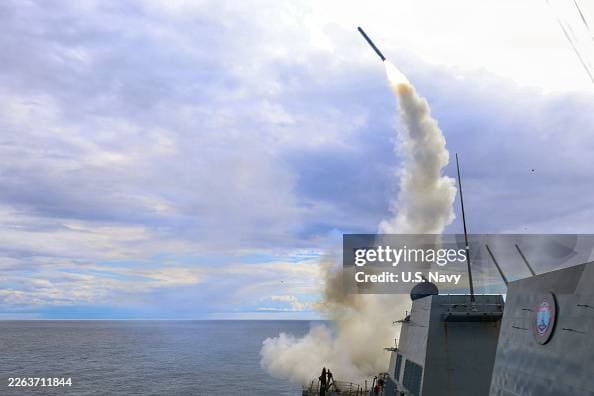
Dubai: A month long military lull shattered over the weekend as direct strikes between US and Iranian forces reignited active hostilities in the Persian Gulf. United States Central Command confirmed that the US forces launched precise air strikes targeting two Iranian rocket launchers on Larak Island near Bandar Abbas. Washington stated the operation was initiated after observing Islamic Revolutionary Guard Corps (IRGC) personnel preparing to launch naval mines into the strategic Strait of Hormuz. Iranian media reported that three people were killed in the bombardment, including two members of the IRGC Navy.
Tehran responded overnight by launching a series of missiles targeting two US air bases in Jordan. While Iranian officials characterised the exchange as a limited confrontation, senior Tehran sources warned that further American aggression would meet a harsh response. President Donald Trump later confirmed that US air defences intercepted the incoming missiles, warning on television that Washington intended to respond forcefully.
However, speaking from the Oval Office, President Trump clarified that the action did not signify a return to full scale war, asserting that Iran’s conventional military capabilities were largely degraded and ruling out the need for nuclear measures.
The military escalation comes amid an aggressive campaign of economic pressure, with Washington enacting secondary sanctions against third country entities trading in Iranian petroleum. USTreasury Secretary Scott Bessent noted that the escalating sanctions were devastating Iran's economy, suggesting Tehran was lashing out kinetically due to severe financial strain.
Meanwhile, controversy arose online after President Trump posted artificial intelligence generated videos depicting Kharg Island's oil terminal being destroyed a claim Tehran dismissed as laughable, though Vice President JD Vance defended the post as a symbolic warning. Despite the renewed strikes and the continued blockade of the Strait of Hormuz, which handles twenty per cent of global oil shipments diplomatic avenues remain under discussion.
Iranian President Masoud Pezeshkian, speaking to Indian Prime Minister Narendra Modi on the sidelines of a regional security summit in Kyrgyzstan, reiterated that Tehran still favoured a negotiated resolution, emphasizing that prolonged conflict benefited no nation. However, with peace talks stalled and military assets engaged across multiple fronts, the security situation across the Gulf remains highly volatile.