

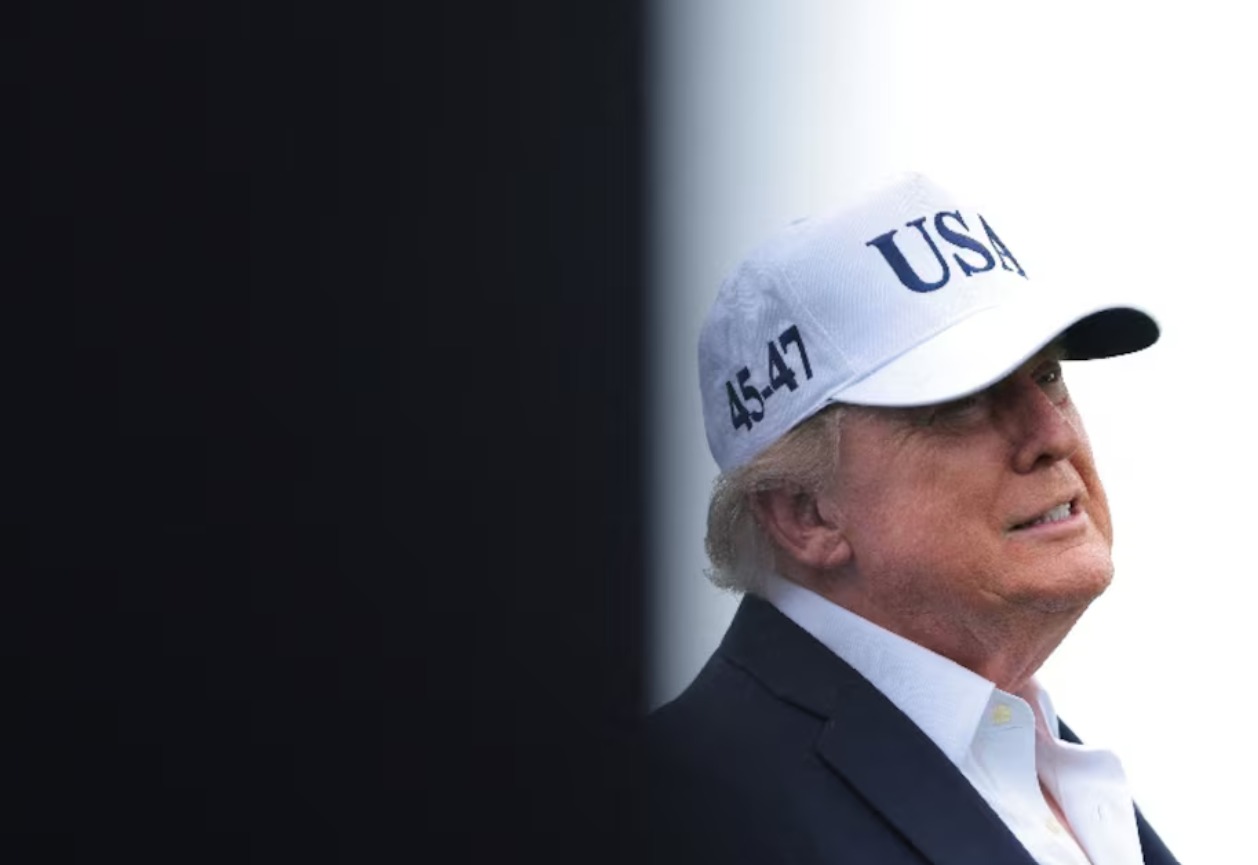
Dublin: President Donald Trump has suggested the United States (US) could remain in Iran and “keep the oil” if Washington decides against withdrawing after the war, drawing a parallel with a US arrangement involving Venezuela.
Speaking during a visit to Ireland on Sunday, Trump said the US would eventually leave Iran unless it chose to remain and benefit from the country’s oil resources. He compared the possibility with a deal involving Venezuela announced by his administration in August.
“We’ll ultimately get out of Iran, unless we decide to stay and keep the oil like Venezuela,” Trump said.
Trump did not provide details of what remaining in Iran or retaining its oil would mean, making the comments a suggestion rather than an announced US policy.
His remarks came as the war continues to disrupt energy supplies across the Middle East. Oil prices have risen above USD 100 a barrel, while attacks have damaged Saudi Arabia’s major East West oil pipeline and disrupted shipping around the Strait of Hormuz.
The Strait of Hormuz is a narrow waterway between Iran and Oman through which a significant share of the world’s oil trade normally passes. Continued disruption there has forced some exporters to seek alternative routes, increasing pressure on global fuel supplies.
Trump also said he still expected the war with Iran to end this year, potentially after the US midterm elections in November. He predicted that US gasoline prices would fall sharply once the conflict ended.
At the same time, diplomatic efforts to stabilise shipping through the Strait of Hormuz have run into difficulties. A meeting involving Iran and Gulf Arab states in Oman was postponed after the countries failed to reach sufficient agreement on the terms.
The latest developments come as Washington faces a difficult balance between ending the conflict, protecting regional allies and limiting the economic impact of disrupted energy supplies.
Trump’s comments therefore introduce a striking possibility: the US could eventually seek to end its military involvement in Iran while maintaining an economic interest in the country’s oil. Whether that becomes part of any eventual settlement remains unclear.