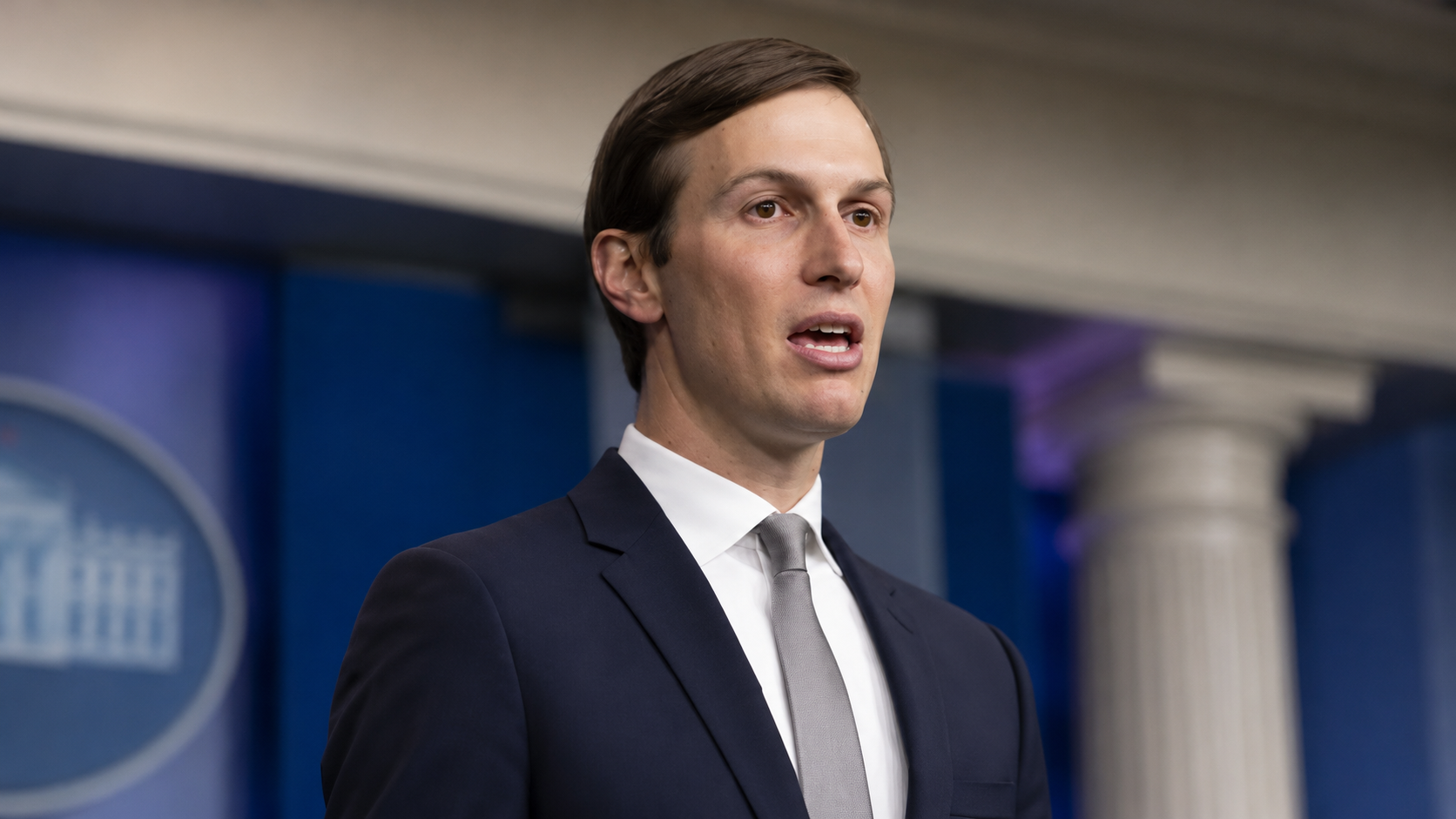
Washington: US envoy Jared Kushner has confirmed holding several meetings with Iranian representatives as part of Washington's efforts to address the conflict with Tehran, while maintaining that President Donald Trump continues to consider military action alongside diplomatic negotiations.
Speaking to Mathias Döpfner on the MD Meets podcast, Kushner said the US administration remained focused on Iran and was examining different approaches to the conflict.
Asked whether Washington could launch further military operations against Tehran, Kushner replied: “President Trump always keeps all his options on the table.”
The remarks indicate that the White House is maintaining the possibility of military escalation despite continuing contacts with Iranian officials.
Kushner, who has been involved in diplomatic efforts under Vice President JD Vance, said Trump had assembled a team to address the conflict and was closely following developments.
Confirming his participation in discussions with Tehran, Kushner said: “We met with the Iranians a couple times.” He did not disclose when the meetings took place, who represented Iran or whether the discussions had produced any agreement.
The comments come as Washington and Tehran remain divided over the conditions required to end the conflict, which began on February 28, 2026, following US and Israeli military strikes against Iran.
The war has affected regional security, energy markets and commercial shipping, particularly around the Strait of Hormuz, a route for global oil supplies.
Diplomatic contacts continue despite differences
Kushner's confirmation follows earlier diplomatic exchanges between American and Iranian representatives, including discussions involving US envoy Steve Witkoff.
In September, US and Iranian officials held talks on the sidelines of the United Nations General Assembly, with Washington simultaneously warning Tehran of further military consequences if negotiations failed.
Trump presented negotiations as a possible route towards resolving the conflict but maintained pressure on Iran through threats of military action.
Iran, meanwhile, has insisted that any agreement must address its security concerns and the consequences of US and Israeli military operations.
The differences have complicated efforts to establish terms for a settlement, with both sides maintaining positions over security guarantees, sanctions and the conditions for ending hostilities.
Kushner's latest statements suggest that channels of communication remain available, although there is no confirmation that the discussions have narrowed those differences.
Kushner criticises Europe's response to Iran crisis
During the podcast, Kushner also questioned whether European governments were contributing sufficiently to Washington's approach towards Iran. “The Europeans ask a lot of America,” he said, expressing dissatisfaction with their response to the conflict.
His remarks reflect differences over the responsibilities of the United States and its European allies in addressing security challenges in the Middle East.
European governments have faced questions over their role in diplomatic efforts, regional security arrangements and measures to protect trade routes affected by the conflict.
However, Kushner did not identify which European countries he believed had failed to provide support or specify what additional measures Washington expected them to undertake.
The continued possibility of military action comes as the Trump administration weighs the prospects for negotiations against demands from Tehran.
Earlier this month, Trump indicated that he did not consider an agreement with Iran necessary under the conditions being discussed, while Iranian officials continued to insist on their own terms for resolving the conflict.
The administration's approach has combined diplomatic engagement with warnings that further military operations remain possible.
For Iran, the uncertainty over Washington's intentions complicates negotiations, particularly as the two countries remain in disagreement over the conditions for de-escalation.
The conflict has also raised concerns among countries dependent on Gulf energy supplies and shipping routes, making its outcome significant beyond the immediate parties involved.
Kushner's confirmation of meetings with Iranian officials establishes that diplomatic contacts have taken place, but does not indicate whether an agreement is approaching.
With no timetable for further negotiations announced, the next stage will depend on whether Washington and Tehran can agree on terms while the possibility of renewed military action remains.