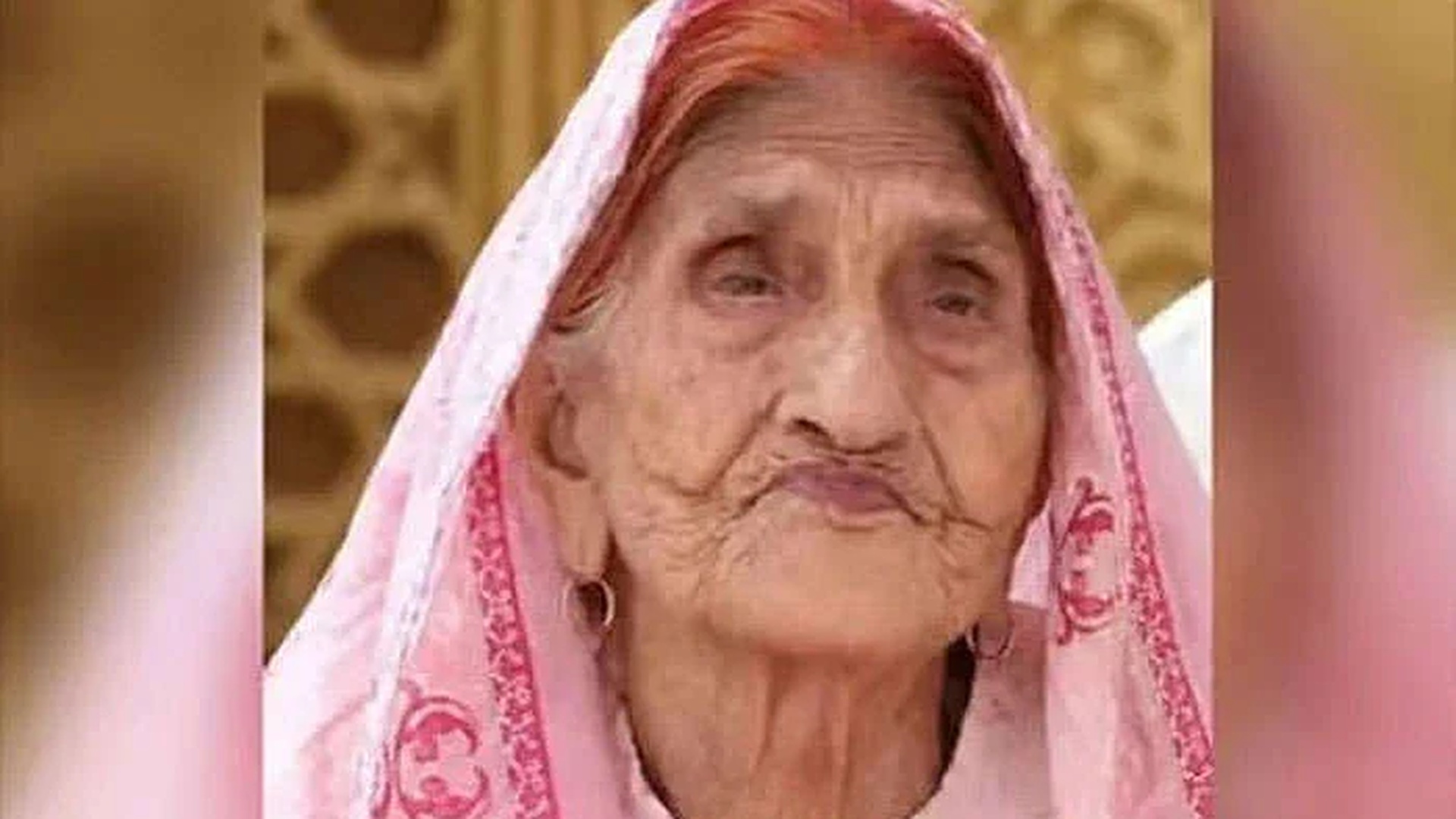
Jhudo: Jannat Khatoon Qaimkhani, believed to be Pakistan's last surviving woman receiving a pension from the British government, has died at the age of 107 in Jhudo, Sindh, bringing to an end a connection with the military pension system established during British colonial rule.
Khatoon was born in 1919 in Jhunjhunu district of Rajasthan, in what was then British India, and later settled in Jhudo, a town in Sindh's Mirpurkhas district.
Her husband, Abdul Shakoor Qaimkhani, served as a sepoy in the 17th Poona Horse Regiment, also identified in some reports as the Punjab Horse Regiment, during British rule.
Following his death while in service, his military pension was transferred to his widow, who continued receiving payments for decades. Khatoon's funeral prayers were held on Monday, November 23, at the central Eidgah in Jhudo, where family members, relatives and residents gathered to pay their respects.
She was the mother of Umar Draz Qaimkhani, a former vice chairman of the Jhudo Town Committee.
A pension linked to British colonial rule
Khatoon's circumstances reflected a pension arrangement originating from the British Indian Army, which recruited soldiers from across the subcontinent before Pakistan and India gained independence in 1947.
Under military pension arrangements, eligible widows of deceased servicemen could receive payments based on their husbands' service. Khatoon's pension reportedly continued for decades after independence, making her one of the remaining beneficiaries of arrangements dating back to the colonial period.
Her life spanned the final decades of British rule, the partition of the subcontinent and nearly eight decades of Pakistan's independence.
Born 28 years before Pakistan's creation, she belonged to a generation that witnessed the political and administrative transition from British India to two independent countries.
The continued payment of her husband's pension also illustrates how financial obligations linked to military service could remain in effect long after the institutions that originally established them had changed.
Local reports describe Khatoon as the last surviving woman in Pakistan to receive a British government pension linked to her husband's military service.
However, that status has not been independently confirmed through records from the British government or the relevant pension authorities.
The amount of her pension, the institution responsible for administering the payments and the arrangements under which they continued have also not been established through official documentation.
Some reports have suggested that payments were processed through an international organisation, although no official explanation of that mechanism has been provided.
Her death has nevertheless drawn attention to the remaining personal and financial links between Pakistan and institutions established during British rule.
Khatoon's story reflects a period of South Asian history in which military service under the colonial administration continued to shape the lives of families long after independence.