

Sialkot: Pakistan’s export story with Europe is increasingly moving beyond how much the country sells to the EU towards what else it can sell, as Sialkot’s manufacturers explore opportunities in the bloc’s vast single market.
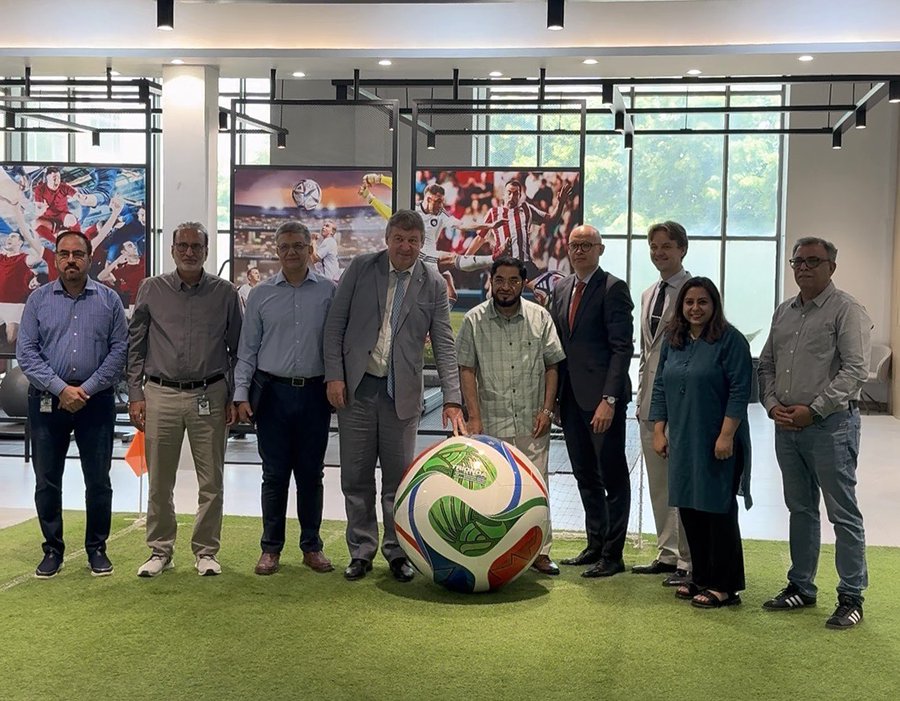
European Union Ambassador to Pakistan Raimundas Karoblis held discussions with Sialkot’s business community on Wednesday on expanding exports and making greater use of access to the EU market. The talks covered continuation of GSP+, business to business cooperation and new export opportunities.
The timing is significant. Pakistan exported goods worth about 8.7 billion Euro to the EU in 2025, up from around 4.5 billion Euro in 2013, according to figures cited in recent reporting. Almost 7 billion Euro of the 2025 exports entered under GSP+ preferences.
GSP+, which Pakistan has benefited from since 2014, provides preferential access to the European market, with more than 85 percent of Pakistan’s exports entering the EU duty and quota free under the arrangement. In return, beneficiary countries are required to ratify and effectively implement international conventions covering human and labour rights, environmental protection and good governance.
Sialkot is particularly important because its industrial base is more diverse than Pakistan’s traditional textile export profile. The city is internationally known for footballs, sports goods, surgical instruments, leather products and other manufactured items.
The EU ambassador’s visit also comes against a changing regulatory environment. The EU’s revised GSP framework is scheduled to apply from 1 January 2027 and will strengthen conditions relating to human rights, labour rights, climate and environmental commitments and good governance. Existing GSP+ beneficiaries will have to reapply under the new rules, although they will have a transition period to do so.
For Sialkot’s surgical instruments industry, compliance is already a practical market issue. During the ambassador’s visit to the Surgical Instruments Manufacturers Association of Pakistan, manufacturers discussed requirements under the EU Medical Device Regulation and challenges in meeting them.