Islamabad: Prime Minister Shehbaz Sharif on Monday directed the Ministry of Foreign Affairs to explore all available channels for increasing humanitarian assistance to Gaza after heavy rainfall flooded tens of thousands of tents sheltering displaced Palestinians.
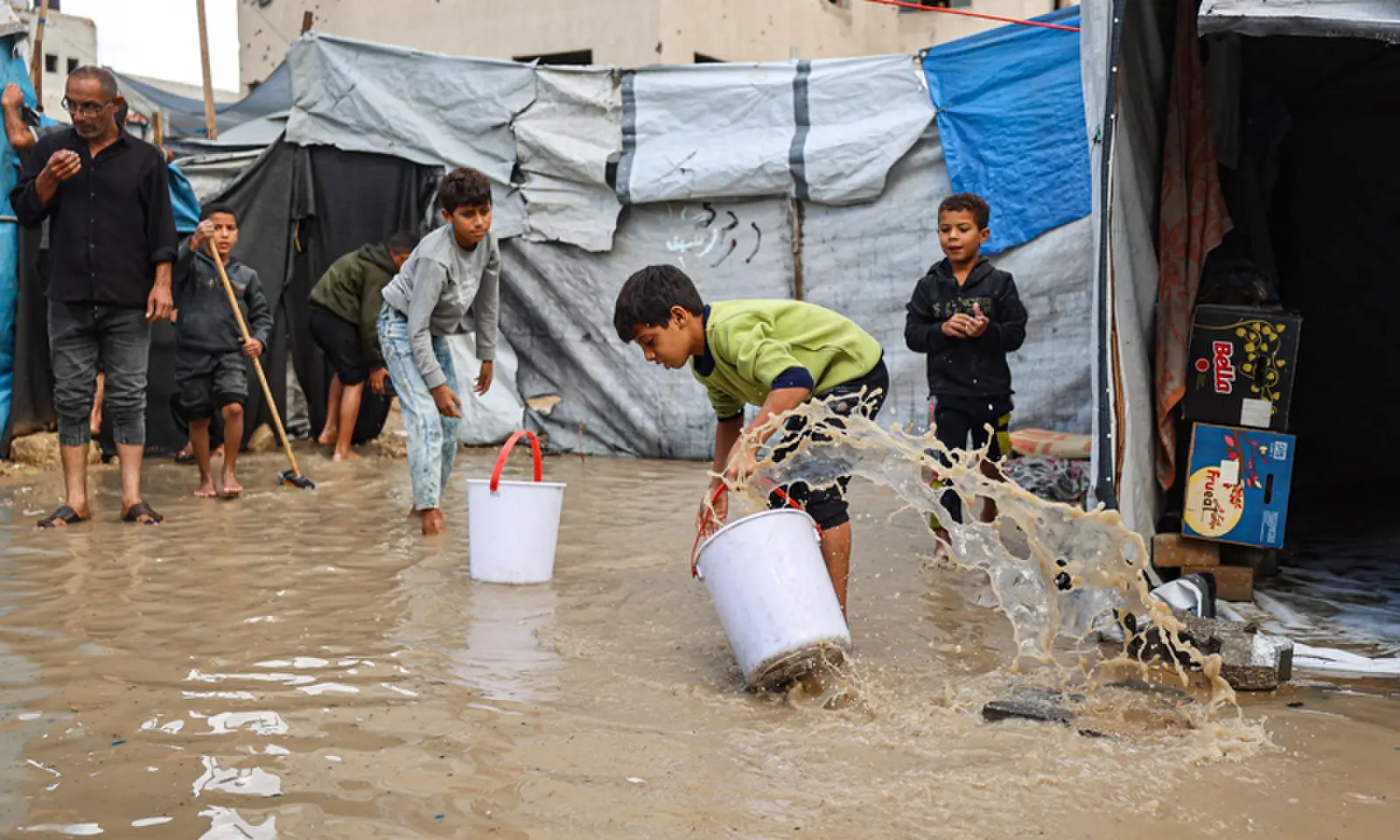
The directive followed reports from Gaza's Government Media Office that at least 70,000 tents had been flooded within 12 hours on Sunday, affecting families already displaced by the conflict.
Authorities reported injuries but no fatalities, while floodwaters damaged or swept away shelters across the territory. Gaza's Civil Defence Service said it had received approximately 1,500 emergency calls from displaced residents seeking assistance.
Municipal and civil defence officials said their response had been restricted by shortages of fuel and functioning equipment. They attributed much of the damage to emergency vehicles, including bulldozers and water-pumping machinery, to military operations by occupying forces in Palestine.
Pakistan calls for increased humanitarian assistance
In a statement posted on X, Prime Minister Shehbaz described images emerging from Gaza as distressing, particularly those showing children exposed to flooding, hunger and falling temperatures.
He said he had instructed the Foreign Ministry to pursue every possible avenue for accelerating relief assistance. The prime minister also criticised continuing restrictions on humanitarian supplies entering Gaza, describing them as violations of international law and the ceasefire arrangements.
He condemned the continued military actions of occupying forces in Palestine and called attention to the humanitarian consequences for civilians. The government has not yet announced the amount of additional assistance Pakistan intends to provide or the mechanism through which supplies would be delivered.
Flooding exposes gaps in shelter and emergency services
The latest rainfall has added to the difficulties facing displaced Palestinians, many of whom have been living in temporary shelters for extended periods. In Gaza City, residents attempted to prevent water from entering their tents by reinforcing their surroundings with sand and repairing damaged coverings.
Others moved children and household belongings from flooded areas. One resident, Olfat Magdoub, described how rainfall had repeatedly soaked her family's bedding, leaving them without adequate protection from the weather.
Another displaced resident, Rafiq Ghattas, said families lacked tents, waterproof coverings and access to assistance. Their accounts illustrate the difficulties facing communities without permanent housing, drainage infrastructure or sufficient emergency supplies.
Ceasefire and humanitarian access
Gaza's humanitarian situation has deteriorated following years of military operations, displacement and restrictions on the movement of essential supplies. According to Palestinian authorities, more than 74,000 people have been killed since the military offensive began following the Hamas led attacks of 7 October 2023.
A US brokered ceasefire agreement reached last year envisaged the eventual reconstruction of Gaza, but implementation has remained limited. Occupying forces continue to control more than 60 percent of the territory, according to the supplied report, while military operations and disputes over humanitarian access have continued.
More than two million Palestinians remain in Gaza, with many dependent on aid and living in shelters that offer limited protection from seasonal weather. The flooding has increased the need for waterproof tents, drainage equipment, fuel, bedding and other relief supplies.
Pakistan's latest directive places renewed attention on the delivery of humanitarian assistance, although the effectiveness of any additional support will depend on access arrangements and the capacity of relief agencies operating inside Gaza.