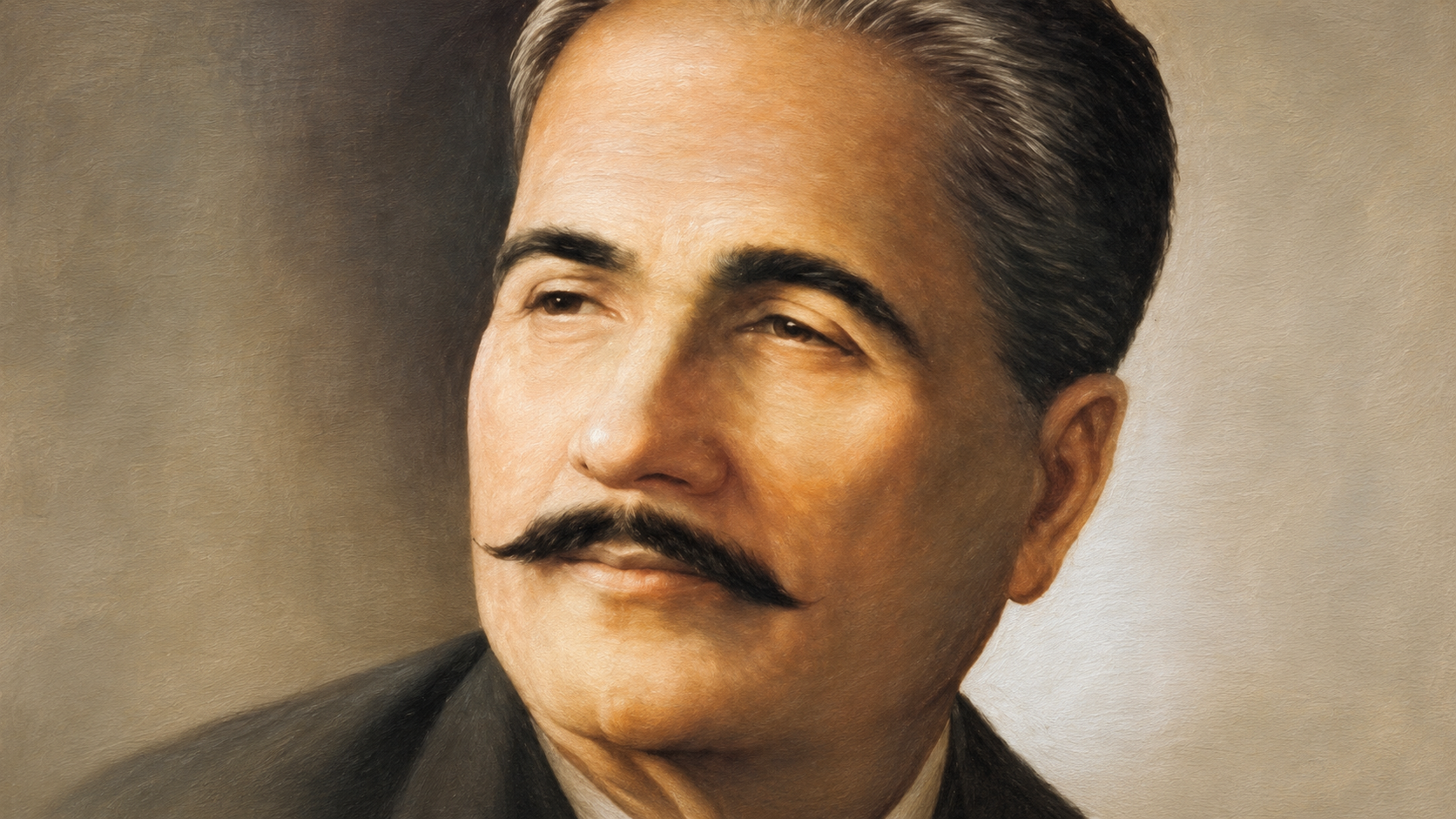
Islamabad: Pakistan is observing the 149th birth anniversary of national poet and philosopher Allama Muhammad Iqbal on Monday, remembering his contribution to Muslim political thought and the intellectual foundations of the Pakistan Movement.
Born on 9 November 1877 in Sialkot, Iqbal was more than a poet who inspired a generation through Urdu and Persian verse. His writings explored individual freedom, spiritual development, collective responsibility and the relationship between religion and modern society.
The government has declared a nationwide public holiday, with educational and literary events highlighting his contribution to Pakistan's history.
The philosophy of Khudi
Central to Iqbal's philosophy was Khudi, or selfhood, which encouraged individuals to develop their potential through knowledge, moral discipline and purposeful action.
His 1915 Persian work Asrar e Khudi explored self development, rejecting passivity and encouraging individuals to shape their own future.
For Iqbal, selfhood was not simply personal ambition. It connected individual development with responsibility towards society.
His poetry repeatedly challenged intellectual stagnation, dependence and the loss of collective confidence, particularly among Muslims living under colonial rule.
From philosophy to political vision
Iqbal's ideas also influenced the political direction of Muslims in British India.
In his presidential address to the All India Muslim League at Allahabad in 1930, he proposed bringing together Muslim majority regions of northwestern India into a political unit.
The address became an important reference point in the Pakistan Movement, although the precise constitutional form of the state he envisaged remains a subject of historical interpretation.
Iqbal died in Lahore on 21 April 1938, nine years before Pakistan gained independence.
His political vision contributed to the intellectual debate that preceded the country's creation.
Beyond poetry and national identity
Iqbal's philosophical work extended beyond Muslim political identity.
In The Reconstruction of Religious Thought in Islam, he examined how Islamic thought could respond to modern knowledge and changing social conditions.
He argued for intellectual inquiry, reinterpretation and a dynamic understanding of religious thought.
Scholars have also questioned whether Pakistan's public remembrance of Iqbal adequately reflects the complexity of his ideas.
His legacy therefore extends beyond national celebrations and the familiar verses recited in schools.
As Pakistan marks Iqbal Day, his writings raise continuing questions about education, independent thinking, social justice and the responsibilities of citizens.
His message of selfhood remains an invitation to examine how individuals and societies can turn intellectual and moral aspirations into action.