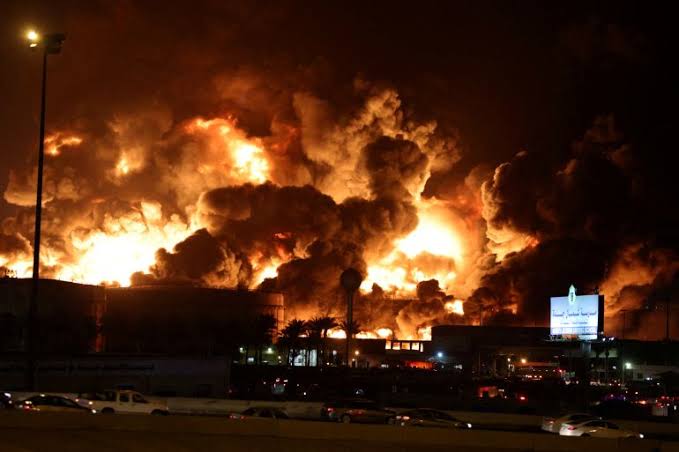
Sanaa: On Tuesday, October 13, Saudi led coalition air strikes hit an oil storage facility near Yemen's capital, Sanaa, according to Houthi affiliated media, prompting threats of retaliation against Saudi Arabia's energy infrastructure and airports.
The strikes reportedly targeted the Yemen Oil Company's al Sabah central station in the Houthi controlled capital city.
Earlier, the Saudi led coalition issued an evacuation warning, urging civilians to leave the facility and the surrounding area ahead of a planned military operation.
The coalition identified the location on a map and said the warning was meant to protect civilians.
Explosions were later reported in Sanaa, with Houthi affiliated media attributing them to Saudi led air strikes. The extent of the damage and any casualties at the facility were not immediately known.
Houthi military spokesperson Yahya Saree warned that further attacks on Sanaa would prompt retaliation against targets in Riyadh, the Saudi capital.
The group identified Saudi Aramco's headquarters in Dammam, King Khalid International Airport in Riyadh, and an Aramco refinery in the capital as potential targets.
The Houthis also urged employees and civilians to avoid Saudi oil installations and airports, calling the facilities potential military targets.
The latest confrontation follows a series of Houthi missile and drone attacks on Saudi Arabia, including strikes on airports and other infrastructure.
A recent attack on Riyadh's King Khalid International Airport killed at least 13 people and left more than 300 injured, according to reports.
Saudi Arabia, which supports Yemen's internationally recognised government, intensified its military operations against Houthi positions as fighting spreads across the country.
The renewed confrontation comes amid wider regional instability involving Iran and the United States, raising concerns about energy infrastructure security and international shipping routes.
Yemen's strategic position near the Bab el Mandeb Strait makes the conflict particularly significant for global trade, as the waterway connects the Red Sea to the Gulf of Aden.