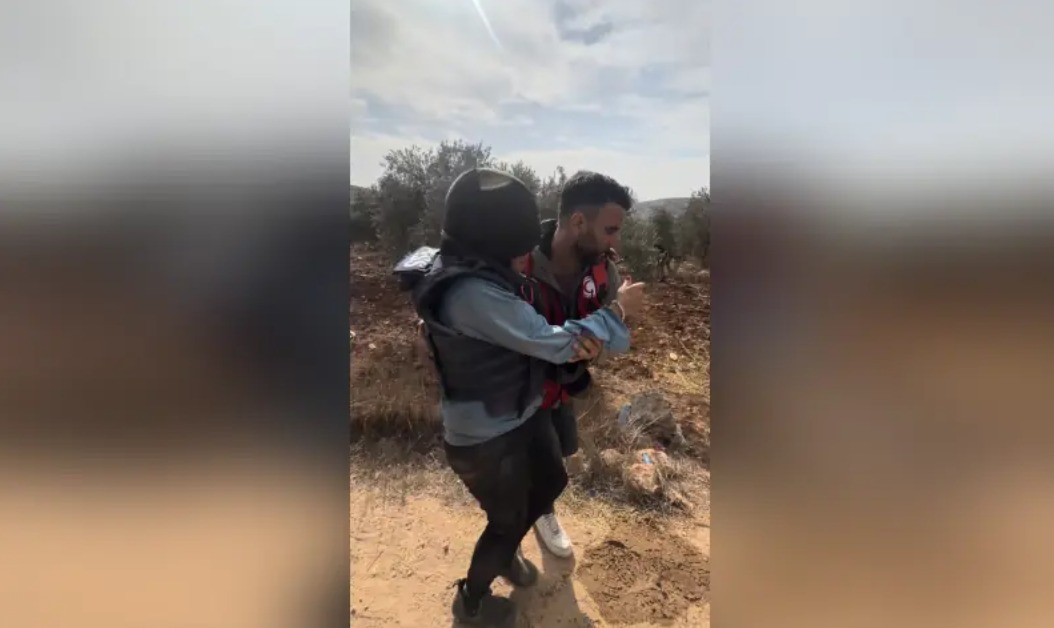
Ramallah: Illegal Israeli squatters beat American photojournalist Heidi Levine on October 16 while she was covering violence against Palestinian olive farmers in the occupied West Bank, leaving her with injuries requiring hospital treatment.

Levine, who was working for The Washington Post, said more than 50 masked squatters carrying sticks attacked her near the villages of Abu Falah and Turmus Ayya.
Speaking from her hospital bed in Ramallah, she said she kept her face towards the ground as the attackers repeatedly kicked her. She was wearing a helmet and protective vest, which the newspaper said was clearly marked “Press” on the front and back.
AFP photographs showed injuries to her leg and hand. The agency did not witness the assault itself, but its journalist saw Palestinian medics treating someone on the ground and Israeli soldiers pushing away journalists attempting to approach.
Palestinian farmer Mukhllis Zuhdi said the squatters attacked people gathering olives on their own land, beating them and throwing stones.
The Foreign Press Association said Levine’s passport, phone, wallet and equipment were stolen. It described the assault as part of a continuing pattern of attacks against journalists and Palestinian civilians, saying the occupation's authorities had ignored repeated demands for action.
Reporters Without Borders condemned the attack and called for the perpetrators to be prosecuted, warning that impunity enabled settler violence.
The occupation's police said they had opened an investigation. The military said troops and border police were deployed following reports of violence and that the circumstances of the journalist’s injuries would be examined.
The US embassy acknowledged reports of the attack but declined further comment, citing privacy laws.
The assault came 10 days after the squatters beat AFP photographer Jaafar Ashtiyeh while he covered the olive harvest. He also required hospital treatment.
Palestinian farmers face recurring attacks and the seizure of olive groves in the occupied territory, where the settlements are considered illegal under international law.