


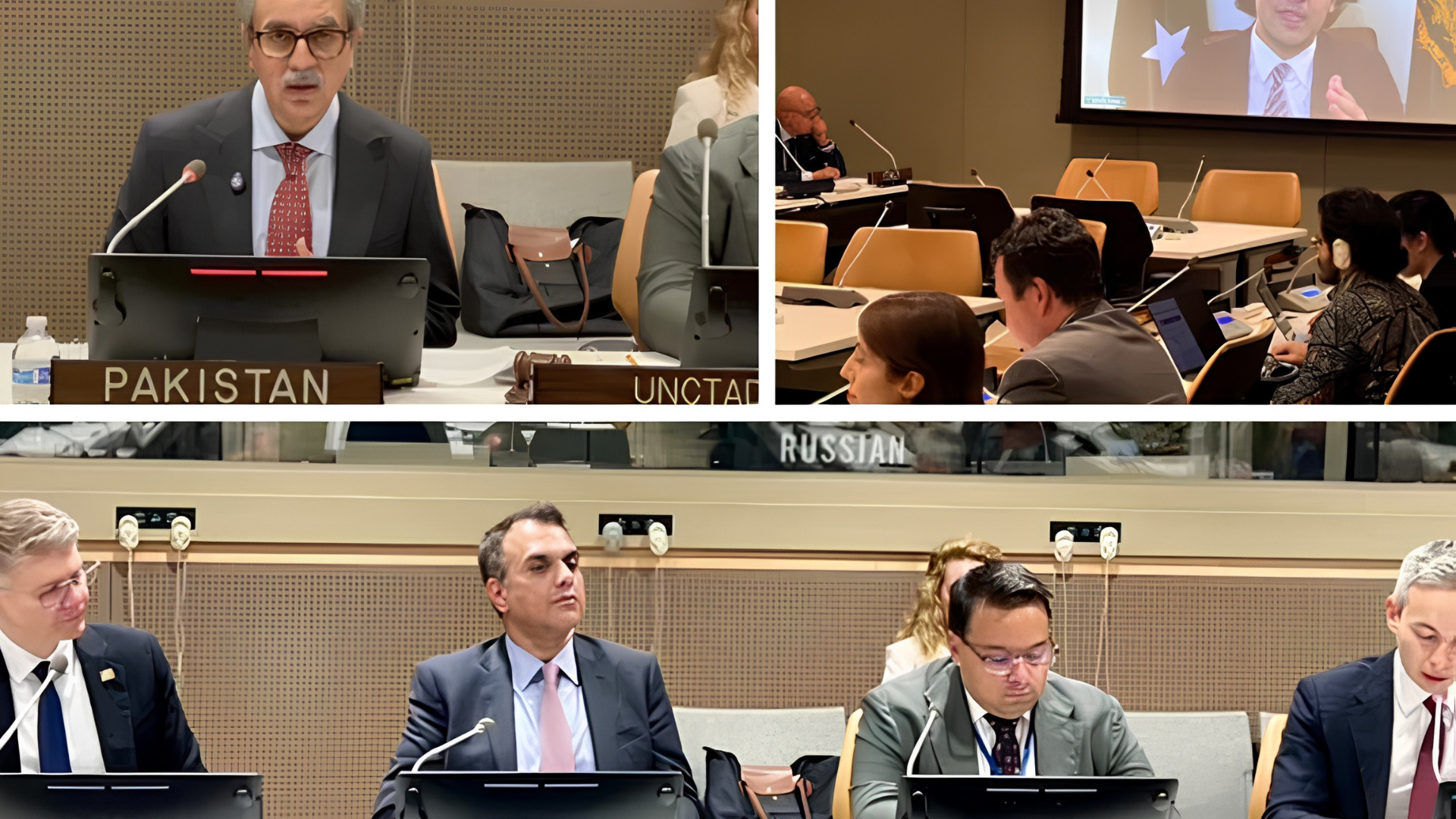
New York: Pakistan has called for an inclusive and responsible approach to digital financial innovation, urging developing countries to help shape emerging rules governing digital assets, blockchain, tokenisation and distributed ledger technologies.
The Permanent Mission of Pakistan to the United Nations, in collaboration with UNDP, UNCTAD and the Office of the Secretary-General's Envoy on Technology, hosted a briefing at UN Headquarters on the opportunities and policy challenges linked to these technologies.
Pakistan's Permanent Representative to the UN, Ambassador Asim Iftikhar Ahmad, said digital assets and blockchain were increasingly becoming part of discussions on finance, investment, payments and digital transformation.
He said developing countries faced gaps in digital infrastructure, technical expertise, institutional capacity and access to finance, and should not remain merely consumers of emerging technologies.
Ambassador Ahmad called for international cooperation, capacity-building, knowledge-sharing and technical assistance, saying the United Nations could help member states respond to the rapidly changing digital landscape.
Minister of State and Chairman of the Pakistan Virtual Assets Regulatory Authority (PVARA), Bilal Bin Saqib, delivered the keynote address and outlined Pakistan's efforts to develop a regulatory framework for digital assets.
Saqib said digital financial innovation could reduce the cost and increase the speed of cross-border remittances, expand financial inclusion and mobilise capital for development.
He stressed that digital assets and related technologies should operate within effective regulatory frameworks, arguing that regulation and innovation could advance together.
He highlighted Pakistan's establishment of PVARA, legislative and licensing measures, and a regulatory sandbox for digital-asset innovation.
Saqib identified faster and more affordable remittances, new investment mechanisms through tokenisation, and greater transparency and traceability of financial flows as key areas where digital financial infrastructure could support development.
He also pointed to potential blockchain applications in development finance, subsidies, aid and climate finance, while stressing safeguards against illicit finance, financial losses and other risks.
Senior representatives from UNDP, UNCTAD and the Office of the Secretary-General's Envoy on Technology also addressed the briefing, focusing on digital technologies, development, technology governance and capacity-building.
A panel discussion examined practical applications and policy challenges, including regulation, interoperability, cybersecurity, institutional capacity and equitable access.
In his concluding remarks, Ambassador Ahmad said developing countries needed the capacity not only to adopt emerging technologies but also to understand, shape and benefit from them. He also highlighted the UN's role in supporting experience-sharing, capacity-building and technical cooperation on digital financial innovation.