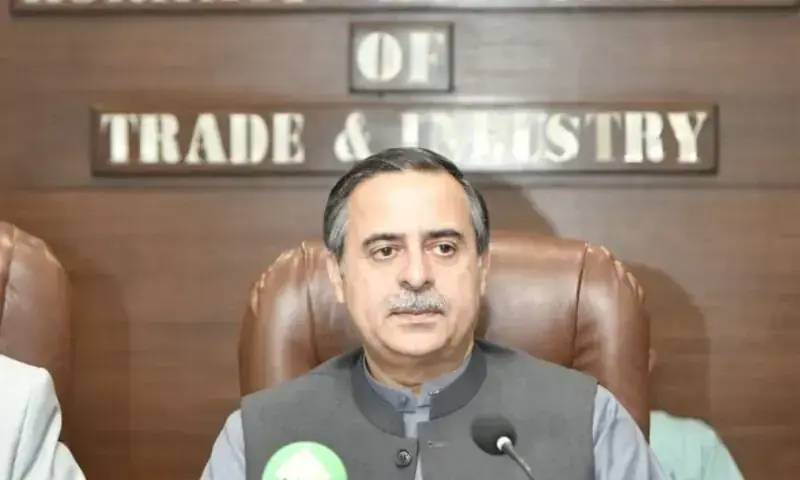
Islamabad: Federal Minister for Maritime Affairs Muhammad Junaid Anwar Chaudhry has proposed a five per cent value addition target for Pakistan's seafood exporters, as the government seeks to increase export earnings by encouraging businesses to process fish and other marine products before selling them abroad.
Chairing a meeting in Islamabad on Thursday, November 26, the minister said only three of the country's 578 seafood exporters currently dealt in processed products, highlighting the industry's dependence on exports requiring little processing.
He urged businesses to invest in seafood processing and packaging, beginning with operations that could be expanded as demand increased.
The proposal is intended to help exporters access markets where processed and packaged seafood commands higher prices than products sold without further preparation.
Government forms committee to promote seafood processing
The minister announced the formation of a committee headed by Fisheries Development Commissioner Dr Muhammad Hafeez-ur-Rehman to examine ways of increasing value addition in the fisheries sector.
The committee will consult provincial fisheries departments, exporters and industry representatives to identify investment opportunities and recommend measures to increase processed seafood sales.
Officials from the ministries of Maritime Affairs and National Food Security attended the meeting, while provincial fisheries representatives participated through video link.
Chaudhry also proposed a workshop involving government departments and exporters to identify obstacles preventing businesses from entering the processing market.
The discussions covered investment in processing facilities, shrimp hatcheries and aquaculture infrastructure as part of efforts to expand seafood production and exports.
Pakistan seeks more earnings from seafood exports
Pakistan exported seafood worth approximately USD 482 million during the financial year ending June 2026, compared with USD 465 million the previous year, according to Pakistan Bureau of Statistics figures.
China, Thailand, Malaysia, Saudi Arabia and the United Arab Emirates are among the markets for Pakistani seafood.
Much of the sector's export earnings come from products such as frozen fish, squid and cuttlefish, while processing remains concentrated among a limited number of exporters.
The government's proposal reflects an effort to increase revenue from existing marine resources by selling products that undergo additional preparation before export.
Value addition can include cleaning, filleting, cooking, freezing, packaging and preparing seafood for retail or food service markets. Such activities can generate employment in processing facilities and create opportunities for businesses involved in packaging, refrigeration and transport.
However, expanding the industry requires investment in equipment, cold storage, quality testing and compliance with food safety requirements in importing countries.
What would the five per cent target mean?
Based on Pakistan's seafood exports of USD 482 million in the previous financial year, a five per cent share would represent approximately USD 24 million in processed seafood exports annually. However, the government has not specified whether the proposed target will be mandatory or how compliance would be monitored.
No deadline has been announced for achieving the five per cent share, and the ministry has not disclosed financial incentives or funding arrangements to help exporters establish processing facilities.
The initiative comes amid efforts to develop Pakistan's fisheries and aquaculture industries, including shrimp farming and seafood production facilities. For exporters, the commercial benefits will depend on access to investment, processing costs and demand in overseas markets.
The committee's recommendations are expected to help determine whether the proposal can be translated into investment and increased foreign exchange earnings.
For now, the five per cent target remains a government proposal rather than a requirement imposed on exporters.