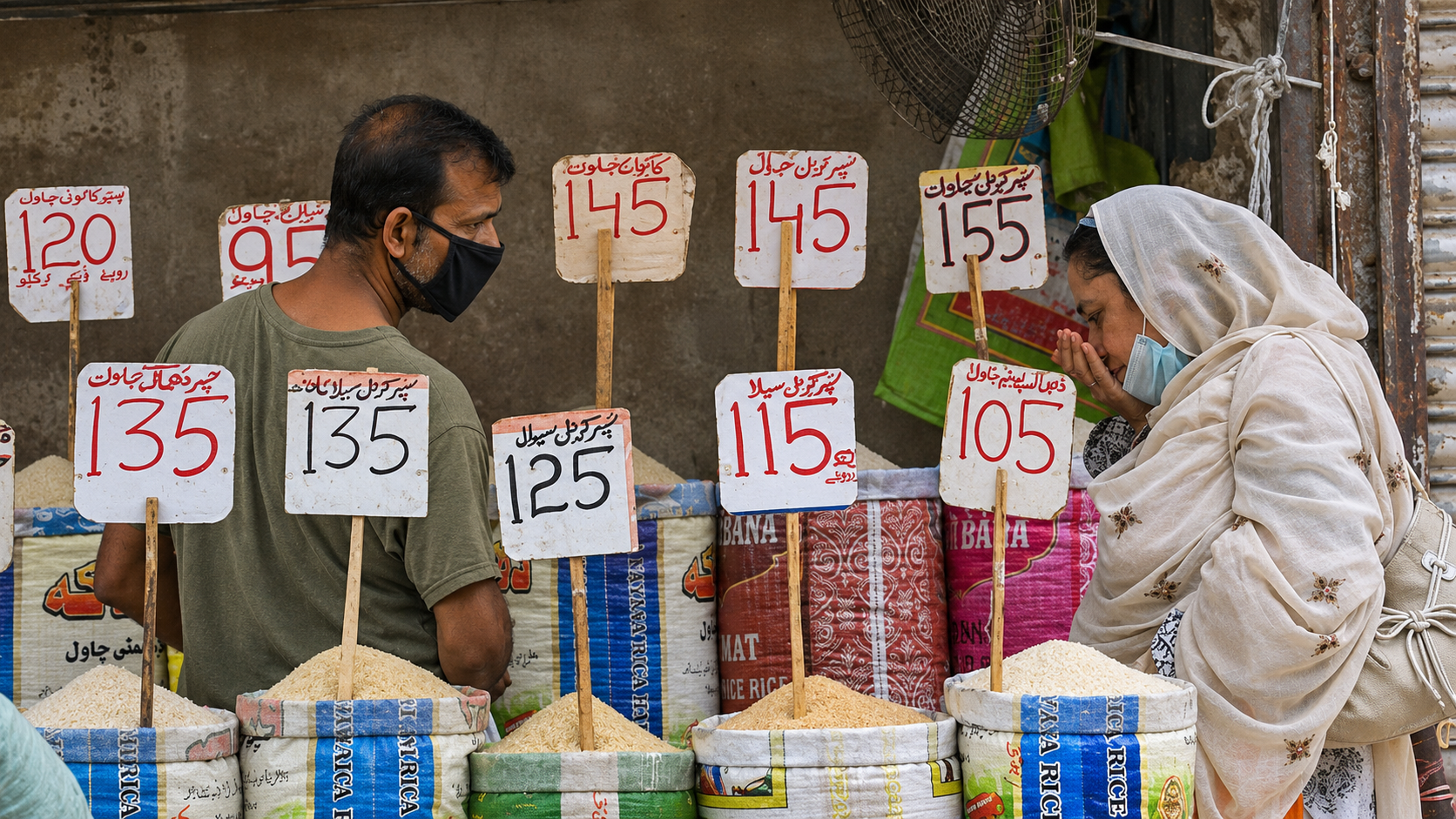
Lahore: Pakistan's rice exports increased to 1.351 million tonnes during the first four months of the 2026 to 27 financial year, compared with 998,000 tonnes in the corresponding period last year, according to trade figures reported on Monday.
The increase of 353,000 tonnes came despite disruptions to shipping routes through the Red Sea, Strait of Hormuz and other parts of the Middle East, where conflict has raised freight charges and marine insurance costs.
Basmati rice accounted for much of the growth, with shipments reaching 301,000 tonnes between July and October, an increase of 116,000 tonnes, or approximately 62 per cent, from the same period a year earlier.
Exports of non-basmati rice also increased, reaching 1.049 million tonnes, according to the figures. Shipments in this category rose by 140,000 tonnes, or approximately 16 per cent, compared with the previous year.
The increase in both categories indicates that Pakistani exporters were able to expand their overseas sales despite competition from other rice producing countries and higher transportation costs.
Trade analysts attributed the growth in basmati exports to production and supply conditions in Pakistan, including stocks carried over from the previous season, an increase in the area under cultivation and higher yields.
Double cropping in some areas and weather conditions were also cited as factors contributing to production.
Government support through the Duty Drawback of Local Taxes and Levies (DLTL) scheme, which was extended until September, provided another source of assistance to exporters facing international competition.
The scheme is intended to compensate exporters for certain taxes and levies incurred during production, reducing costs associated with selling goods abroad. Non basmati exporters, meanwhile, faced competition from India, Thailand, Vietnam, Cambodia and Myanmar.
India's export pricing and the availability of rice from other Asian producers have placed pressure on Pakistani suppliers seeking to retain buyers in international markets.
Despite those conditions, Pakistan recorded an increase in non basmati shipment volumes during the four month period. The country wise figures for October showed that the Philippines was Pakistan's largest rice buyer during the month, importing 87,478 tonnes.
Tanzania followed with purchases of 43,747 tonnes, while Kenya imported 33,078 tonnes. Other destinations included the United Arab Emirates, which purchased 25,305 tonnes, and the European Union, which received 21,200 tonnes.
Exports to Central Asian markets stood at 16,400 tonnes, while China imported 11,949 tonnes and Saudi Arabia purchased 7,655 tonnes. The Philippines has become a market for Pakistani rice, particularly non basmati varieties. During July to September 2026, Philippine purchases of Pakistani rice reached approximately 282,725 tonnes, according to Pakistan Customs data cited by Arab News.
The increase in shipments to the Philippines has helped Pakistani exporters expand their presence in Southeast Asia while maintaining trade with African and Middle Eastern markets.
Export earnings have also increased alongside shipment volumes.
According to provisional trade figures, Pakistan earned approximately USD 823.32 million from rice exports during July to October, compared with USD 581.17 million a year earlier, an increase of 41.67 per cent.
The increase in export value was greater than the rise in shipment volumes, suggesting that changes in export prices and the composition of rice sold contributed to the growth in earnings.
However, maritime disruptions continue to create uncertainty for exporters, particularly those supplying markets in the Gulf and destinations that depend on shipping routes affected by the regional conflict.
Higher freight and insurance charges can reduce exporters' margins even when overseas sales volumes increase.
The figures show that Pakistan's rice sector expanded its shipments during the first four months of FY 27, but maintaining that growth will depend on production costs, international prices, competition and access to export markets.