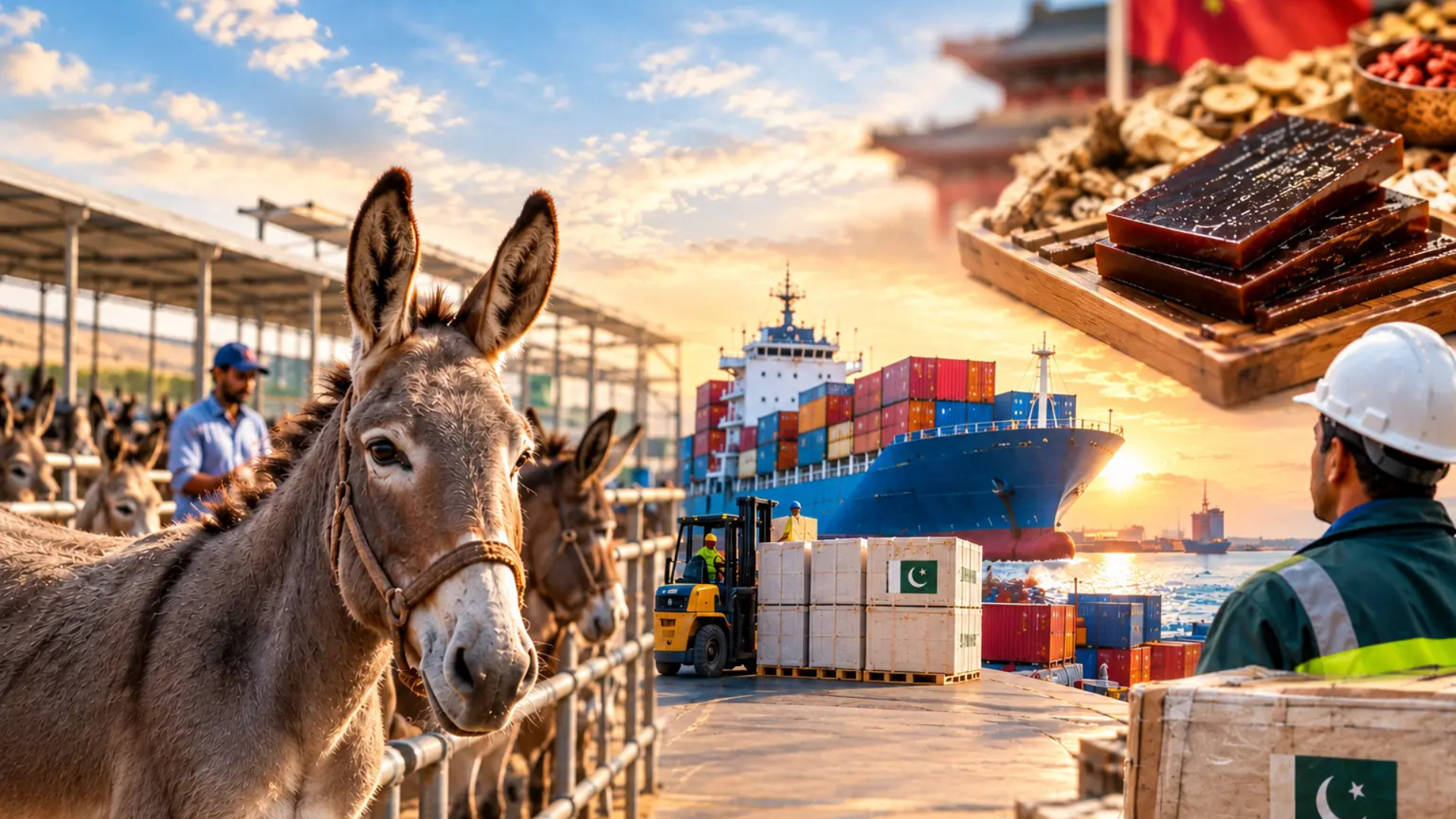
Islamabad: Pakistan is emerging as a new supplier of donkeys to China, with growing demand for donkey hides used in traditional Chinese medicine opening a niche export market, according to a Bloomberg report. Pakistan has an estimated donkey population of more than six million, while Chinese buyers are seeking overseas supplies as domestic numbers decline.
Donkey hides are used to produce ejiao, a collagen-rich gelatin made by boiling donkey skin and widely used in traditional Chinese medicine. China’s ejiao market was valued at about USD 7.8 billion in 2021, according to a 2023 US Congressional Research Service report, which estimated that between 2.3 million and 4.8 million donkeys are slaughtered worldwide each year for their hides.
China has increasingly looked to countries including Pakistan, Brazil and Australia to meet demand for donkey products. Pakistan has spent several years developing the regulatory framework and infrastructure needed to export donkey meat and hides to the Chinese market.
In October 2024, Pakistan and China signed a protocol setting out quarantine requirements for the export of donkey meat and hides during Chinese Prime Minister Li Qiang’s visit to Pakistan.
The government announced in April 2025 that commercial donkey meat exports to China could support trade, with plans for breeding and processing facilities in Gwadar. Chinese companies were allowed to establish farms, slaughterhouses and export facilities in Gwadar’s Export Processing Zone under the China-Pakistan Economic Corridor.
In May 2026, the Economic Coordination Committee approved the export of donkey meat from the Gwadar North Free Zone, subject to the destination country’s import requirements.
By July, Chinese entrepreneur Andy Liao had established a slaughterhouse in Gwadar through Hangeng Group and begun exports to China. The company plans to process up to 216,000 donkeys a year and increase its daily slaughter capacity to 800 within months.
Liao said the business could generate about USD 5 million a month in foreign-exchange earnings within six months, rising to USD 7 million within two years. Hangeng Group has invested around USD 50 million in Pakistan over six years and employs about 500 local workers alongside nine Chinese managers.
The company has also invested RMB5 million, about USD 740,000, in a digital traceability system to track animals from farmers to Chinese customers. It plans to expand into donkey breeding and laboratory facilities.
In July 2026, the prime ministers of Pakistan and China agreed on an annual export target of 200,000 donkeys, covering meat, bones and hides. The planned exports are estimated to generate between USD 375 million and USD 400 million in foreign exchange annually.