

London: Pakistan and the United Kingdom (UK) are looking to expand their economic relationship beyond established trade links, with both sides identifying technology, financial services and manufacturing as areas for further cooperation.
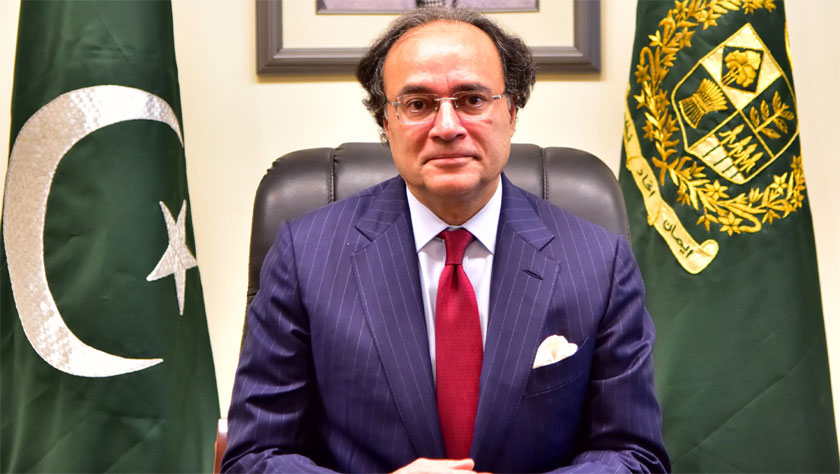
Finance Minister Muhammad Aurangzeb met UK Minister of State for Trade Anas Sarwar at the UK Department for Business and Trade in London on Thursday, where the two sides discussed ways to increase bilateral trade in both goods and services.
The ministers agreed to explore new business and trade opportunities in information technology, fintech, manufacturing and production. They also expressed a desire to secure tangible outcomes through the Pakistan UK Trade Dialogue Mechanism, scheduled to begin in December.
Pakistan’s government puts current bilateral trade at around USD 2.5 billion a year and says there is scope to increase trade in both goods and services.
The latest UK government trade data provides a broader picture. In the four quarters to the end of September 2025, total trade in goods and services between the UK and Pakistan stood at 5.6 billion. UK exports to Pakistan accounted for 3 billion pounds, while imports from Pakistan were 2.5 billion pounds. The figures represented a 13.5 percent increase in total trade compared with the previous 12 month period.
Investment is another part of the relationship. UK data shows that the stock of UK foreign direct investment in Pakistan stood at 1.3 billion at the end of 2024, while Pakistani investment stock in the UK was 69 million pound.
The focus on IT and fintech also builds on discussions already taking place between the two countries. In July, Aurangzeb and Pakistan’s newly appointed High Commissioner to the UK, Tipu Usman, discussed cooperation in banking, financial services, capital markets and digital finance, including blockchain based financial solutions and emerging instruments such as tokenisation.
The manufacturing focus comes as Pakistan seeks to broaden its export base. Prime Minister Shehbaz Sharif said this week that more sectors should be prepared for international markets, while directing authorities to improve product quality, standards and value addition.