
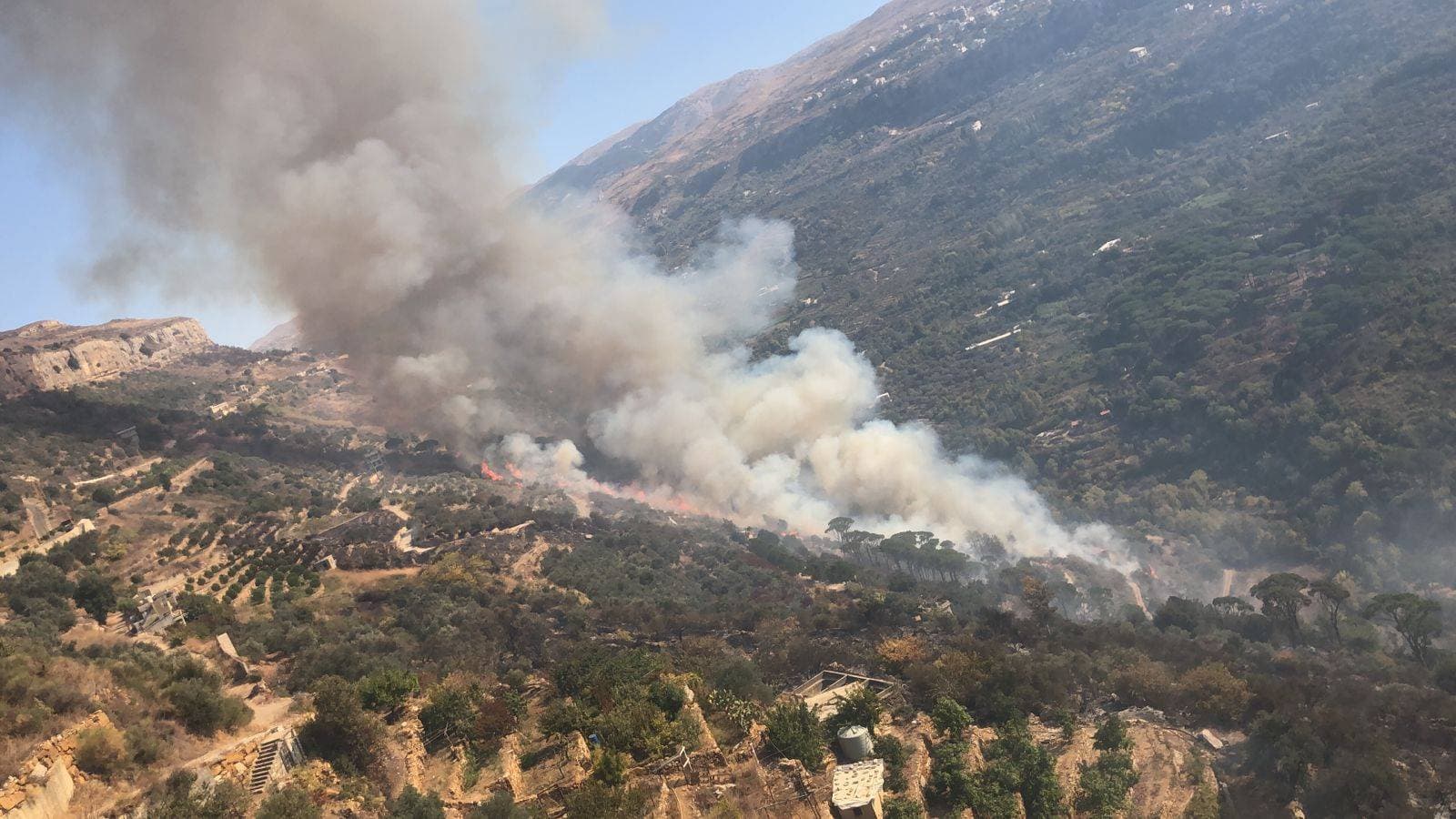
Beirut — Lebanese officials, environmental groups, and border residents have accused the Israeli military of enforcing a deliberate "scorched earth" strategy across southern Lebanon. Environmental Minister Tamara Elzein condemned the widespread destruction as "ecocide," pointing to satellite imagery and ground reports that reveal thousands of hectares of burnt farmland, uprooted olive groves, and destroyed nature reserves within Israel's self declared security zone.
Data from Lebanon's National Council for Scientific Research (CNRS) indicates that Israeli military operations have set roughly 160 square kilometres (16,000 hectares) of land ablaze since October 2023, with over half consisting of essential agricultural terrain. Local civil defence teams in the Nabatieh region report that blazes are routinely triggered by artillery, drones, incendiary white phosphorus shells, and cluster munitions. Despite a fragile ceasefire arrangement reached in June, destruction has persisted, with CNRS recording an additional 350 hectares burnt following the deal.
Residents in border villages such as Kfarshuba and Shaqra report severe economic and environmental devastation. Local authorities state that firefighters face critical delays in accessing active blazes, as safety clearance through ceasefire monitoring mechanisms is often granted only after fires have consumed entire areas. Beyond the immediate destruction of homes and crops, community members emphasize that while buildings can eventually be reconstructed, the widespread eradication of centuries-old olive trees and native forestry represents an irreplaceable long term ecological loss for southern Lebanon.