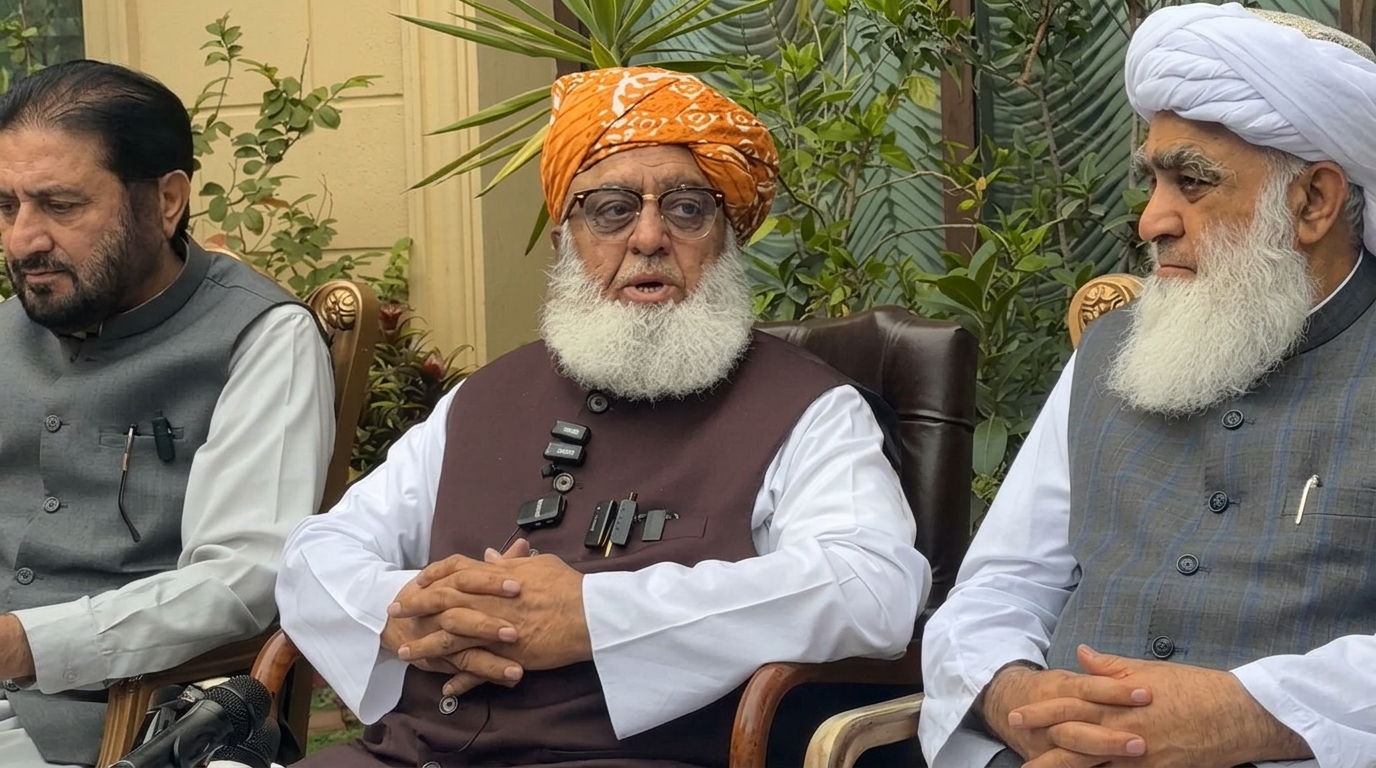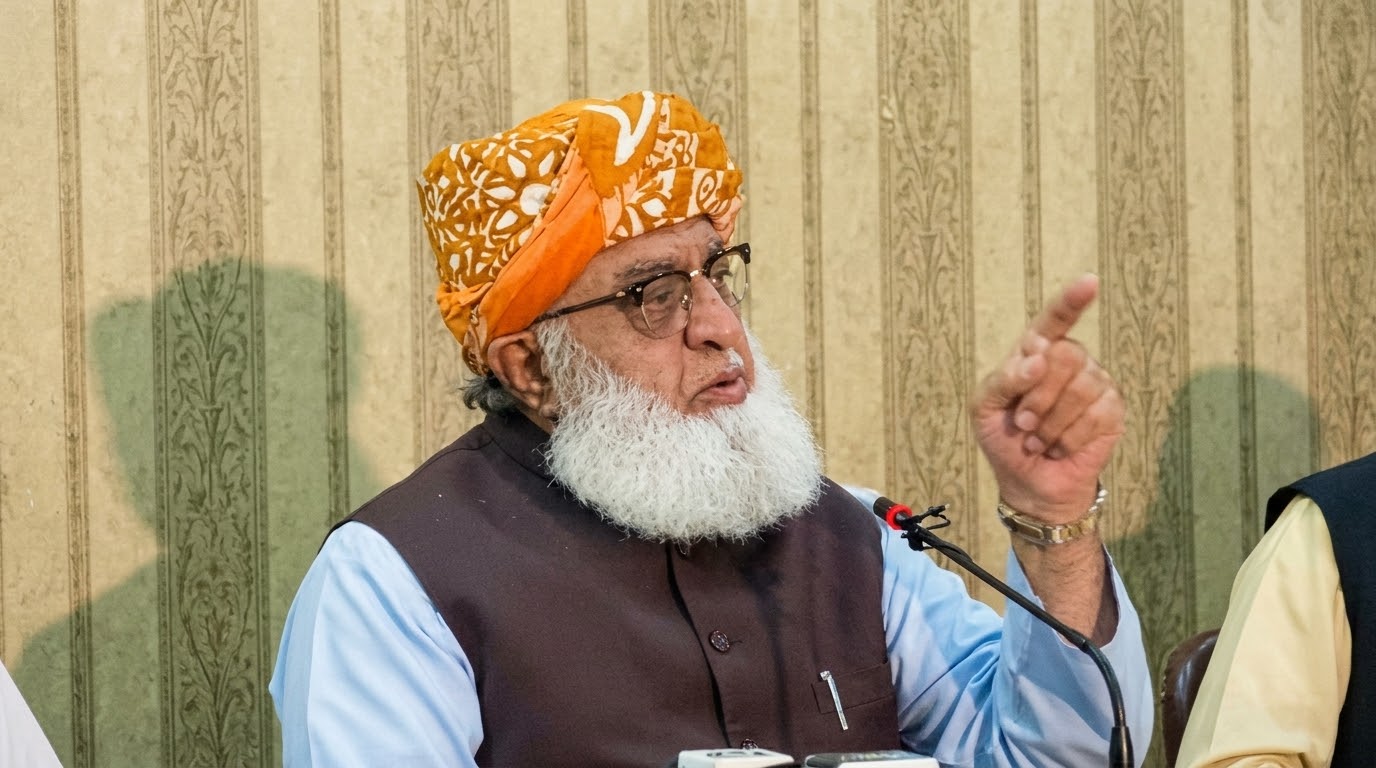
Lahore: Lahore Police on Thursday, November 26, denied arresting or placing Jamiat Ulema e Islam Fazl (JUI F) chief Maulana Fazlur Rehman under house arrest, telling the Lahore High Court that the politician was neither in police custody nor wanted in any case.
The response was submitted on behalf of Lahore Capital City Police Officer (CCPO) through government lawyer Farrukh Lodhi during the hearing of a petition seeking the JUI F chief's recovery.
Justice Ali Zia Bajwa heard the petition filed by Advocate Abrar Hussain, who had challenged the alleged confinement of Fazlur Rehman at his temporary residence in Lahore.
In its reply, the police maintained that no arrest had been made and that the JUI F leader had not been placed under house arrest.
The statement came a day after the high court directed the CCPO to explain the circumstances surrounding the reported restrictions on Fazlur Rehman's movement.
The petition was filed after police personnel were deployed outside Fazlur Rehman's residence in Lahore's Chuhng area on November 24, with shipping containers placed on roads leading to the property.
The JUI F leader had travelled to Lahore to attend an all-parties conference organised by the Lahore High Court Bar Association but was unable to reach the venue.
JUI F representatives alleged that the deployment amounted to house arrest without lawful authority, prompting Advocate Hussain to approach the high court.
Fazlur Rehman described the restrictions as a "state siege", while his party questioned why police had prevented him from participating in a political gathering. During Wednesday's hearing, Justice Bajwa warned that anyone found responsible for unlawfully detaining the JUI F chief would face consequences.
The court observed that authorities would have to provide legal justification if restrictions had been imposed on his liberty. The government lawyer had also questioned the petitioner's claims, pointing out that Advocate Hussain had been allowed to meet Fazlur Rehman.
Hussain maintained that permission to meet the politician had been granted only after repeated requests and did not establish that he was free to leave his residence.
Legal questions remain over police deployment
The police response introduces a dispute between the authorities' denial of detention and the JUI F's account of restrictions on its leader's movement. Reports indicate that police began removing barriers outside the residence on Tuesday evening, after the restrictions had prevented Fazlur Rehman from attending the conference.
The case concerns constitutional protections relating to personal liberty and freedom of movement. Articles 9 and 15 of Pakistan's Constitution protect personal liberty and movement, subject to restrictions permitted by law.
The central question is whether the police deployment and restrictions amounted to detention, even in the absence of a formal arrest order. The police have denied taking Fazlur Rehman into custody, but the information available does not establish whether the court has accepted that explanation or issued a ruling on the petition.
The proceedings come amid tensions between the JUI F and the government over restrictions on political activity and the party's criticism of government policies. The outcome of the case will depend on the court's assessment of the police report and the petitioner's allegations concerning the restrictions imposed on November 24.