

Peshawar: Deputy commissioners across Khyber Pakhtunkhwa (KP) have been empowered to order preventive arrests and detention under the Maintenance of Public Order (MPO) Ordinance, placing decisions affecting personal liberty at the district level.
Governor Faisal Karim Kundi approved the delegation under Section 3(1) of the West Pakistan Maintenance of Public Order Ordinance, 1960. According to reporting on the Home Department notification, a deputy commissioner will consider preventive action after receiving a case from the district police officer concerned.
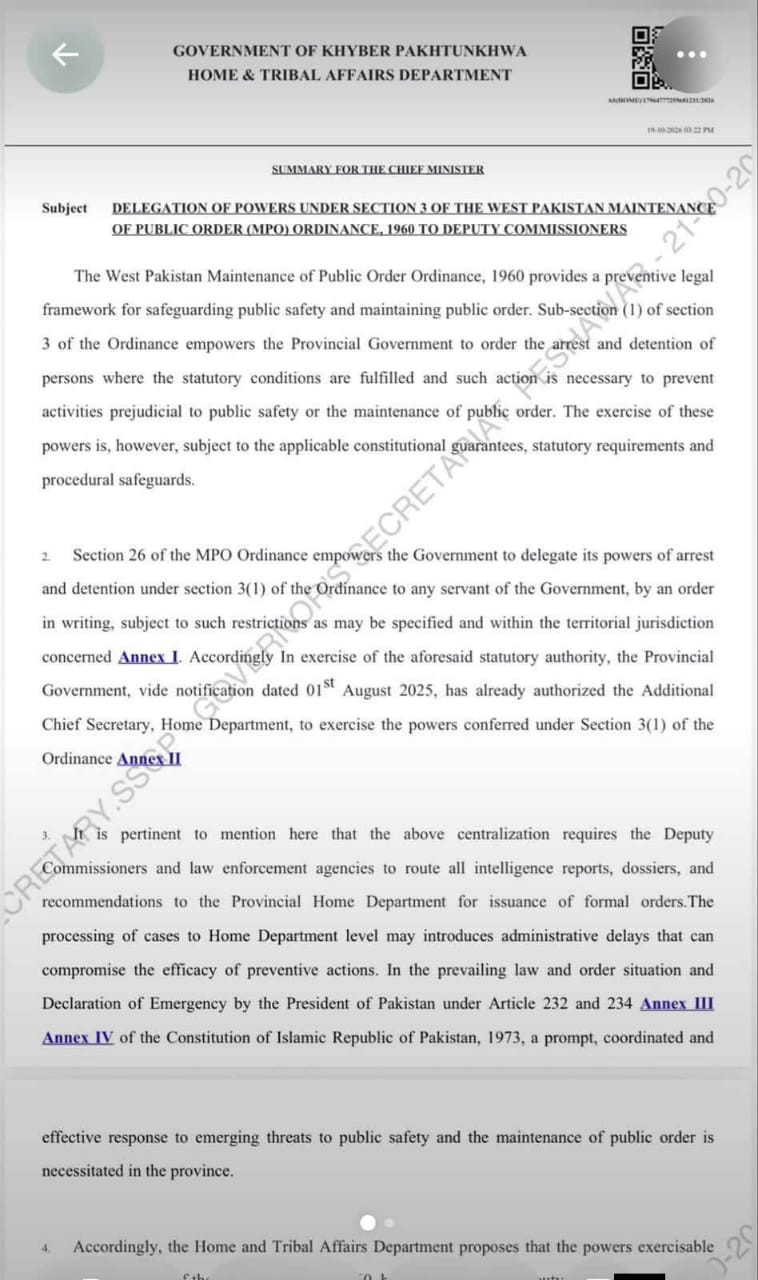
Kundi said the purpose was to enable timely action, reduce administrative delays and improve coordination with law enforcement agencies. He directed officials to act responsibly and strictly within the Constitution and law, warning against misuse.
What does 3 MPO mean?
The expression refers to Section 3 of the public order ordinance. It allows preventive detention where the competent authority considers it necessary to stop a person from acting against public safety or the maintenance of public order.
Preventive detention differs from imprisonment following a criminal trial. Its stated purpose is to prevent an anticipated threat; a detention order does not establish that the person has committed an offence.
The delegation changes who can exercise the authority. The Express Tribune reported that the powers had previously rested with the additional chief secretary responsible for home affairs. District officials will now carry greater responsibility for assessing police submissions and recording legally sustainable decisions.
What safeguards apply?
Article 10 of the Constitution provides safeguards for preventive detention. It requires the grounds to be communicated within 15 days and an early opportunity to make a representation against the order, while allowing certain facts to be withheld in the public interest.
Detention beyond three months requires scrutiny by the appropriate review board and a finding that sufficient grounds exist for its continuation. These requirements mean administrative authority is not an unrestricted power to imprison.
The practical test will be how individual orders are justified: a referral from police starts the administrative process, but the detention decision must still satisfy the applicable law.