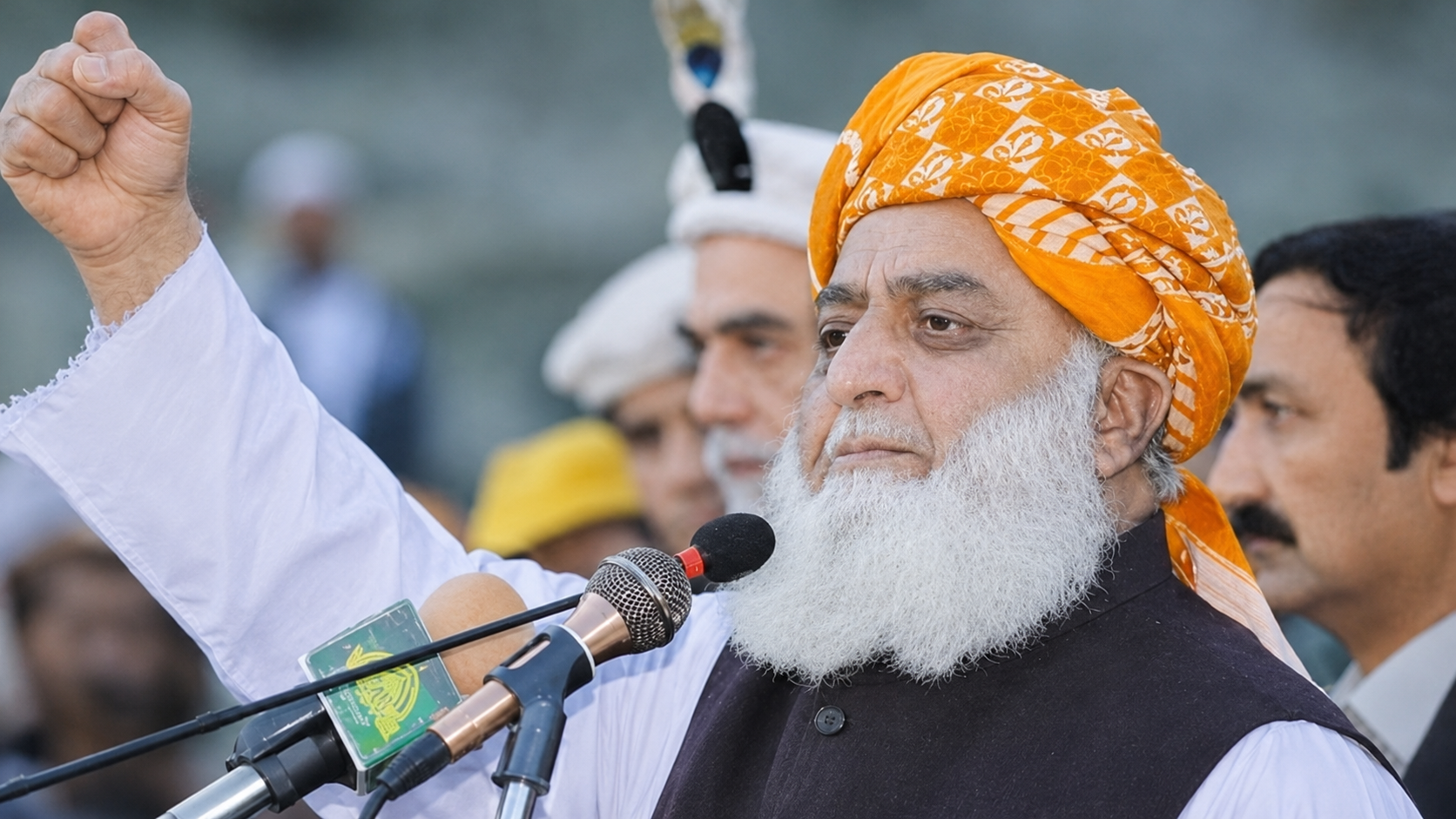
Quetta: Jamiat Ulema e Islam Fazl (JUI F) staged demonstrations across Sindh and Baluchistan on Friday, condemning what it described as an organised campaign of character assassination, surveillance and political pressure against party chief Maulana Fazlur Rehman.
In Baluchistan, protests were held in Quetta, Khuzdar, Awaran, Musakhel, Harnai, Lasbela, Qila Saifullah, Ziarat, Nasirabad, Jaffarabad, Chaman, Pishin, Kalat, Mastung and Kohlu.
Party workers, religious scholars and local political representatives participated in the demonstrations, expressing solidarity with the JUI F leadership.
Addressing the gatherings, speakers alleged that a drone was used to record footage of Fazlur Rehman's private residence, which was subsequently circulated on social media.
They described the alleged surveillance as a violation of personal privacy and constitutional protections, warning that political disagreements should not extend to individuals' homes and families.
Party demands investigation into alleged surveillance
JUI F leaders called for an immediate, transparent and impartial investigation into the alleged drone filming and the circulation of footage online.
They demanded that those responsible, including anyone involved in organising the alleged operation, be identified and held accountable under the law.
The speakers also condemned what they described as coordinated attempts to discredit Fazlur Rehman through social media campaigns and personal allegations.
They argued that political disagreements should be addressed through dialogue and constitutional processes rather than personal attacks.
The allegations concerning drone surveillance and an organised campaign were not independently verified.
Fazl demands transparency in mineral agreements
Meanwhile, addressing a gathering of Jamiat Talaba Islam in Islamabad, Fazlur Rehman called for greater transparency in agreements involving foreign investment in Pakistan's mineral resources.
He said his party did not oppose investment from China, the United States or multinational companies but wanted the terms of such agreements disclosed publicly.
According to Fazlur Rehman, agreements should clearly identify how profits would be distributed among Pakistan, foreign investors and local communities.
He also questioned security restrictions in the tribal districts, alleging that recurring curfews were being used to facilitate unauthorised trade routes.
The JUI F chief asked why restrictions were imposed on selected days if the security threat remained unchanged throughout the week.
His remarks came amid growing coordination between opposition parties, which recently discussed a joint political strategy and the possibility of a multiparty conference.
JUI F maintained that it will continue its opposition activities despite what it describes as attempts to intimidate its leadership.