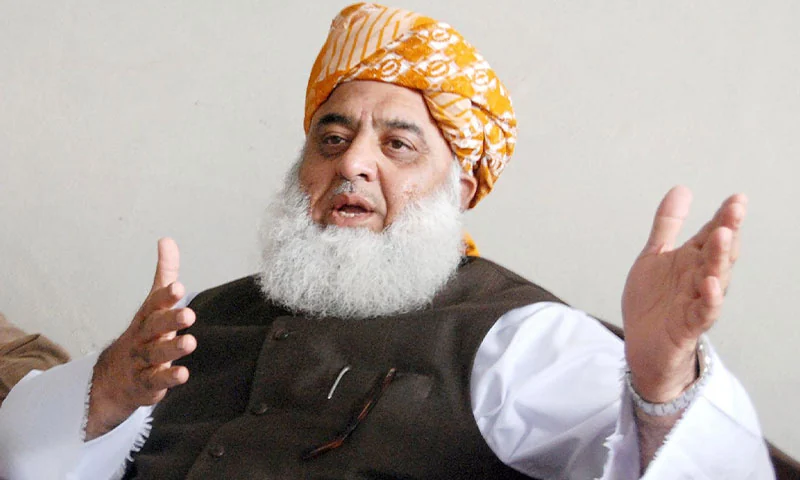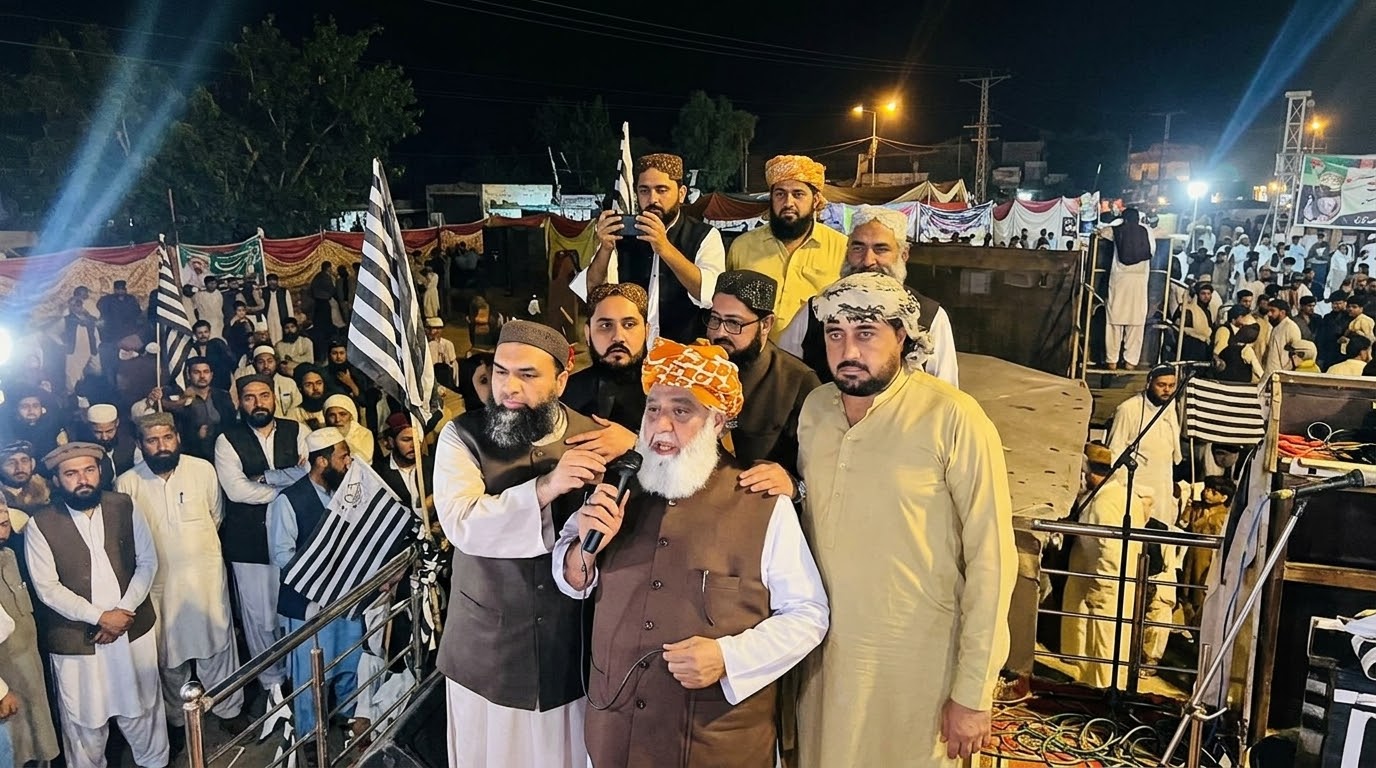
Lahore: Jamiat Ulema e Islam Fazl (JUI F) has claimed that its chief, Maulana Fazlur Rehman, was arrested near Thokar Niaz Baig in Lahore, an allegation denied by police amid tensions between the party and the federal government.
JUI F Lahore Deputy Information Secretary Hafiz Zain alleged on Thursday, November 26, that Lahore Capital City Police Officer (CCPO) Bilal Siddique Kamyana and Deputy Inspector General (DIG) Operations Faisal Kamran had detained the party leader.
However, DIG Operations Faisal Kamran rejected the claim, saying Fazlur Rehman had returned to his residence with his convoy and was not in police custody. Police also maintained that traffic on Multan Road and the motorway was moving normally.
No official confirmation of the alleged arrest has emerged, leaving the party's account disputed by law enforcement authorities.
The controversy follows proceedings in the Lahore High Court (LHC) over allegations that police had restricted Fazlur Rehman's movements and prevented him from attending political activities. A petition filed before the court alleged that police personnel had surrounded the JUI F chief's residence in Lahore, effectively placing him under house arrest.
According to the petition, Fazlur Rehman had been scheduled to attend an all parties conference organised by the Lahore High Court Bar Association but was unable to leave his residence because of restrictions imposed by the authorities.
Responding to the allegations on Thursday, the Lahore CCPO informed the court that the JUI F chief had neither been arrested nor placed under house arrest. Police also maintained that he was not wanted in any criminal case.
The Lahore High Court subsequently disposed of the petition after the CCPO presented video footage showing Fazlur Rehman on Multan Road. The court proceedings concerned allegations of confinement, while the party's subsequent claim of detention near Thokar Niaz Baig prompted a separate police denial.
The dispute comes amid growing differences between Fazlur Rehman and the federal government over political developments and security policies. Relations have deteriorated since mid October, particularly following the JUI F chief's criticism of the imposition of governor's rule in Khyber Pakhtunkhwa.
Fazlur Rehman has accused the federal government of failing to honour commitments made during efforts to resolve differences with the Pakistan Tehreek e Insaf led provincial administration. The JUI F has also criticised restrictions on political gatherings and alleged interference in the activities of opposition leaders.
The party maintains that its leadership should be allowed to participate in political activities without restrictions on movement. The authorities, however, have rejected allegations that Fazlur Rehman was formally detained.
The confrontation has also been accompanied by concerns raised by the JUI F over security arrangements for its leadership. Last week, police and Federal Constabulary personnel assigned to Fazlur Rehman and his family were reportedly withdrawn from their residences in Islamabad and Dera Ismail Khan.
The party criticised the decision amid concerns over the safety of its leadership. Separately, the National Accountability Bureau (NAB) has summoned Fazlur Rehman's son, former federal communications minister Asad Mahmood, in connection with alleged irregularities in appointments at Pakistan Post during 2022 and 2023.
According to NAB sources, Mahmood did not appear before investigators despite summonses issued for November 10 and 14. The allegations remain under investigation, and no finding of wrongdoing has been established.
The developments have added to tensions between the JUI F and the authorities as the party continues to challenge government decisions.
For now, the dispute over Fazlur Rehman's reported detention remains a matter of conflicting claims, with police denying that he was arrested and the party maintaining that its leader faced restrictions.
The case has also raised questions about the limits of police intervention in political activities and the legal safeguards available to political leaders who allege unlawful restrictions on their movement.