
Tehran: Diplomatic tensions and military exchanges between Washington and Tehran have escalated sharply after an American missile strike hit a residential home hosting a wedding ceremony in southern Iran, killing at least four civilians and wounding over 50 others. The strike occurred in the coastal town of Kuhestak, located in Hormozgan province along the strategic Strait of Hormuz.
According to the Iranian Red Crescent Society and local officials, shrapnel from a projectile severely damaged the residential property during the celebration, killing four people, including a four year old child, and causing dozens of casualties. Iranian Foreign Ministry spokesman Esmaeil Baqaei condemned the attack as a "war crime," warning that the strike would not go unpunished.
Video footage broadcast by Iranian state television showed extensive debris, damaged homes, and injured guests, while the father of the bride confirmed that the celebration had been turned into a tragedy. Independent visual analysis of the site confirmed that the blast collapsed a nearby telecommunications tower located roughly 120 metres from the house where the wedding was taking place. Weapons experts examining fragments recovered from the scene suggested the munition was likely a US Joint Standoff Weapon or a Standoff Land Attack Missile.
Responding to the allegations, US Central Command (CENTCOM) spokesman Captain Tim Hawkins stated that Washington was aware of the reports, asserting that the US military never targets civilians. CENTCOM explained that the wider barrage across southern Iran was conducted in response to recent attempted attacks by the Islamic Revolutionary Guard Corps against American service members and commercial shipping in the Strait of Hormuz.
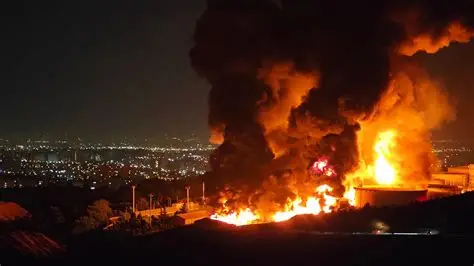
The US strikes targeted air defence installations, radar systems, and maritime assets across several southern provinces, which Iranian authorities state caused an additional 14 deaths in separate locations. In direct retaliation for the Kuhestak strike and the surrounding bombardment, the IRGC and regular Iranian armed forces launched a coordinated wave of ballistic missiles and attack drones against US military installations and allied targets across the Middle East.
Jordanian forces intercepted 10 of 13 ballistic missiles aimed at US facilities near the Gulf of Aqaba, while air raid alerts and drone strikes were reported across Kuwait, Bahrain, and Erbil in northern Iraq. With commercial crude tankers also sustaining damage from naval mines in the Strait of Hormuz, the renewed violence marks a severe breakdown in diplomatic ceasefire efforts as the six-month regional conflict continues to broaden.