
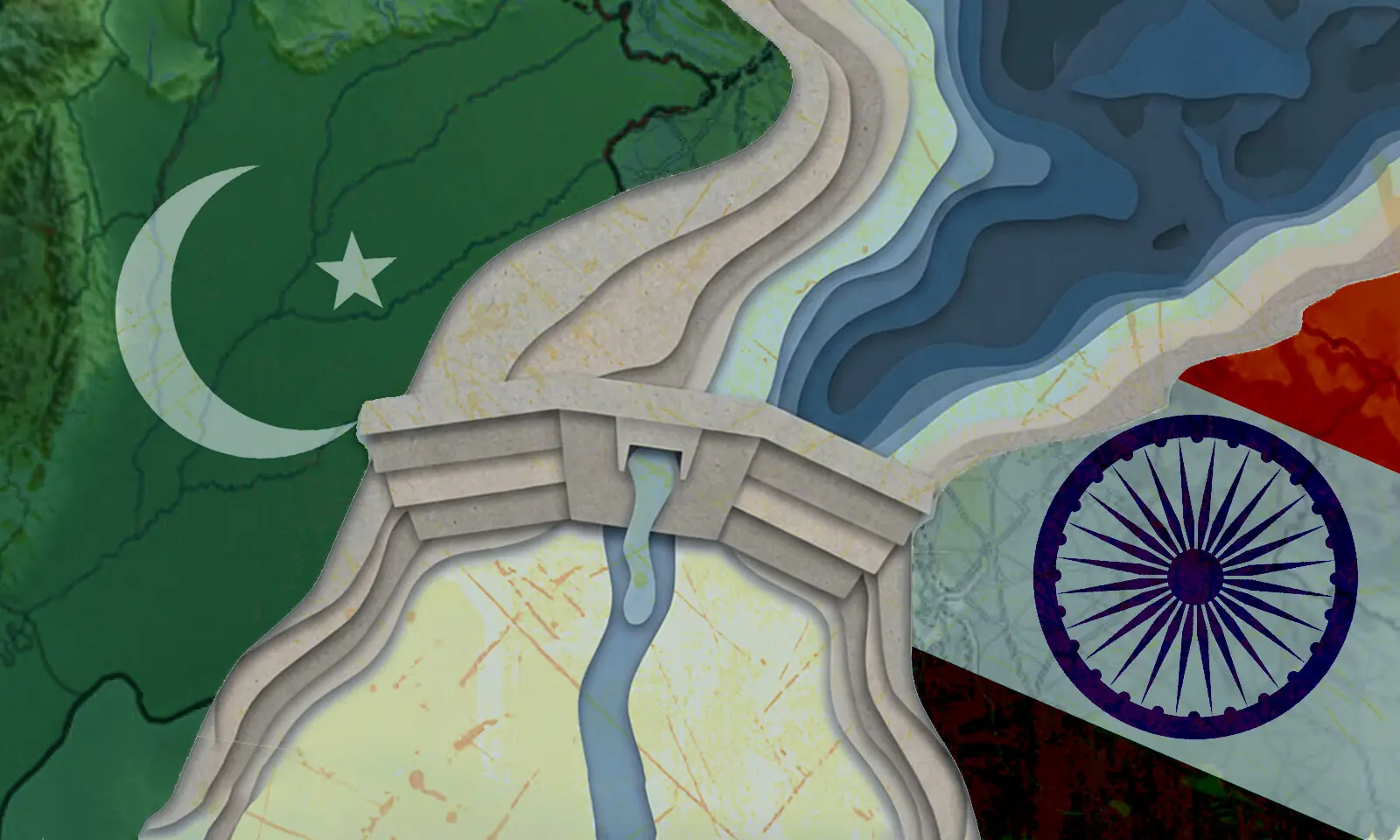
The Hague: The Permanent Court of Arbitration (PCA) has ruled that India remains bound by the Indus Waters Treaty (IWT) with Pakistan, finding no legal basis for New Delhi to suspend or terminate the decades old water sharing agreement.
The ruling, issued on Monday, August 31, comes more than a year after India announced that it was placing the treaty in abeyance following the April 2025 Pahalgam attack in Indian Illegally Occupied Jammu and Kashmir. India had linked the attack to Pakistan, while Islamabad denied involvement.
The Court of Arbitration said the treaty remains fully in force and that India must continue to observe its obligations, including those governing the design and operation of hydroelectric projects on the Western Rivers.
Alongside its ruling on the treaty’s status, the court issued interim measures concerning the Ratle hydroelectric plant, a project on the Chenab River in Indian administered Kashmir. The measures restrict certain construction activities at the project while a neutral expert assesses whether the hydropower facilities' design complies with the treaty. The court also ordered India to provide information concerning the project's construction schedule.
The neutral expert, appointed through a World Bank mechanism, is expected to deliver a decision by July 2027.
Pakistan has accepted the Hague ruling, reaffirming its stance that the Indus Waters Treaty cannot be suspended unilaterally. Islamabad has repeatedly argued that the treaty contains no provision allowing either country to suspend it unilaterally and has raised concerns over India's hydropower projects on rivers allocated to Pakistan under the agreement.
The ruling gives Pakistan a significant legal argument in the continuing dispute over India's management of projects on the Western Rivers, particularly the Chenab, Jhelum and Indus.
For now, the court has affirmed the treaty's continuing legal force and limited parts of the Ratle project. India, meanwhile, maintains that neither decision affects its position that the treaty remains in abeyance.