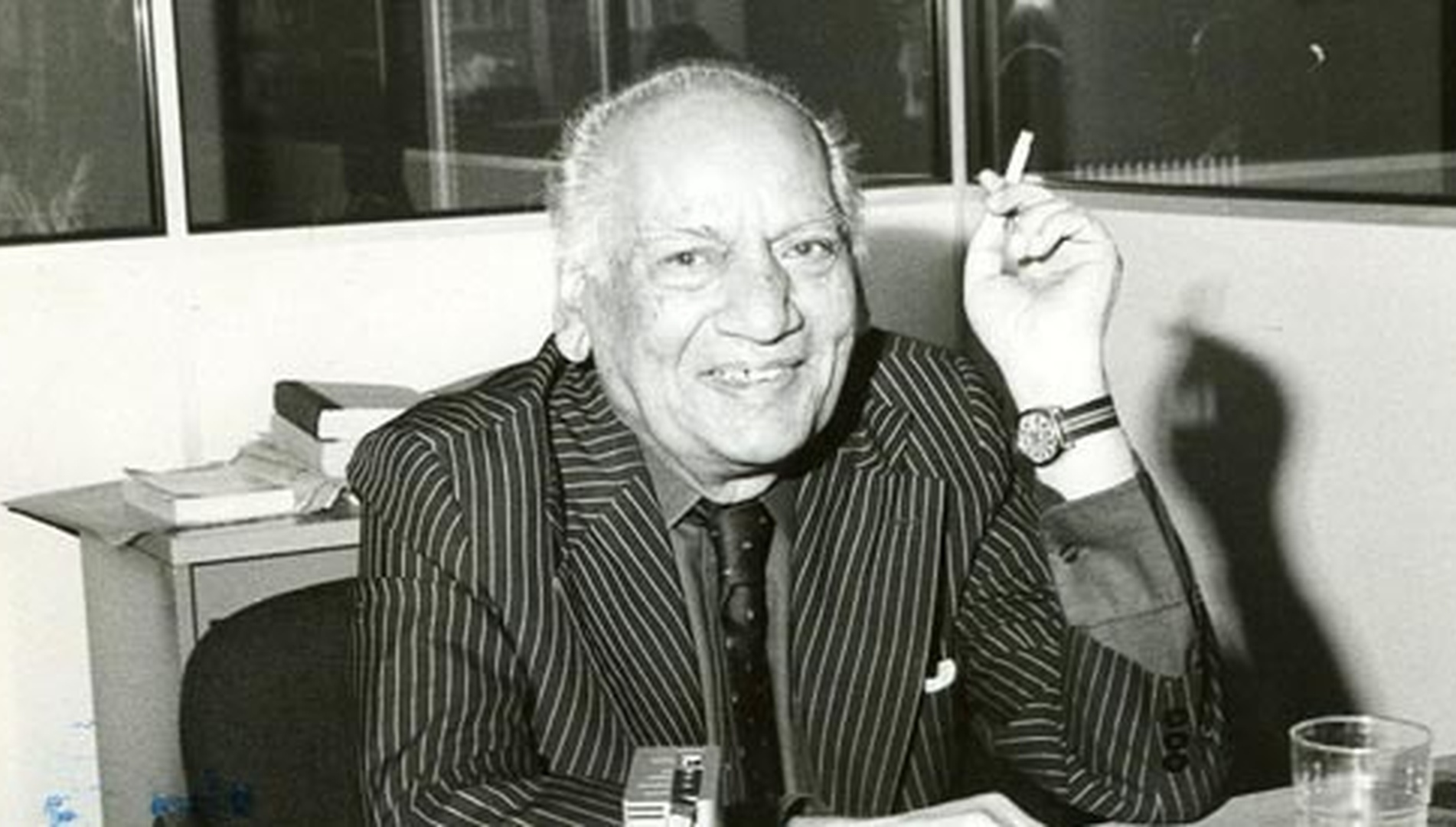
Lahore: Pakistan marks the 42nd death anniversary of Faiz Ahmed Faiz on Friday, remembering an Urdu poet whose work reached audiences through books, film songs, concerts and protest gatherings. Faiz died in Lahore on November 20, 1984, aged 73, and was buried in the city. Literary gatherings and seminars are being held across the country to mark the anniversary.
Born in Punjab in 1911, Faiz studied English and Arabic in Lahore and taught in Amritsar. He became associated with the Progressive Writers’ movement, whose members saw literature as a way to engage with inequality and political change.
He served in the British Indian Army during the Second World War and later edited the Pakistan Times. His career took him from classrooms to newsrooms, but it was through poetry that he reached his widest audience.
In 1951, Faiz was arrested in the Rawalpindi conspiracy case, which centred on an alleged plot to overthrow the government. He spent about four years in prison before his release in 1955.
The experience shaped poems in Dast e Saba and Zindan Nama. The Soviet Union awarded him the Lenin Peace Prize in 1962, and Pakistan conferred the Nishan e Imtiaz on him posthumously in 1990. He later lived in exile in Beirut, where he edited the literary journal Lotus and continued writing in Urdu.

Faiz’s contribution to Urdu poetry lay in what he did with the language it already had. The beloved, separation and the promise of reunion could still carry their meanings in a ghazal, but they could also speak to exile, imprisonment or the hope of political change.
In ‘Subh e Azadi’, his poem on Partition, the dawn of independence does not bring the freedom its speaker had imagined. In ‘Bol’, the act of speaking becomes a way to resist silence. He made room for public questions without giving up the intimacy of a voice addressing one person.
‘Mujh Se Pehli Si Mohabbat’ shows how that shift works. The speaker addresses a beloved, then turns towards suffering that love alone cannot answer. Noor Jehan’s rendition carried the poem to film audiences.
Mehdi Hassan gave ‘Gulon Mein Rang Bhare’ a place in the ghazal repertoire, while Nayyara Noor sang ‘Aaj Bazaar Mein’ and recorded an album of Faiz’s work in 1976. Iqbal Bano sang ‘Dasht e Tanhai’ as well as ‘Hum Dekhenge’, two poems that show the range of feeling singers found in the same writer.
That repertoire travelled across borders. India’s Begum Akhtar was among the singers who interpreted Faiz, and his books found readers on both sides of the border. Decades after Iqbal Bano’s performance of ‘Hum Dekhenge’ in Lahore during General Zia ul Haq’s rule, the poem was taken up by protesters in India.
Translations into English and Russian offered another route into his work for readers who could not read Urdu. Beirut, meanwhile, was not simply a place of exile: through Lotus, Faiz took part in a literary exchange beyond the subcontinent.
His legacy is visible in the different settings in which people still encounter him. Someone hearing Noor Jehan for the first time need not know the history of the Rawalpindi case to follow the turn in ‘Mujh Se Pehli Si Mohabbat’. A crowd singing ‘Hum Dekhenge’ can give the poem a purpose its first listeners could not have foreseen.

For readers who return to the collections, the songs are an entry point rather than the whole record: the page gives them room to notice how often Faiz moves from what one person feels to what people owe one another. That movement helps explain why an anniversary observed in Pakistan also belongs to listeners and readers elsewhere.