New York: Deputy Prime Minister and Foreign Minister Ishaq Dar on Tuesday urged the Organisation of Islamic Cooperation (OIC) to press the Afghan Taliban to take concrete and verifiable steps to prevent their territory from being used for terrorist attacks against neighbouring countries.
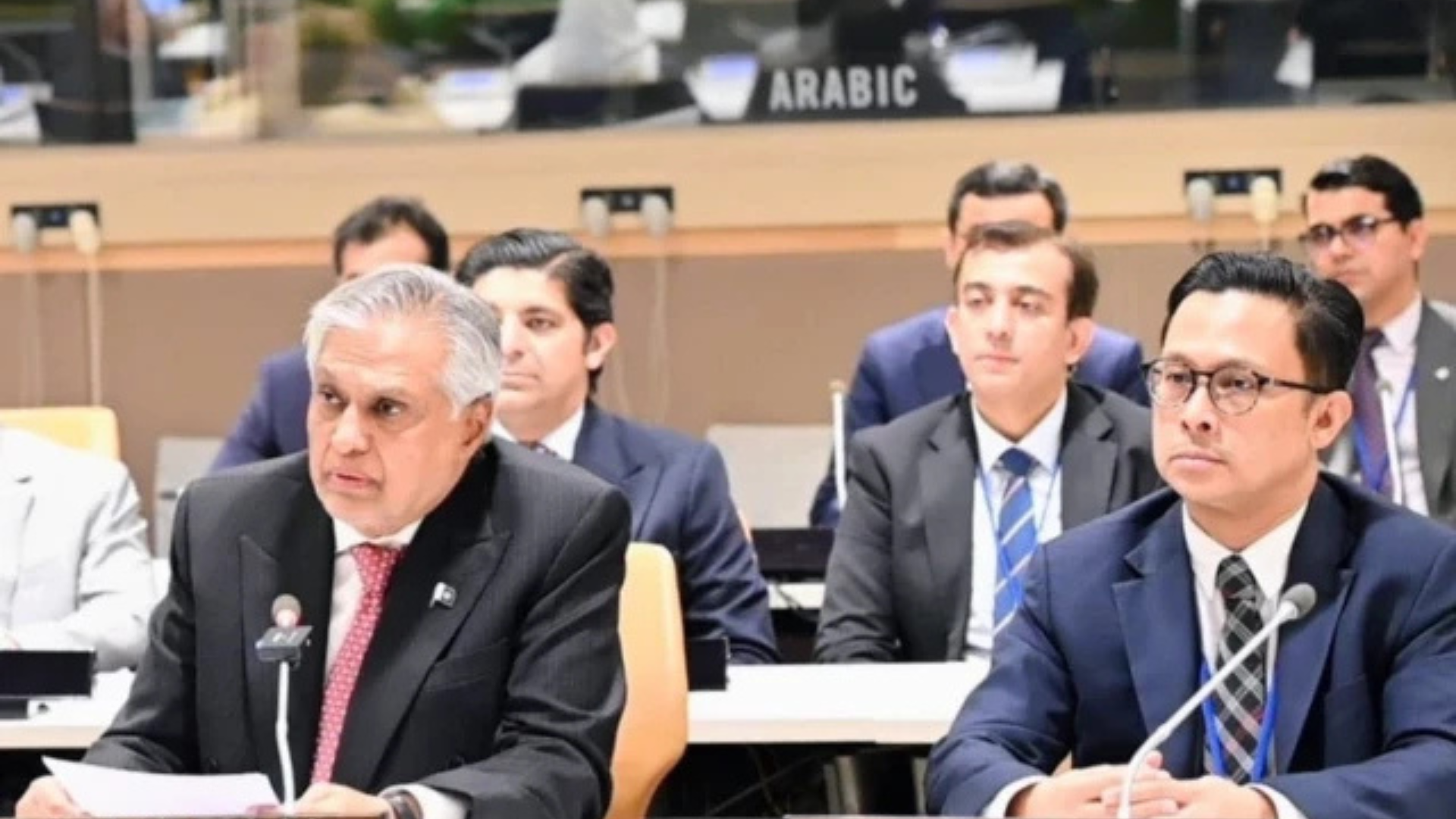
Dar made the remarks while addressing a meeting of the OIC Contact Group on Afghanistan on the sidelines of the 81st session of the United Nations General Assembly in New York.
Recalling the withdrawal of US troops from Afghanistan in August 2021, Dar described it as a “watershed moment” and said Pakistan had opened its doors to Afghan citizens and hosted an extraordinary OIC foreign ministers’ session in December that year to mobilise international support for Afghanistan.
He said it had been hoped that the Taliban would honour Afghanistan’s international obligations and commitments by eliminating terrorism, promoting inclusivity and protecting human rights. However, he said, those expectations had remained unfulfilled.
Dar said the foremost requirement was for the Taliban to take “concrete and verifiable actions” to prevent Afghan soil from being used for terrorism against neighbouring countries.
He said Pakistan was particularly concerned about the presence of more than two dozen terrorist groups in Afghanistan, including the Tehreek-e-Taliban Pakistan (TTP), Balochistan Liberation Army (BLA), Majeed Brigade, ISIL-K, Al-Qaeda and ETIM.
Referring to the suicide attack at a mosque in Kohat the previous week, Dar said at least 24 Pakistanis had been killed. He said Pakistan’s law enforcement agencies continued to make sacrifices in countering terrorism.
Dar thanked Qatar, Türkiye and Saudi Arabia for their mediation efforts and for seeking to counsel the Taliban towards finding solutions to the dispute.
He urged the OIC to call on the Taliban to eliminate terrorism, end the patronage of militant groups and prevent Afghan territory from being used to plan attacks against neighbouring countries.
He also called on Kabul to honour its international commitments, curb trafficking in narcotics, weapons and people, and reconsider restrictions on women and girls that he said were contrary to Islamic principles and norms.
Dar referred to the OIC Ministerial Conference on Women held in Islamabad in July, which expressed concern over restrictions on girls’ education and women’s employment in Afghanistan.
He further called for an inclusive political process involving ethnic and minority groups, and urged the Taliban to facilitate the resettlement and integration of Afghan returnees.
Dar said the international community should support Afghanistan through humanitarian assistance and funding for socio-economic development.
He reaffirmed Pakistan’s support for a stable Afghanistan at peace with itself and its neighbours, while stressing that progress would require “mutual respect, sincerity and demonstration of necessary political will by the Taliban.”
Pakistan and Afghanistan have faced heightened tensions over cross-border militancy, with Islamabad maintaining that TTP members operate from Afghan territory. Kabul has denied the allegations and accused Pakistan of violating its sovereignty through alleged strikes.
Islamabad has said meaningful engagement with Kabul requires concrete and verifiable action against militant groups operating from Afghan soil.