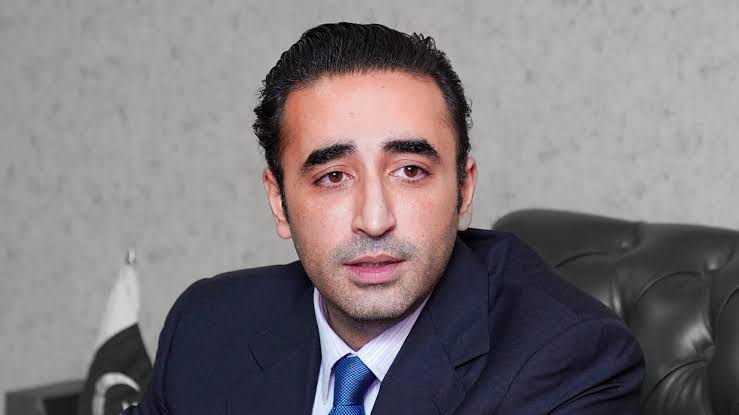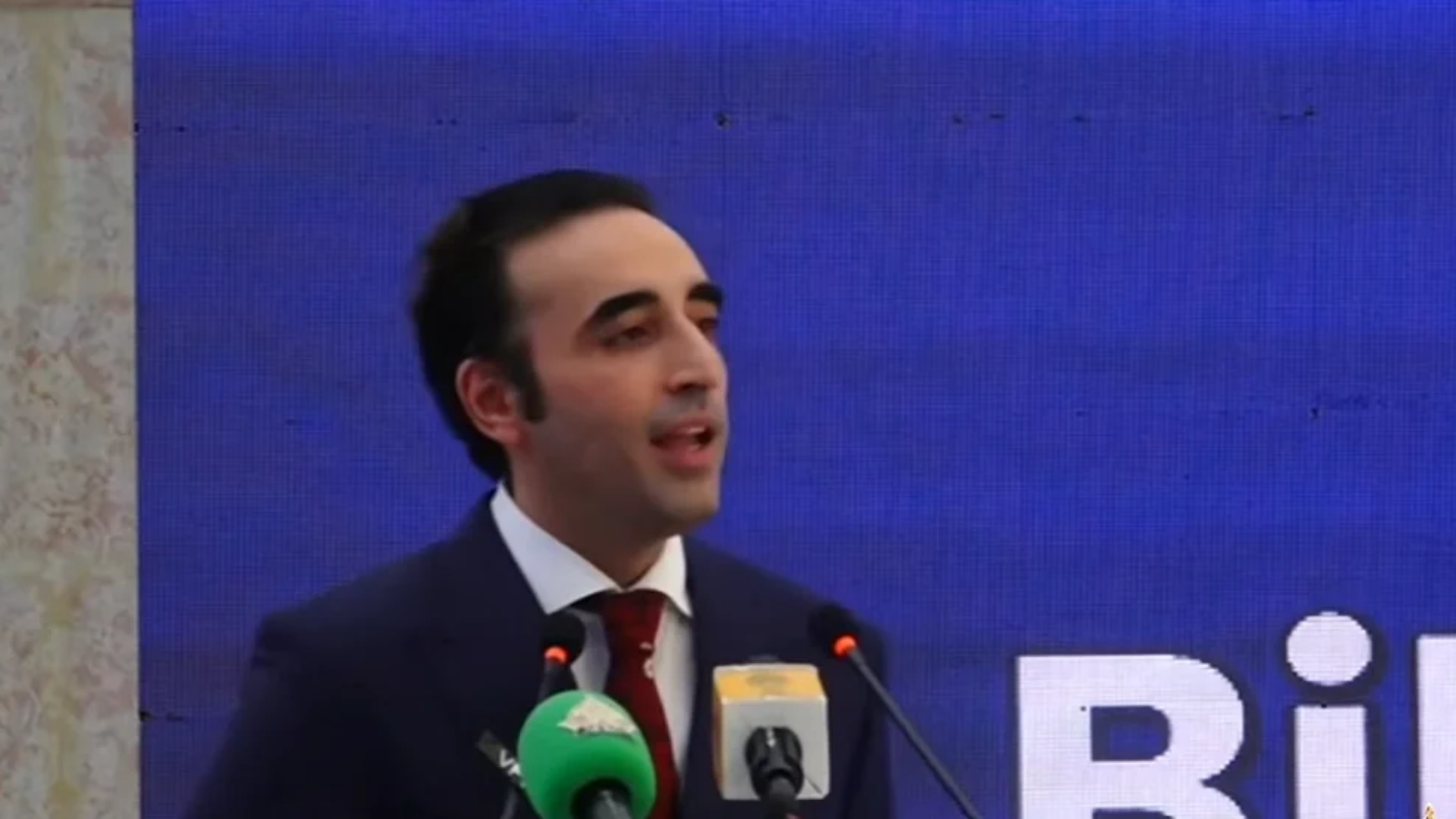
Pakistan Peoples Party (PPP) Chairman Bilawal Bhutto Zardari said in Karachi on Tuesday that the system was made to collapse and any reset must be political.
He proposed a way forward: first seeking agreement inside the PPP, whose Central Executive Committee meets soon, and then trying to convene an all parties conference on collapse and reset. The conference would be open to government allies and every opposition party.
Interior Minister Mohsin Naqvi has said since July that governance has collapsed and needs a reset. On 12 November, he proposed a referendum on new provinces and said he and Bilawal were nearly on the same page. Asked about that at the Karachi Press Club, Bilawal said that if this was the page, nothing better could be hoped for. No one in the federal government, he said, had raised new provinces with him or with President Asif Ali Zardari.
Bilawal said the PPP will not back dividing a province by force. It would support new provinces where people want them and the constitutional process is followed. A Punjab Assembly resolution for South Punjab would have his vote, he said, and he backs constitutional status for Gilgit Baltistan. Referendums in Pakistan have so far served undemocratic ends, he said.
On Sindh his tone hardened. People talk about garbage on Karachi's streets, he said, but if Sindh is divided by force the questions will be about the blood that flows there. Forcing it, he warned, could set one brother against another in Karachi, Hyderabad and other cities.
The Sindh Assembly has repeatedly rejected division, he said, and the 1973 Constitution, framed under Zulfikar Ali Bhutto, recognised Sindh as a province. Asked about making Karachi federal territory or running it jointly with Islamabad, he said Sindh's people have resisted such moves since the Bombay Presidency days.
Those behind the proposals have never won an election, he said, and most PPP members would refuse if he told them to vote for dividing Sindh.
Provinces still have not received all the institutions and funds due since the 18th Amendment of 2010, he said. He gave figures: Sindh gave the federal government a budget surplus of Rs 585 billion this year, and a further Rs 260 billion toward security and national interest. He put the province's unpaid share of the petroleum levy at Rs 1.7 trillion.
You cut the province's pocket, then ask why the road is broken,
If a province pays that much, he argued, the federal government, not the provincial one, should answer for money that does not reach people. If provinces ceased to exist, he asked, what would become of the National Finance Commission award and the 18th Amendment?
On rare earth minerals, he said provincial governments have a role but no foreign office, so they must work with the centre to attract investment.
Bilawal said he wants Prime Minister Shehbaz Sharif to succeed, but that his own ministers are sabotaging him and he needs the authority to control them.
The cabinet has not decided on provinces and parliament has not debated them, he said. If there is an agenda, he suggested it could be brought to the Senate. He invited the prime minister to Sindh and suggested the cabinet meet in every province.
Everyone agrees the system has collapsed, Bilawal said; nobody asks why. The remedy on offer, he argued, does not treat the illness.
A reset is needed, but politicians represent the people, so it has to be political. He also accepted that politicians themselves share the blame. Every institution, from parliament to the Election Commission, the courts and the media, had lost public trust and had to win it back.
The reset, he said, must start in parliament. That means the government winning back the opposition's trust.
The most patriotic job in any parliament is the job of the opposition.
Doubting the patriotism of opposition members for criticising the government, he said, was an injustice to parliament and to the system.
Bilawal defended Jamiat Ulema e Islam Fazl chief Maulana Fazlur Rehman, whose exchanges with federal ministers have turned sharp in recent weeks.
Criticism is the opposition's job, he said, and the government should answer it instead of sending NAB after critics or a notice to his house. Those in office would not be there without Fazlur Rehman's role in the Pakistan Democratic Movement, he added.
He also said it was the first time in his political life that people inside the government were alleging rigging as well as the opposition. Accountability, he said, must reach officials too, because no file moves without a secretary or the bureaucracy signing it.
Asked about National Accountability Bureau (NAB) notices to PPP lawmakers, he said he was not aware of any.
On reserved seats, his language was blunt. What happened with them was "a joke", he said. The opposition was deprived of its seats and, he said, government members then pocketed them.
Those same seats were used to pass two constitutional amendments, he said, and a third is under consideration. He wants them returned to the opposition without preconditions, along with electoral reforms before any election and an end to NAB cases brought for revenge.
Pakistan, he said, should have no political prisoners, and he named Imran Khan as one, while adding that some of the Pakistan Tehreek e Insaf's (PTI) troubles were of its own making.
The PTI is a political reality and the country cannot run without it, he said. He wants its electoral symbol restored through a court review or a new law, and recalled that the PPP lost its own symbol in 1988.
"What a strange country this is," he said of a history in which prime ministers go to jail and ex prisoners return to the Prime Minister House.
The 27th Amendment passed with a brute majority, with neither consensus nor a bilateral deal, he said. The later resignations of senior judges, he added, showed a lack of confidence in the new system.
The 26th Amendment, in his account, had broad agreement, with the opposition's input taken through Fazlur Rehman. He called for judicial reform by consensus, so that lawyers and judges themselves trust the courts.
Governor's rule in Khyber Pakhtunkhwa should not be permanent, Bilawal said, and the government should restart the talks that broke down.
A federal minister had himself said the province's side was ready to sign an agreement against terrorism the night before the talks failed, he claimed. Someone sabotaged it, he said.
The government should tell the opposition it wants to end governor's rule, which could end quickly if the PTI agreed to a joint approach.
In Balochistan, terrorism is at its peak and the first priority, he said. The economic crisis is felt most there, with trade through Iran and Afghanistan obstructed.
In Sindh, he said, law and order is also an economic problem, since desperation drives much street crime.
He described the economy in personal terms. Never in his life had he seen conditions this bad, he said, and he expected worse.
Families were choosing between school fees and two meals a day, and between a parent's treatment and food. People dread the electricity bill.
For journalists, Bilawal proposed extending the 1973 newspaper employees' law to electronic and digital media, enforced by a joint task force of the Sindh government and the press club.
He said he had been told that a private channel in Karachi laid off 25 journalists about a month ago, affecting about 50 families.
The PPP had proposed a media complaints commission, he said, and he gave the draft to Sherry Rehman when she was information minister. Had it been adopted, the Prevention of Electronic Crimes Act (PECA) might not be needed, and laws like it make journalists think twice before naming problems.
He asked press clubs to suggest amendments, which the PPP would raise in the National Assembly and the Sindh Assembly.
Asked by a journalist about a promise to marry three times, he said promises get made during elections.