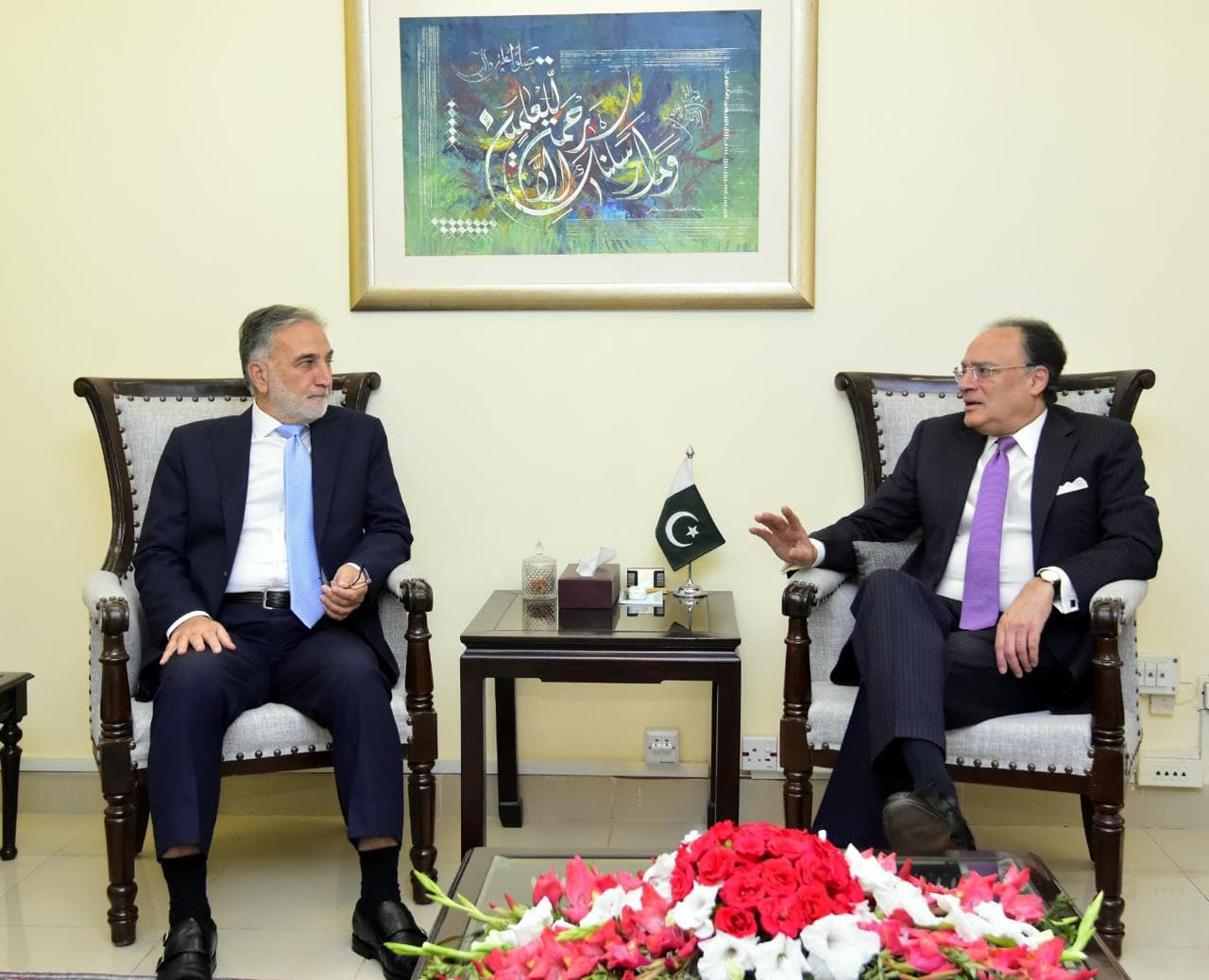

Islamabad: Federal Minister for Planning, Development and Special Initiatives Ahsan Iqbal called for simultaneous execution of solar, transmission and road components and directed to build sustainable tourism framework and carrying-capacity study to protect Gilgit Baltistan ecology.
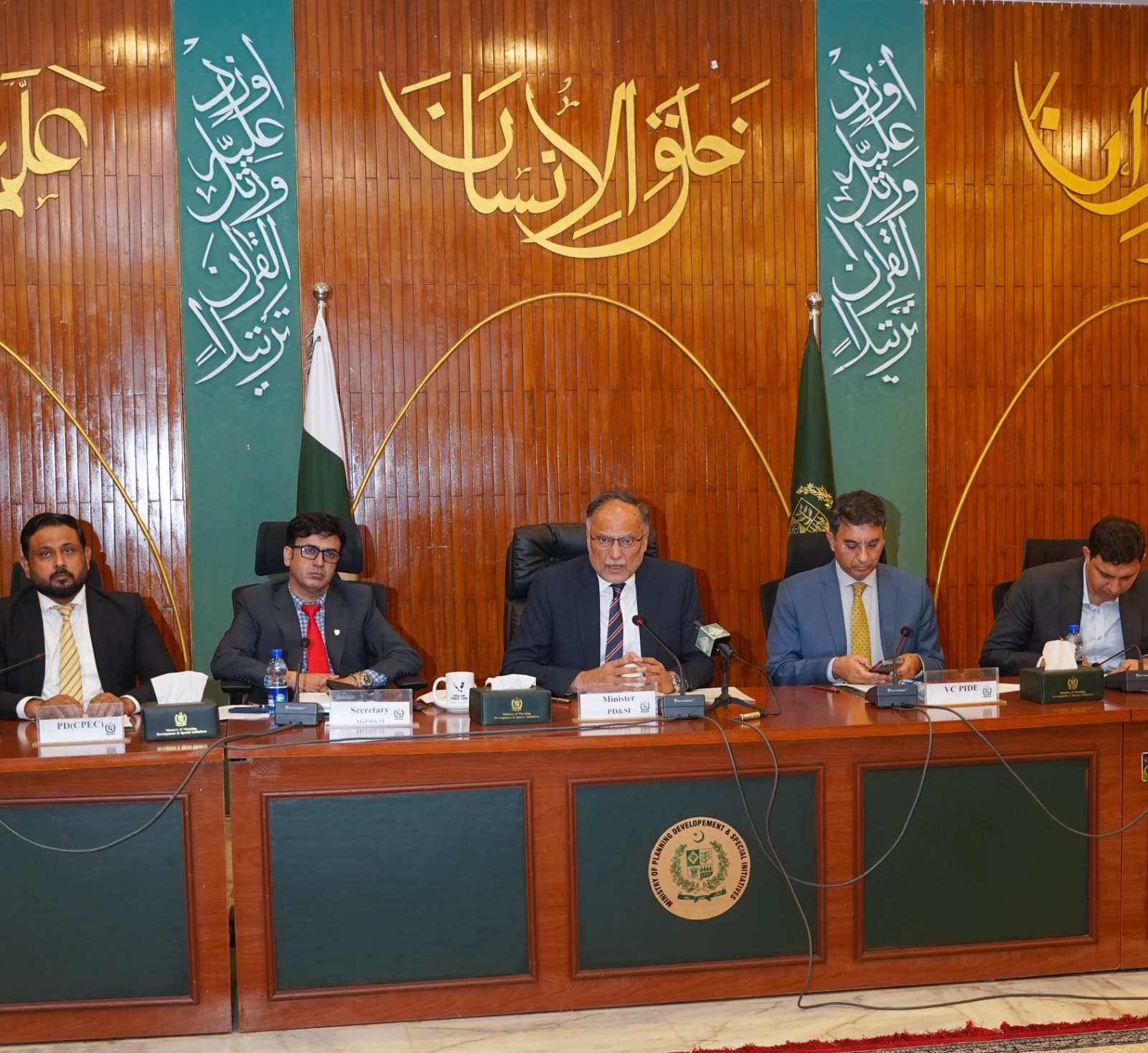
The planning minister chaired the second meeting of the Prime Minister’s committee constituted to review the development concerns of Gilgit-Baltistan (GB) and formulate actionable recommendations for accelerating the region’s development.
The meeting reviewed progress on the committees constituted to examine key development issues confronting Gilgit-Baltistan, with particular focus on energy, financing and revenue, tourism, regulatory frameworks, institutional capacity and development projects.
Reviewing the energy situation in Gilgit-Baltistan, the meeting was informed that the PKR 10.6 billion Naltar Power Project was nearing completion, while the PKRs12.9 billion Hanzel Power Project was also at an advanced stage of completion.
The meeting also reviewed progress on the PKR 24.9 billion PSDP project titled “100 MW Distributed Solar Photovoltaic (DPV) Plants at Various Sites in Gilgit-Baltistan.” The planning minister termed the project a high-priority initiative for addressing the acute electricity shortage in the region and directed that its implementation be expedited.
The meeting was briefed that the project comprises rooftop and utility-scale solar installations, along with associated transmission lines and access roads. The transmission infrastructure and access roads falling within the scope of the Gilgit-Baltistan government would be executed by the provincial authorities.
Ahsan Iqbal directed that the federal and Gilgit-Baltistan components of the project be executed simultaneously rather than sequentially to ensure its timely completion. He directed the GB government to immediately initiate work on the access roads and transmission infrastructure falling within its share.
The Planning Minister further directed that third-party validation of the project should proceed concurrently with implementation, ensuring independent verification of quality and compliance without bringing ongoing work to a halt.
He directed the Gilgit-Baltistan government to consider introducing an appropriate taxation and regulatory framework for tourism to generate additional revenue while ensuring sustainable and environmentally responsible growth of the sector.
The minister cautioned that unplanned growth in tourism and construction could place considerable pressure on the fragile ecology of Gilgit-Baltistan. He directed that a comprehensive study on the tourism carrying capacity of the region be undertaken to determine the level of tourism that its natural environment can sustainably support.
He proposed that the Ministry of Kashmir Affairs and Gilgit-Baltistan, Ministry of Climate Change and the Gilgit-Baltistan government constitute a task force, with the support of relevant experts and institutions, including the Aga Khan Development Network, to undertake the study and formulate recommendations.
Chief Minister Gilgit-Baltistan Amjad Hussain Azaar, Leader of the Opposition in the Gilgit-Baltistan Assembly, Federal Minister for Power Sardar Awais Ahmad Khan Leghari, who participated virtually, and senior officials of the federal and Gilgit-Baltistan governments attended the meeting.