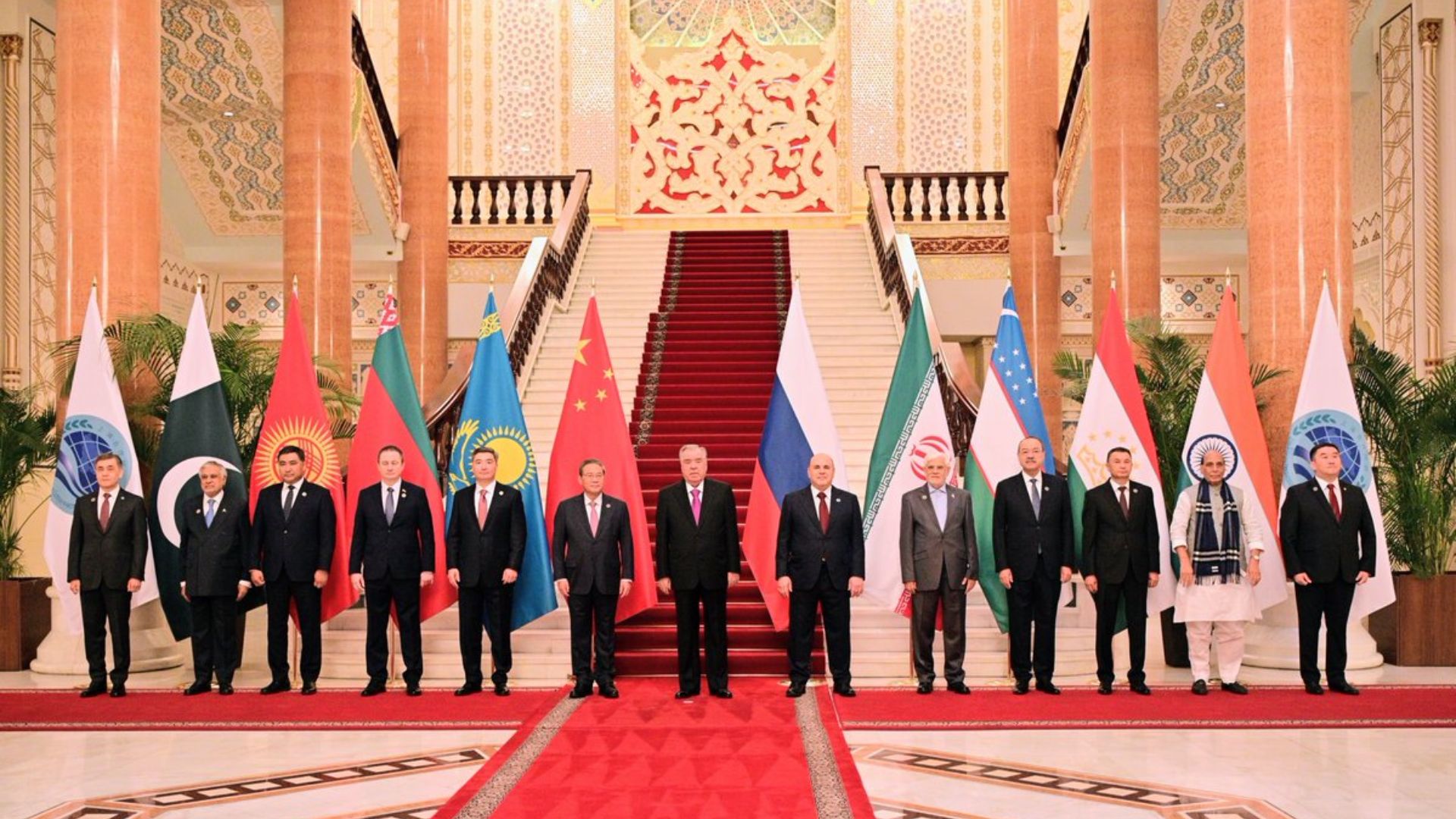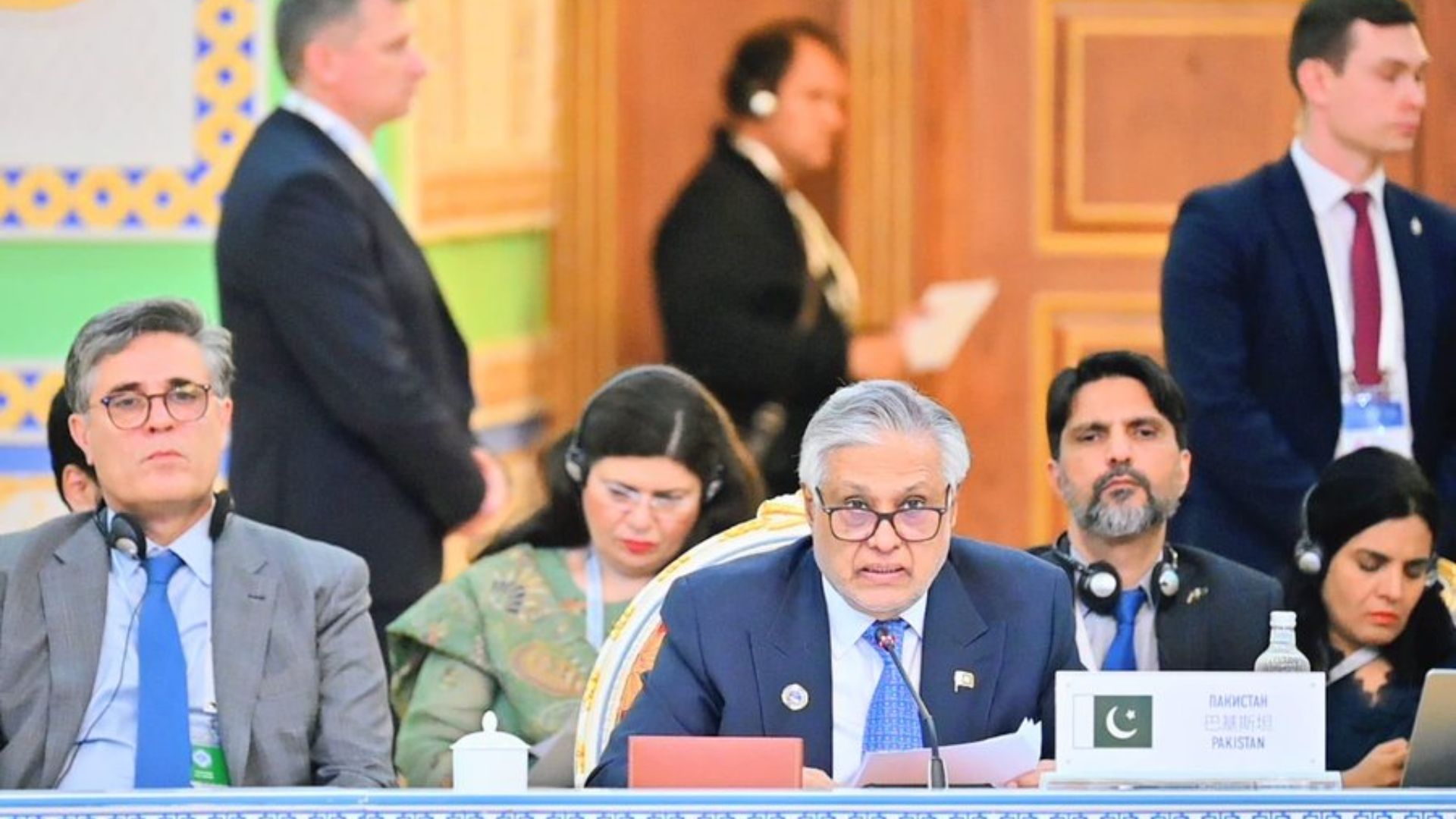
Dushanbe: Deputy Prime Minister and Foreign Minister Ishaq Dar said on Tuesday that Pakistan expected the Afghan Taliban authorities to ensure their territory was not used for terrorism against Pakistan or any other country, warning that sustainable economic development depended on durable regional peace.
Addressing the restricted session of the Shanghai Cooperation Organisation’s (SCO) Council of Heads of Government, Dar said Pakistan wanted a peaceful, stable, prosperous and regionally integrated Afghanistan that maintained peaceful relations with its neighbours.
He said Islamabad had made sincere efforts to support Afghanistan’s development and the wellbeing of its people.
“In return, Pakistan has only one expectation from the Afghan Taliban regime: that Afghan territory must not be used for terrorism against Pakistan or any other country,” he said.
Dar described stability in Afghanistan as essential to safeguarding regional peace, saying Pakistan remained committed to a peaceful neighbourhood as the foundation for development and prosperity.
His remarks came amid continuing tensions between Islamabad and Kabul over militant activity. Pakistan accuses the Afghan authorities of sheltering the Fitna al Khawarij (FaK) formerly known as Tehreek e Taliban Pakistan (TTP). Kabul denies providing sanctuary. The group is distinct from, although closely allied with, Afghanistan’s ruling Taliban.
Pakistani forces and Afghan Taliban personnel exchanged fire along the border on October 17. Pakistani officials said the fighting followed an attempted militant infiltration.
The security dispute also has economic consequences. Pakistan closed border crossings after deadly clashes in October 2025, disrupting a corridor important to bilateral trade and regional transport. The confrontation illustrates the difficulty of advancing the connectivity agenda Dar presented while border security remains contested.
Dar’s address brought together two central Pakistani priorities: preventing cross border terrorism and building stronger economic links across Eurasia.
He said the SCO had remained anchored in mutual trust and respect for diversity over the past 25 years, while expanding cooperation into trade, infrastructure, culture and innovation.
Established in 2001, the organisation now has ten members, including Pakistan, China, Russia, India, Iran and the Central Asian states. Pakistan became a full member in 2017. Its Council of Heads of Government meets annually to address economic cooperation and approve the organisation’s budget.
Dar recalled Pakistan’s hosting of the Council of Heads of Government meeting in Islamabad in 2024. He also said Pakistan had concluded its chairmanship of the SCO Regional Anti Terrorist Structure this year and had used its leadership of the Working Group on Poverty Alleviation to exchange development experience.
Pakistan intended to highlight the contribution of small and medium enterprises to poverty reduction, he said.
Outlining the country’s SCO chairmanship priorities, Dar referred to Prime Minister Shehbaz Sharif’s theme, “Turning Vision into Action: Connectivity, Innovation and Shared Prosperity”.
The priorities cover peace, security and mutual trust; regional connectivity and trade; artificial intelligence, innovation and digital transformation; climate resilience and sustainable energy; and exchanges between people.
Dar said meaningful economic integration required targeted investment, particularly in energy and transport infrastructure.
Pakistan also supported greater investment in agriculture, mining, minerals and information technology to develop a more resilient and interconnected regional economy, he said.
He presented the China Pakistan Economic Corridor (CPEC) as an opportunity for SCO partners to participate in wider economic integration. CPEC’s relevance to this agenda lies in its focus on transport, energy and economic infrastructure, sectors Dar identified as necessary for connecting regional markets.
He added that artificial intelligence, digital transformation, innovation, energy cooperation and international information security should become important pillars of future SCO cooperation.
On financial cooperation, Dar urged faster progress towards using national currencies for mutual settlements. Such arrangements would allow participating countries to settle eligible transactions in their own currencies rather than relying entirely on an intermediary currency.
He also advocated an SCO Development Bank, a Development Fund and an investment fund, saying these mechanisms could support development projects and help regional economies withstand international financial shocks.
These were proposals for stronger financing arrangements, rather than an announcement that the institutions had become operational. The SCO has discussed development financing mechanisms for years, with earlier Council of Heads of Government decisions calling for further work on a development bank and fund.
Dar criticised protectionist policies and unilateral coercive measures, saying they constrained growth, obstructed technological progress and deepened inequality. He called for reform of global financial and trade systems to make development more equitable.
He congratulated Tajikistan’s government, the SCO secretary general, the director of its Regional Anti Terrorist Structure and officials involved in preparing the meeting’s documents.
Dar said the joint communiqué and statements reflected shared aspirations and commitments, while expressing hope that the documents prepared by national coordinators and experts would be adopted.
He also congratulated Uzbekistan on assuming the Council of Heads of Government chairmanship for 2026 to 27 and said Pakistan looked forward to welcoming SCO leaders to Islamabad for the Council of Heads of State summit in August 2027.
The two councils perform different functions: the heads of government oversee economic and budgetary cooperation, while the heads of state provide the organisation’s highest level of political direction. Pakistan’s forthcoming summit will therefore provide a separate platform for advancing the priorities outlined in Dushanbe.