An asteroid struck near present day Mexico approximately 66 million years ago, triggering a global catastrophe. Thousands of kilometres away, sediments accumulating beneath an ancient sea preserved evidence of the event.
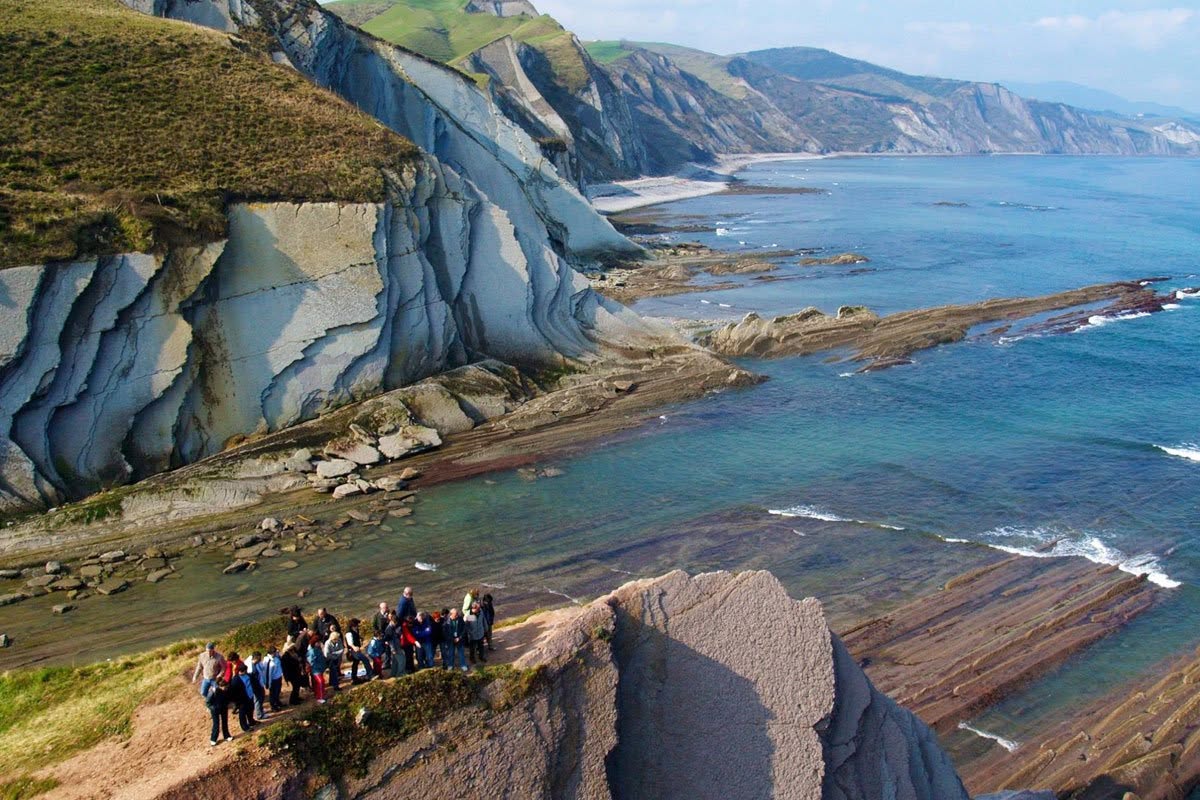
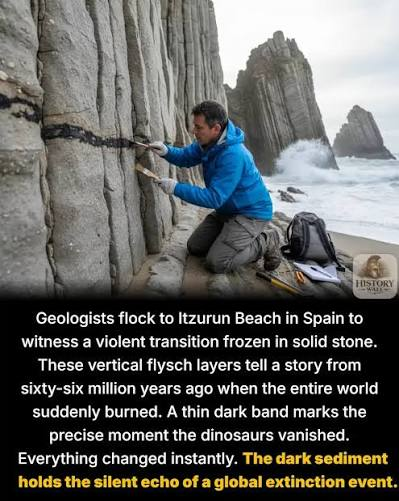
Today, that evidence is visible in the coastal cliffs of Zumaia in northern Spain, where a thin, dark layer marks the Cretaceous Palaeogene boundary, commonly known as the K/Pg boundary. This geological boundary separates two periods in Earth's history and marks the mass extinction that wiped out non avian dinosaurs, along with many other species.
The remarkable feature is its scale: an event that transformed life across the planet can be traced through a narrow band within a towering succession of rocks.
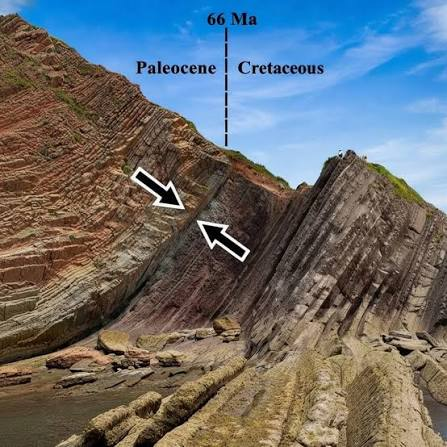
The surrounding formations are known as flysch, a geological term for alternating layers of sedimentary rock formed from deposits of mud, sand and other material on an ancient seabed.
Over millions of years, tectonic movements associated with the formation of the Pyrenees mountain range folded and tilted these layers. Coastal erosion subsequently exposed the geological record visible today.
The asteroid struck at Chicxulub, near Mexico's Yucatán Peninsula, leaving a vast impact crater. Estimated to have been approximately 10 kilometres wide, the asteroid released enormous quantities of dust, soot and other material into the atmosphere.
These particles reduced the sunlight reaching Earth's surface, causing global cooling and disrupting food webs, the interconnected feeding relationships through which energy passes between plants, animals and other organisms.
Research on Zumaia's geological formations, including findings published in the scientific journal Geology, has strengthened evidence linking the asteroid impact to the abrupt extinction event. Scientists also examine the roles of volcanic activity and longer term environmental changes in understanding the crisis.
However, not every dinosaur lineage disappeared.
Non avian dinosaurs refers to dinosaurs other than birds. Modern birds evolved from earlier feathered dinosaurs, and their ancestors survived the extinction, making birds the only dinosaur lineage still living today.
Zumaia's cliffs therefore preserve more than an ancient geological formation. They offer a physical record of the boundary between two profoundly different chapters of life on Earth, showing how a catastrophe originating thousands of kilometres away left evidence in rocks across the planet.