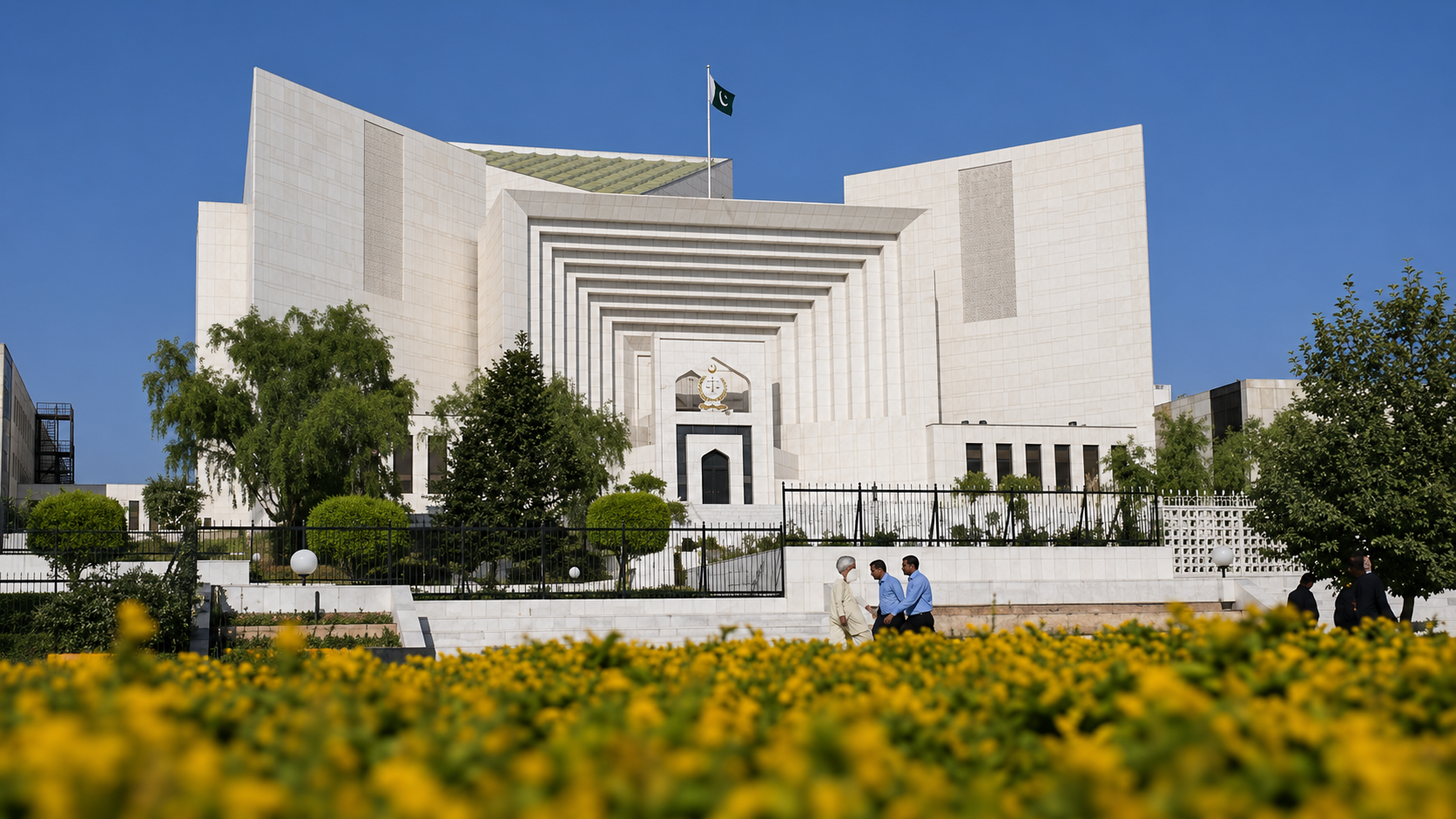
Islamabad: The Supreme Court called for a thorough examination of the role of officials in electricity theft, unauthorised connections and the illegal sale of power, questioning how such arrangements could operate without the knowledge of the relevant electricity supply companies.
A two member bench comprising Justice Muhammad Ali Mazhar and Justice Irfan Saadat Khan made the observations on Friday while hearing a petition seeking cancellation of bail granted to a suspect in an electrocution case.
In a six page order authored by Justice Mazhar, the court expressed concern over electricity being supplied privately through unauthorised arrangements instead of approved distribution networks.
The bench observed that such activities were difficult to imagine without the knowledge of the Water and Power Development Authority (WAPDA), the relevant utility company or its officials.
The court directed that a copy of its order be forwarded to the WAPDA chairman for information, emphasising the need to examine the involvement of individuals responsible for illegal electricity connections.
Electrocution case prompts judicial scrutiny
The proceedings arose from a March 2024 incident in Larkana, Sindh, in which a man suffered an electric shock after a PVC electricity wire snapped and came into contact with a high tension power line.
The victim's brother, Ali Asghar Khokhar, subsequently lodged a complaint at Rehmatpur police station against Anwar Ali Kori and other individuals, including officials associated with the electricity supply system.
According to the complaint, a contractor was allegedly supplying electricity to shops through an unauthorised connection taken from an existing power line.
The petitioner claimed that the arrangement was operating in collusion with electricity officials and that customers were being charged without receiving regular bills from an authorised utility.
He argued before the Supreme Court that the Sindh High Court granted bail to the accused without adequately considering the evidence collected during the investigation.
Court declines to cancel suspect's bail
The Sindh High Court's Larkana circuit bench confirmed the suspect's bail on October 20, 2025.
The decision was based partly on a nine month delay in registering the first information report and the finding that the allegations required further investigation.
The investigating officer also stated that there was no established contact between the accused and WAPDA officials.
During the Supreme Court hearing, the complainant informed the bench that he no longer wished to pursue the bail cancellation request because the criminal trial was already underway.
The court consequently found no reason to interfere with the High Court's decision and disposed of the petition.
Criminal responsibility to be determined at trial
The Supreme Court clarified that granting or cancelling bail does not determine an accused person's guilt.
The bench observed that criminal responsibility could only be established after evidence was examined during a regular trial.