Lahore: The Punjab government called for a non political approach to tackling smog, describing air pollution as a public health and environmental challenge, even as Lahore and other major cities continue to experience hazardous air quality.
At a press conference on Wednesday, Senior Minister Marriyum Aurangzeb said environmental protection and public health should take precedence over political disagreements because pollution affects millions of people.
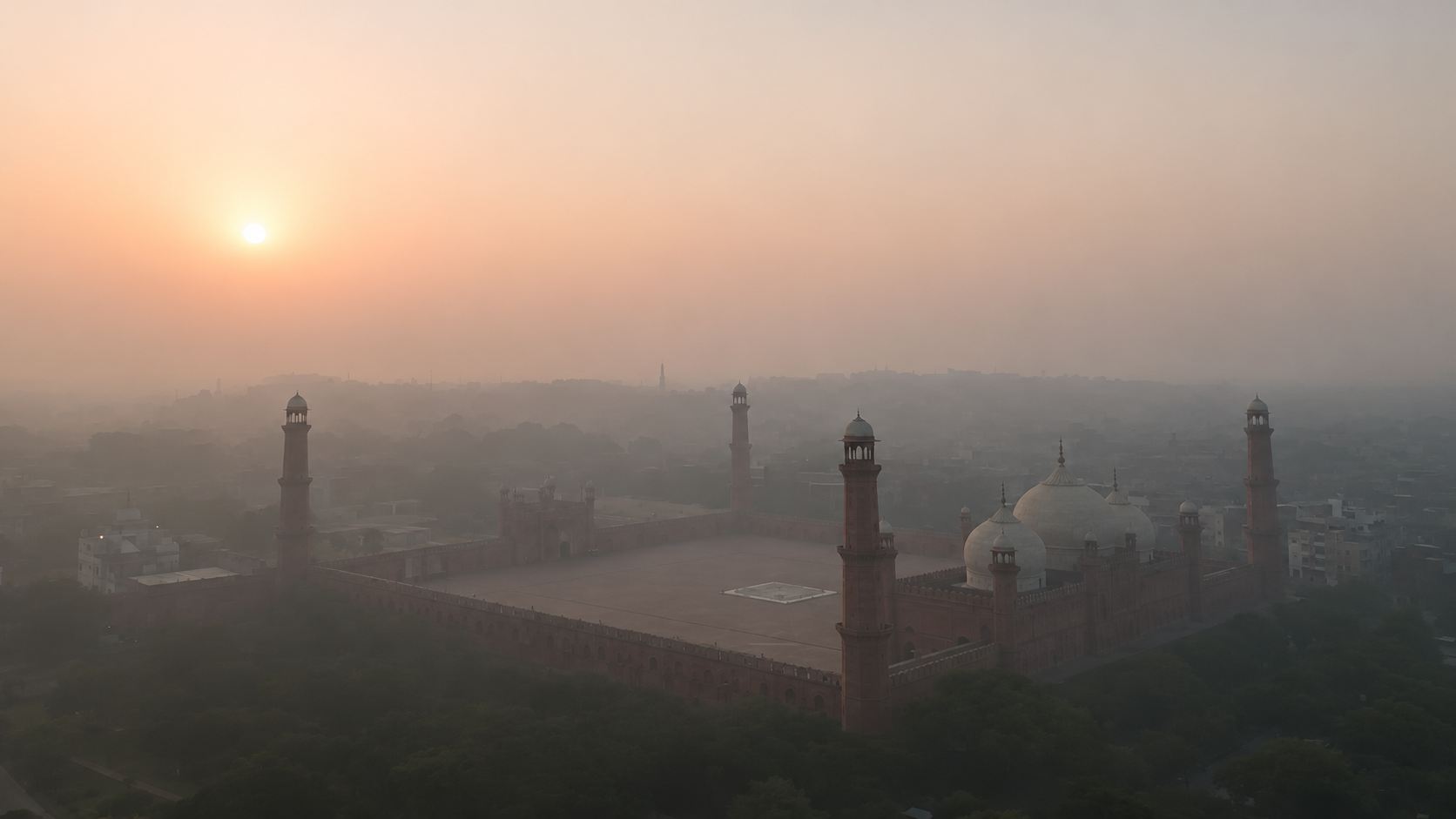
Her remarks came as Lahore remained among the world’s most polluted major cities, recording an Air Quality Index (AQI) of 358 on Wednesday night. New Delhi recorded an AQI of 248 during the same period.
Thick smog also persisted across Multan and other parts of Punjab, affecting visibility and disrupting transport.
Punjab identifies cross border pollution
The Punjab Environment Protection Agency (EPA) released an assessment indicating that polluted air originating in India contributed to worsening air quality across the province during the Diwali period.
According to the agency, air masses from across the border affected approximately 50 per cent of Punjab during the preceding 24 hours.
Monitoring stations also recorded significant differences in fine particulate matter, known as PM 2.5, across Lahore.
At the Wagah Border station, PM2.5 concentrations increased by 275 per cent, compared with a 15 per cent rise at Safari Park on the western side of the city.
The EPA said the geographical differences were consistent with pollution being carried into Lahore by easterly winds.
Lahore’s overall AQI rose from 366 on November 8 to 440 on November 9, according to the agency’s analysis.
Government claims improvement in air quality
Aurangzeb maintained that Punjab’s anti smog measures had produced measurable improvements compared with previous years.
She said Lahore’s AQI had reached approximately 2,400 on November 11, 2024, compared with readings below 450 on the corresponding date in 2026.
The minister attributed the improvement to strengthened environmental monitoring, technology based surveillance, and enforcement measures targeting transport, industries, agriculture, and brick kilns.
She also said pollution indicators across different areas had improved by between 23 and 64 per cent.
According to the minister, Punjab has introduced forecasting technology that can predict pollution trends five to seven days in advance, allowing authorities to prepare preventive measures.
These improvements were presented as government assessments rather than independently verified evidence of the effectiveness of individual interventions.
New Delhi faces monitoring controversy
Across the border, New Delhi also experienced severe pollution following Diwali celebrations.
According to reports, particulate matter concentrations exceeded the measurement limits of several monitoring instruments, leaving gaps in official air quality data.
India's Central Pollution Control Board (CPCB) explained that readings beyond the instruments' calibrated range were automatically excluded from calculations.
That concentration was more than 58 times the World Health Organisation’s (WHO) recommended daily limit of 15 micrograms per cubic metre.
Despite Punjab’s claims of improvement, Lahore’s latest readings remained in the hazardous category, highlighting the continuing risks posed by poor air quality.