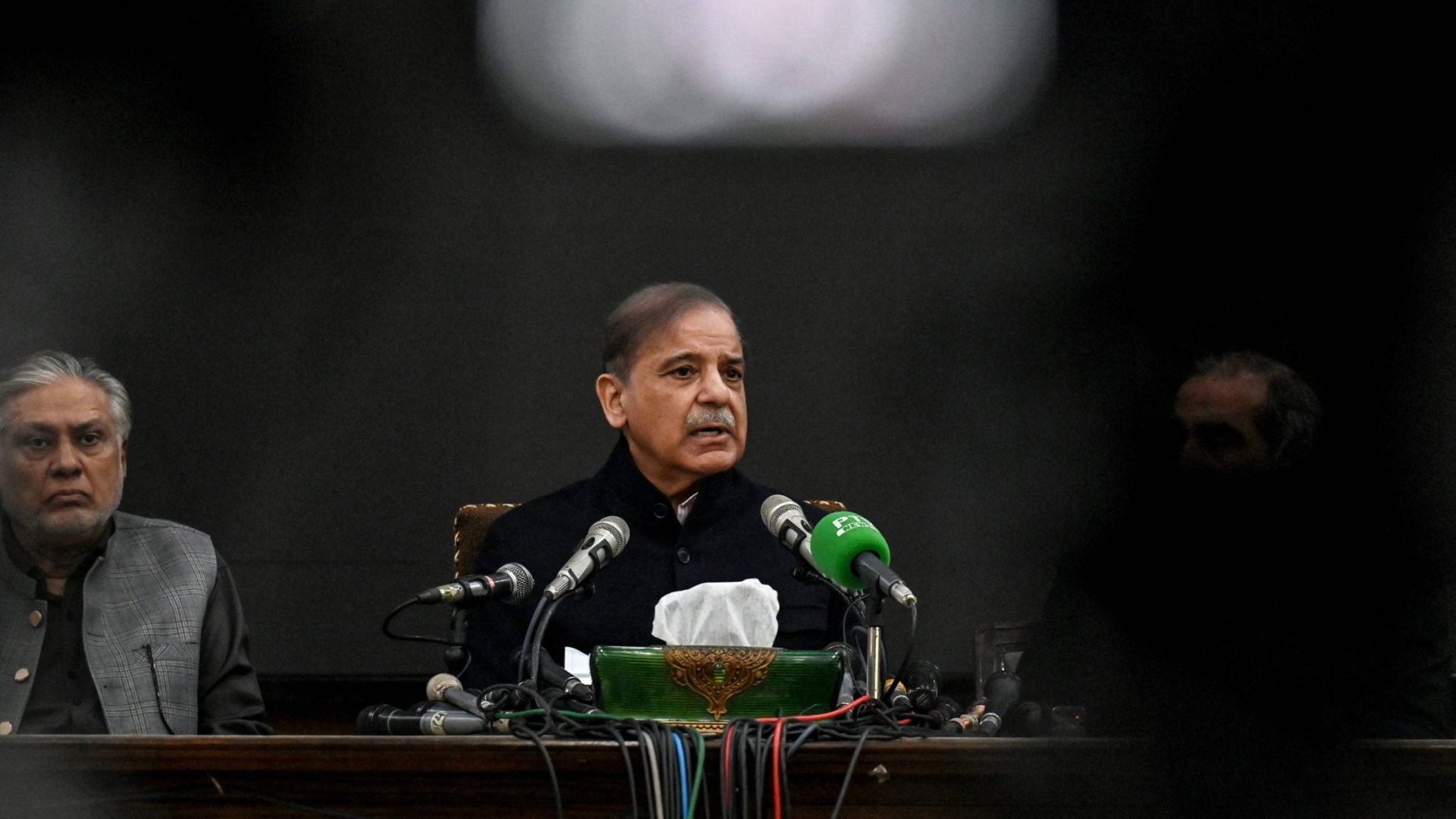
Islamabad: Prime Minister Shehbaz Sharif on Tuesday directed federal cabinet members to stop making statements against one another and resolve their differences through consultation, following an exchange of criticism between Interior Minister Mohsin Naqvi and Prime Minister's Adviser Rana Sanaullah over proposals to create new provinces.
In a statement issued by the Prime Minister's Office, Shehbaz expressed concern over remarks exchanged by government representatives, saying such disagreements should be addressed through discussions rather than public statements.
The prime minister said his government's focus remained on economic growth, public welfare and development projects, and that disputes among ministers were diverting attention from those priorities.
He instructed cabinet members to resolve matters through mutual understanding and consensus, while urging representatives of provincial governments to avoid statements that could intensify political disagreements.
Shehbaz said political stability required cooperation among those holding public office and called for an end to criticism between members of the government.
The intervention follows a dispute over proposals to restructure Pakistan's administrative system by creating new provinces, an issue that has also generated differences between the ruling Pakistan Muslim League-Nawaz (PML-N) and its coalition partner, the Pakistan Peoples Party (PPP).
On Monday, Sanaullah criticised Naqvi for raising the issue of creating provinces during the Pakistan Economic Summit in Islamabad in July. Speaking on Geo News, Sanaullah said the interior minister had complicated the debate by discussing constitutional and administrative changes at a business forum rather than through political institutions.
He argued that the matter should have been discussed with political parties before being presented publicly. Sanaullah also questioned why Naqvi had not secured the support of PPP leaders, including President Asif Ali Zardari and party chairman Bilawal Bhutto Zardari, despite several months having passed since the proposal was introduced.
The PML N leader maintained that the creation of provinces required political agreement and parliamentary debate, warning that the controversy could make it more difficult to reach consensus. The exchange followed remarks by Naqvi in Lahore on Sunday, when he warned an unnamed cabinet colleague against repeatedly criticising him.
Naqvi said he had listened to the minister's comments for two and a half years and suggested that a response from him could damage the politician's reputation. Although Naqvi did not identify the individual, his remarks came amid criticism from Sanaullah concerning the proposed governance changes.
The interior minister has advocated creating administrative units, arguing that Pakistan's governance structure requires reform to improve public services and transfer authority to local levels. On November 12, he also proposed holding a referendum to seek public opinion on creating provinces.
Other federal ministers, including Defence Minister Khawaja Asif and Minister for Parliamentary Affairs Tariq Fazal Chaudhry, have supported examining the referendum proposal. However, the government has not announced a date or presented a plan identifying the proposed provinces and their boundaries.
The PPP has opposed attempts to divide provinces, particularly Sindh, without following constitutional procedures. Bilawal has argued that governance problems should be addressed through reforms strengthening parliament, the judiciary, electoral institutions and local government.
The disagreement has raised questions about whether the ruling coalition can develop a common position on administrative restructuring. On November 19, President Zardari and Prime Minister Shehbaz met in Islamabad and agreed that political differences should be resolved through dialogue and consultation.
Naqvi also attended that meeting, which took place amid exchanges between PML N and PPP leaders. The Presidency subsequently said major decisions would be pursued through consultation with coalition partners.
The proposed referendum also faces constitutional requirements.
Article 48(6) of Pakistan's Constitution provides a mechanism for referring a matter of national importance to a referendum, while Article 239 establishes the procedure for constitutional amendments.
Under Article 239(4), any amendment altering the boundaries of a province requires approval by a two-thirds majority of the provincial assembly concerned, in addition to the parliamentary amendment process.
A referendum would therefore not, by itself, authorise the creation of a province. The debate involves both the proposed administrative changes and the process through which the government intends to pursue them.
Shehbaz's intervention seeks to prevent disagreements within the cabinet from developing into further public confrontations, but it does not resolve the differences over creating provinces.
No agreement has been announced on the referendum, and the government has yet to present a constitutional proposal for consideration by parliament.
The next stage will depend on consultations within the cabinet and between coalition partners, particularly the PML N and PPP, whose cooperation would be necessary for advancing constitutional changes.
Sources: APP — Prime Minister's instructions, November 24, 2026 · Dawn — Rana Sanaullah's remarks · Dawn — Coalition consultations