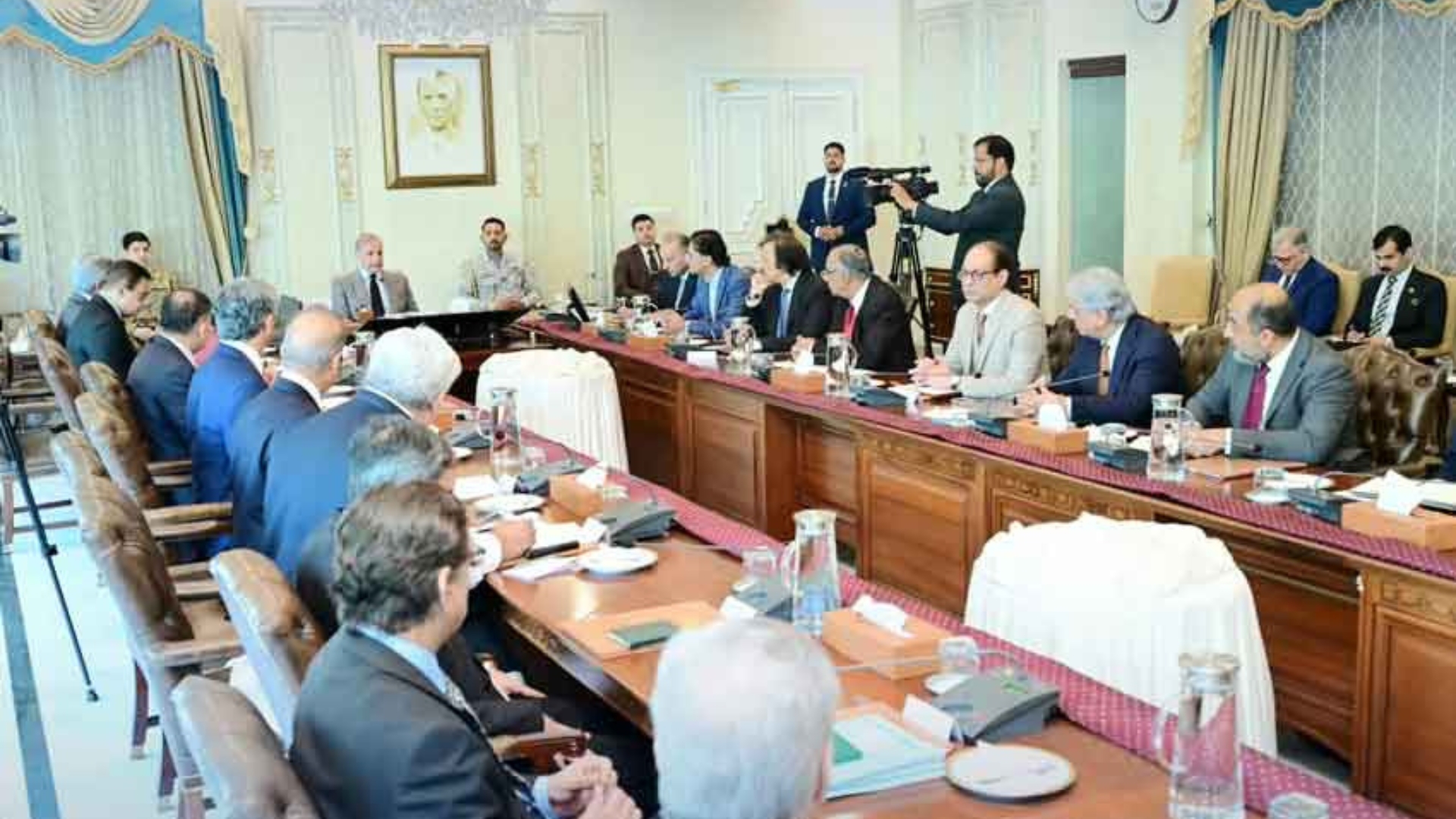
Islamabad: Prime Minister (PM) Shehbaz Sharif on Monday directed the Federal Board of Revenue (FBR) to complete digital production monitoring across manufacturing sectors by December 31, aiming to narrow the gap between actual tax receipts and potential revenue.
Chairing a review of FBR reforms, the prime minister instructed officials to remove obstacles to installing automated systems that monitor production for sales tax purposes, according to an official statement.
Officials said installation was complete in sugar, cement, tobacco, tiles and fertilisers. Work was under way in textiles, packaged water, juice and milk, with the necessary equipment already purchased.
Equipment procurement for steel, poultry and tyres was scheduled for completion by October 15. Purchases for tea, household electronics, leather, paper and board, and oil and ghee were due by October 30.
Officials told the meeting that monitoring systems in these sectors were expected to become fully operational by December 31.
The briefing identified resistance to installation in parts of the textile industry. However, several companies had voluntarily adopted the system, including Nishat Mills, Interloop, Sapphire Textiles, Soorti Enterprises and Nishat Chunian. Shehbaz appreciated their cooperation.
FBR said cameras were being used to strengthen production monitoring under its faceless system.
The meeting also reviewed an assessment of Pakistan’s tax potential and the additional revenue that improved compliance and enforcement could generate.
Officials said enforcement measures over the past three years had yielded an additional Rs1.3 trillion, describing this as a 40 percent increase in tax collection.
Shehbaz said businesses that collected taxes from consumers but retained the money instead of depositing it in the national exchequer should receive no concessions.
He also directed the information technology ministry to conduct audits across other sectors to assess the monitoring system’s effectiveness, and praised the FBR team that prepared the tax gap assessment.