Peshawar: The Peshawar High Court (PHC) on Tuesday referred petitions concerning the detention of Khyber Pakhtunkhwa Chief Minister Sohail Afridi and other Pakistan Tehreek e Insaf (PTI) leaders to its chief justice to form a larger bench, after government authorities failed to comply with orders to explain their whereabouts.
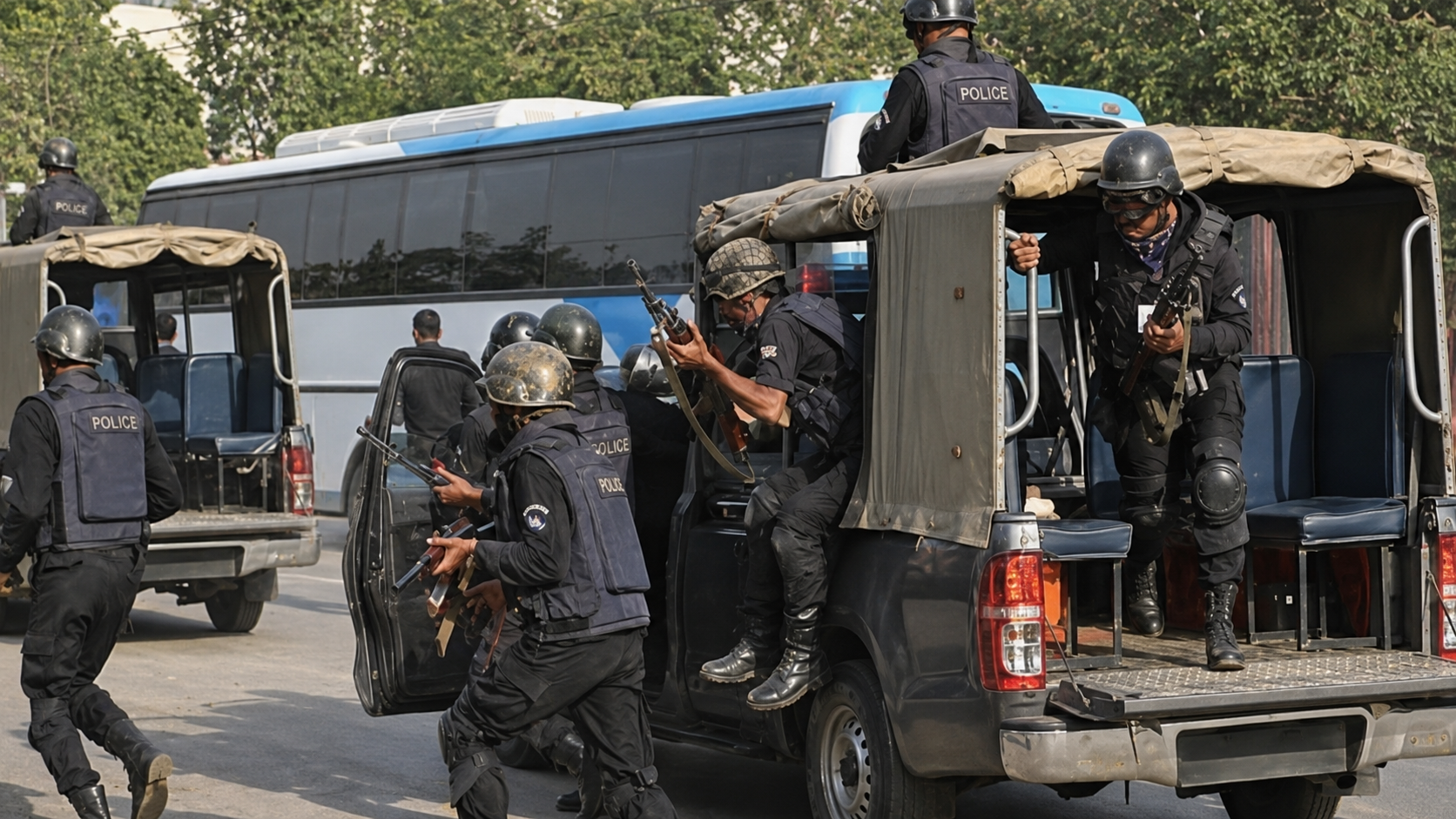
A two-member bench comprising Justice Syed Arshad Ali and Justice Muhammad Faheem Wali heard the petitions seeking the recovery of politicians who have been unaccounted for since governor's rule and emergency measures were imposed in KP on October 11.
The petitions concern Afridi, KP Assembly Speaker Babar Saleem Swati, MNAs Junaid Akbar and Dr Amjid Ali, provincial minister Amjid Ali Khan, MPAs Ikramullah and Aurangzeb Khan, former Gilgit Baltistan chief minister Khalid Khursheed and other PTI members.
The court directed the provincial government, police, and other authorities on October 20 to submit reports clarifying whether the politicians were in custody, where they were being held, and the legal grounds for their detention.
However, the respondents failed to provide the required information before Tuesday's hearing. Justice Ali questioned the delay, observing that the court had already given officials 10 days to respond. KP Advocate General Sanaullah Khan requested another three days, saying his office was awaiting information from the provincial home department, police and other law enforcement agencies.
The bench then referred the matter to the chief justice to constitute a larger bench. The advocate general also supported the referral.
Afridi's whereabouts remain undisclosed
Afridi has not appeared publicly since October 11, when the federal government imposed governor's rule and emergency measures in KP. A federal minister confirmed on October 12 that Afridi and some members of his cabinet had been placed in preventive custody. However, the authorities have not publicly disclosed where they are being held or provided details of the legal orders authorising their detention.
Afridi's brother, Muhammad Aamir, approached the PHC on October 13, alleging that the chief minister had been taken from the Chief Minister's House in Peshawar during the imposition of emergency measures.
Relatives of other PTI leaders, including the assembly speaker and former Gilgit Baltistan chief minister, filed similar petitions. The petitioners have sought judicial directions for the authorities to establish the politicians' whereabouts, produce them before the court and release them if their detention is found unlawful.
They have also requested the preservation of CCTV recordings, security logs and other records that could establish the circumstances surrounding the alleged detentions. The court has not determined the allegations of abduction.
During Tuesday's hearing, petitioners' counsel Bashir Vazir argued that Article 199 of the Constitution empowered the High Court to order the production of individuals allegedly held without lawful authority. He maintained that the court could require officials to produce Afridi and Swati and explain the grounds for their custody.
Vazir also referred to the Khyber Pakhtunkhwa Provincial Assembly (Powers, Immunities and Privileges) Act, 2026, arguing that the legislation provided safeguards against the arrest or detention of assembly members.
Under Section 11 of the provincial law, authorities seeking to arrest or detain an assembly member must obtain prior permission from the speaker. The law has itself become a subject of disagreement between provincial and federal authorities over the extent of legislative privileges.
The petitioners contend that the alleged detentions violated the protections available to elected representatives. Whether those protections apply in the circumstances of these cases remains a matter for judicial determination.
The advocate general referred to more than 200 detention cases under the Maintenance of Public Order Ordinance (MPO), arguing that orders had been passed in those matters without hearings.
The bench rejected the comparison, observing that those cases had sought reports but did not submit them. It also clarified that the petitions before it were not MPO detention cases. The proceedings therefore concern more than the authorities' failure to provide reports. They require clarification of whether the politicians were formally arrested, placed in preventive custody or detained under another legal arrangement.
The distinction matters because state custody must have a legal basis and remain subject to the remedies available under the Constitution. Under Article 199, a High Court may examine whether a person is being held without lawful authority and, where the constitutional requirements are met, order that person to be brought before it.
The imposition of governor's rule does not, by itself, establish the legality of a particular individual's detention.
What happens next?
The petitions arise amid the federal government's intervention in KP following disagreements with the former provincial administration over security and counterterrorism policy. Governor's rule has left the province under a different administrative arrangement, while the detention of elected representatives has created a dispute over access to the courts and the exercise of provincial political authority.
The PHC chief justice will now consider the referral and the constitution of a larger bench to hear the petitions. No order for the politicians' production or release was announced during Tuesday's proceedings. The next stage will involve determining the PTI leaders' legal status and location, examining the government's response, and considering whether their detention complies with constitutional requirements.
Until those questions are resolved, the legal basis of their custody remains under judicial examination.