
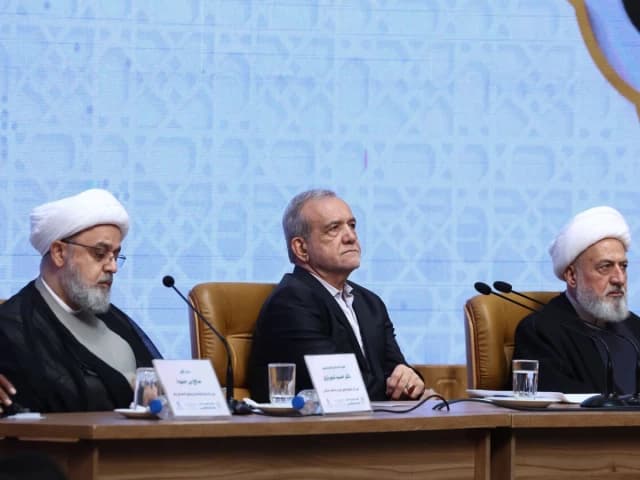
Tehran: Iranian President Masoud Pezeshkian has called on Muslim countries to protect their national sovereignty by preventing their airspace and territories from being used to launch foreign military attacks against fellow Islamic states.
Addressing the opening of the 40th International Islamic Unity Conference in Tehran on Thursday, Pezeshkian proposed a mutual security and non-aggression framework aimed at preventing further escalation of conflicts in the Middle East.
“No Islamic country should allow its territory to be used as a launchpad for aggression against another Islamic country,” he said.
Pezeshkian was speaking to around 600 delegates and religious leaders from 40 countries. He said defending Iran should not be interpreted as hostility towards neighbouring states, while calling for stronger mechanisms to prevent disputes and foreign interference among Muslim countries.
He also proposed establishing a permanent mediation and dispute-prevention mechanism under the Organisation of Islamic Cooperation (OIC).
The Iranian president said greater Islamic unity did not require member states to surrender their individual identities or political systems. Instead, he called for a common commitment to non-interference, economic cooperation and mutual protection.
The OIC, established in 1969, is the second-largest intergovernmental organisation after the United Nations, with 57 member states across four continents. It seeks to promote the collective political, economic and social interests of Muslim countries and provides a platform for diplomatic engagement on issues affecting the Islamic world.
Pakistan’s participation
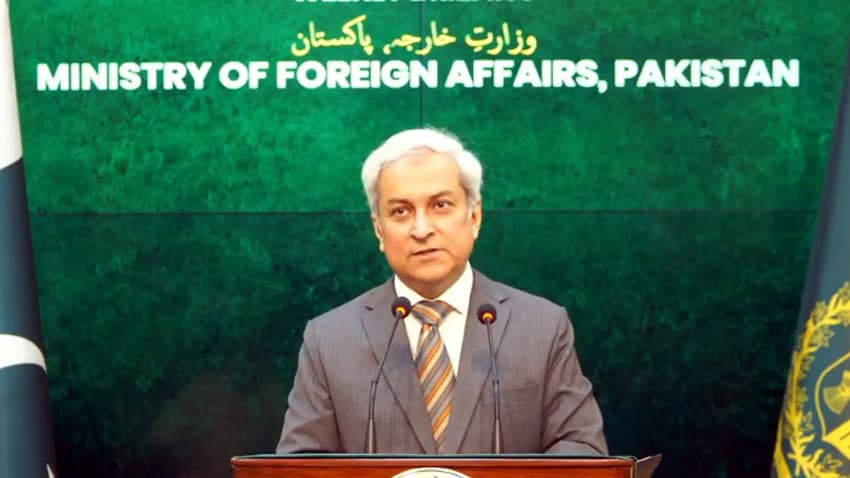
Pakistan is represented at the Tehran conference by a delegation comprising Islamic scholars, academics and political figures, including Jamaat-e-Islami Naib Ameer Liaqat Baloch and senior members of national unity boards and religious councils.
Pakistani representatives backed calls for intra-faith harmony, dialogue and greater economic self-reliance, including cooperation in agriculture, trade and technology.
They also reaffirmed Pakistan’s emphasis on regional peace, respect for territorial sovereignty and diplomatic mechanisms such as the OIC, while stressing the importance of keeping regional territory and airspace free from foreign military rivalries.