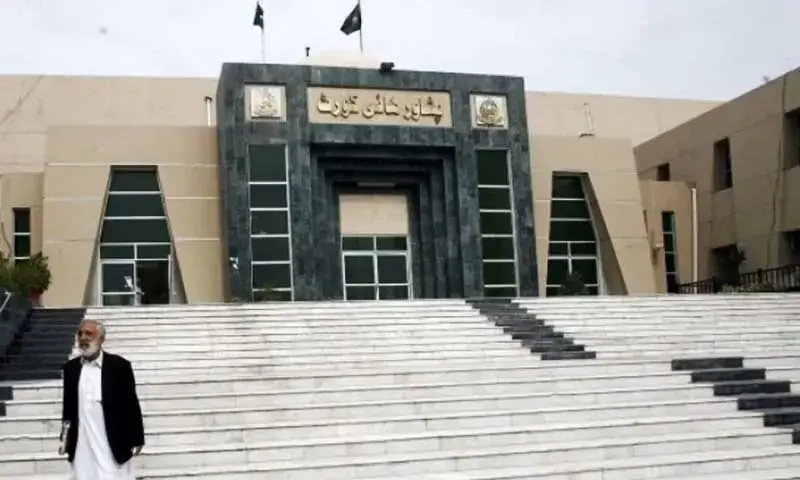
Peshawar: The Peshawar High Court (PHC) has removed approximately 105 petitions from its November 10 hearing lists following a Federal Constitutional Court (FCC) order suspending proceedings instituted under Article 199 of the Constitution on or after October 12.The decision, implemented on Saturday, November 7, affects cases challenging the imposition of emergency measures and governor’s rule in Khyber Pakhtunkhwa, as well as petitions concerning the alleged detention of Chief Minister Sohail Afridi, Pakistan Tehreek e Insaf (PTI) lawmakers and party workers.
The petitions were removed after the PHC’s administrative committee decided on Friday to comply with the FCC’s restraining order. The Constitutional Court has also directed that fresh petitions should not be entertained and should instead be returned to applicants for submission before an appropriate forum.
Constitutional Court suspends proceedings
On November 5, a two-member FCC bench ruled that proceedings initiated before the PHC under Article 199 from October 12 onwards must remain suspended because the armed forces had been deployed across KP in aid of civil power.
The ruling relied on Article 245(4) of the Constitution, which restricts the exercise of high court jurisdiction under Article 199 in areas where the armed forces are acting in aid of civil power.
The deployment followed an October 11 Interior Ministry order authorising military assistance for the duration of the emergency proclamation issued under Articles 232 and 234. The FCC directed KP Advocate General Sanaullah Khan to submit a report within seven days identifying areas where military assistance was no longer required.
The court indicated that it could reconsider the scope of its restrictions after examining the report.
Governor’s rule and detention petitions affected
Among the cases removed were petitions challenging the constitutional basis of emergency measures and governor’s rule in KP. The challenges had been filed by PTI chairman Barrister Gohar Ali Khan, representatives of Tehreek Tahafuz i Aeen Pakistan, the National Democratic Movement, the KP Bar Council and other petitioners.
During an October 20 hearing, the PHC had sought responses from the federal government and other respondents within two weeks, scheduling further proceedings for November 10. The latest decision prevents those hearings from proceeding as originally scheduled.
Petitions concerning the alleged detention or abduction of Sohail Afridi, KP Assembly Speaker Babar Saleem Swati, PTI provincial president Junaid Akbar and several party lawmakers and workers have also been affected.
On October 20, the PHC directed provincial authorities, including the chief secretary, home secretary, inspector general of police and Peshawar Capital City Police Officer, to provide information about Afridi’s whereabouts. The court also sought clarification on whether he had been arrested or named in any criminal proceedings.
After the authorities failed to submit their report within the prescribed period, a bench referred the matter to the chief justice on November 3, recommending consideration by a larger bench. Those proceedings have now been removed from the November 10 hearing list.
Property disputes and repatriation cases also removed
The FCC order has affected cases beyond the political dispute surrounding the provincial administration. Petitions challenging detention orders under the Maintenance of Public Order Ordinance were among those removed. The affected cases also include a petition filed by KP Assembly Deputy Speaker Suriya Bibi against the sealing of her official residence.
The PHC had previously granted interim relief, directing the authorities to reopen the residence and permit her to remain there. Following the government’s failure to implement that direction, the court sought an explanation on November 5.
Other removed petitions concern anti encroachment operations, missing persons and Afghan nationals seeking judicial relief against repatriation measures. The suspension therefore affects individuals seeking court intervention in administrative, property and detention matters, in addition to cases involving political officeholders.
Lawyers raise concerns over access to justice
The Insaf Lawyers Forum (ILF) has criticised the restrictions, arguing that judicial and administrative decisions should not undermine constitutional protections. In a statement, ILF central information secretary Masooma Mir said the suspension of proceedings raised concerns about access to justice for KP’s population of approximately 45 million.
She referred to Article 199, which provides a mechanism for seeking constitutional relief before high courts, and Articles 9, 10 A and 25, which protect rights relating to life, fair trial and equality before the law. Mir argued that safeguarding these protections remained the responsibility of the state and judiciary.
She called on the Pakistan Bar Council, KP Bar Council, Supreme Court Bar Association and other legal organisations to intervene in defence of citizens’ constitutional rights. Her remarks reflect the position of the ILF, while the FCC has based its decision on the constitutional restrictions associated with military deployment under Article 245.
What happens next?
The immediate question is how petitioners can obtain judicial relief while Article 199 proceedings remain suspended.
The FCC has directed applicants to approach an appropriate forum but has not, in the reported order, identified a single alternative route for every category of petition. The distinction is significant because the affected cases involve different legal questions, ranging from challenges to emergency powers to detention and property disputes.
The FCC’s next consideration of the matter may depend on the report requested from the KP advocate general regarding areas where military assistance is no longer required. Until the restrictions are modified or lifted, the petitions removed from the PHC’s hearing lists will remain without their previously scheduled hearings.
The development places the scope of emergency powers, judicial jurisdiction and access to constitutional remedies at the centre of the continuing legal dispute over governance in Khyber Pakhtunkhwa.