

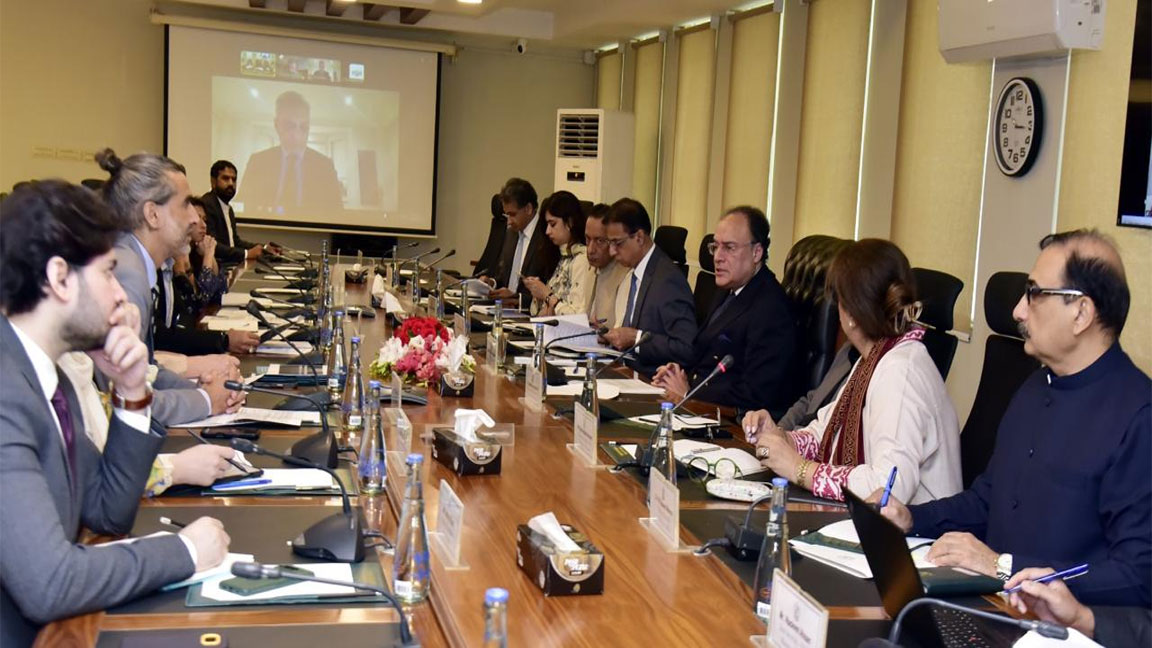
Islamabad: Pakistan will work to strengthen the economic indicators and institutional factors that influence its sovereign credit ratings, Finance Minister Muhammad Aurangzeb said during talks with a World Bank delegation.
The meeting, reported on October 2, connected efforts to improve Pakistan’s credit standing with reforms intended to attract investment, increase productivity and strengthen exports.
Aurangzeb told the delegation, led by World Bank Country Director Bolormaa Amgaabazar, that the government would deepen engagement with relevant stakeholders to support further improvement in the country’s credit standing.
Sovereign ratings assess a government’s ability and willingness to repay debt. They influence how lenders view risk and can affect borrowing costs. The meeting did not announce a new rating decision.
Alongside creditworthiness, the discussions examined implementation of the National Tariff Policy and World Bank analytical support for tariff changes. Work concerning the automotive sector and future reforms was also reviewed.
The stated objective was to improve competitiveness and help Pakistan participate more extensively in global value chains, where production is divided across countries. For businesses, tariff decisions affect the cost of imported inputs and the competitive environment in which they operate.
Both sides emphasised implementation and institutional strengthening, linking the reform programme to growth driven by private businesses, improved management of public resources and stronger investment.
The discussion comes as Pakistan continues its engagement with an IMF mission over its economic programme. Together, these contacts place attention on how policy commitments translate into implementation.
Target rating, a timetable for an upgrade or particular automotive tariff changes have not been specified as of yet. The next steps therefore concern carrying out reforms and strengthening the conditions on which future credit assessments will depend.