

Islamabad: Brent crude oil prices rallied over 3% on Monday as U.S. President Donald Trump rejected a peace proposal from Iran aimed at easing Middle East tensions and reopening the Strait of Hormuz.
Brent crude futures jumped $3.43 (3.29%) to $107.75 per barrel by 0540 GMT, while U.S. West Texas Intermediate (WTI) crude gained $2.14 (2.32%) to reach $94.55 per barrel.
The geopolitical friction escalated after Trump formally declined the peace deal submitted by Iran during last week’s UN General Assembly in New York, which had been transmitted through Qatari mediators. However, in a Sunday phone interview with Axios, Trump noted he expects American envoys to participate in further negotiations this week.
"The rejection has reduced hopes of an immediate breakthrough, although diplomatic efforts have not ended," said Sugandha Sachdeva, founder of New Delhi-based research firm SS WealthStreet. She highlighted $120 per barrel as a critical resistance level for Brent futures, adding that a pullback remains possible if shipping conditions improve or diplomatic talks advance.
Security concerns in the region persist. Early Saturday, the Saudi-led coalition in Yemen reported intercepting two ballistic missiles and two drones targeting Saudi Arabia, launched by Iran-backed Houthi forces.
The price surge follows a mixed week for energy markets. While Brent recorded a minor 0.4% gain last week, WTI tumbled 7.9% due to concerns that potential U.S. restrictions on diesel exports could force domestic refineries to scale back production.
Analysts at ANZ noted that soaring U.S. diesel prices are fueling inflation fears and driving discussions around export limits. They warned that restricting U.S. diesel exports would tighten global supply and drive up European fuel prices.
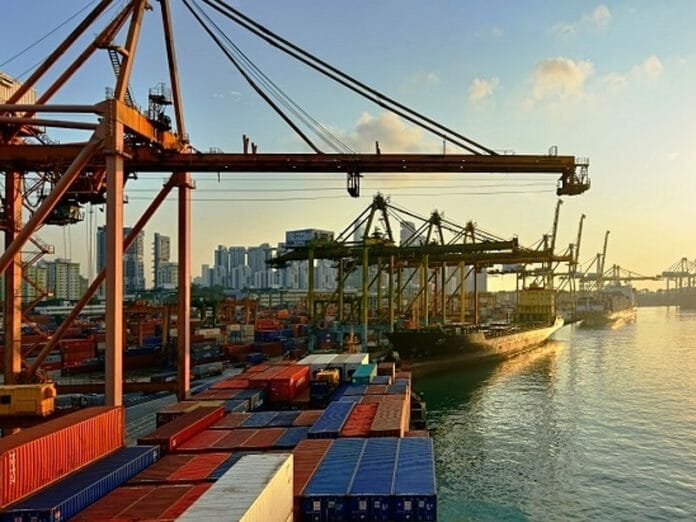
Despite ongoing market instability, preliminary data from intelligence firm Kpler indicates that Middle East crude exports rebounded in September to 12.8 million barrels per day (bpd)—their highest level since conflict broke out in February. The surge was driven by increased exports from Saudi Arabia and the UAE, alongside a recovery in Strait of Hormuz shipments to roughly 7.4 million bpd. To bypass damaged infrastructure along its East-West pipeline, Saudi Arabia redirected shipments from its Red Sea port of Yanbu to its eastern terminal at Ras Tanura.