
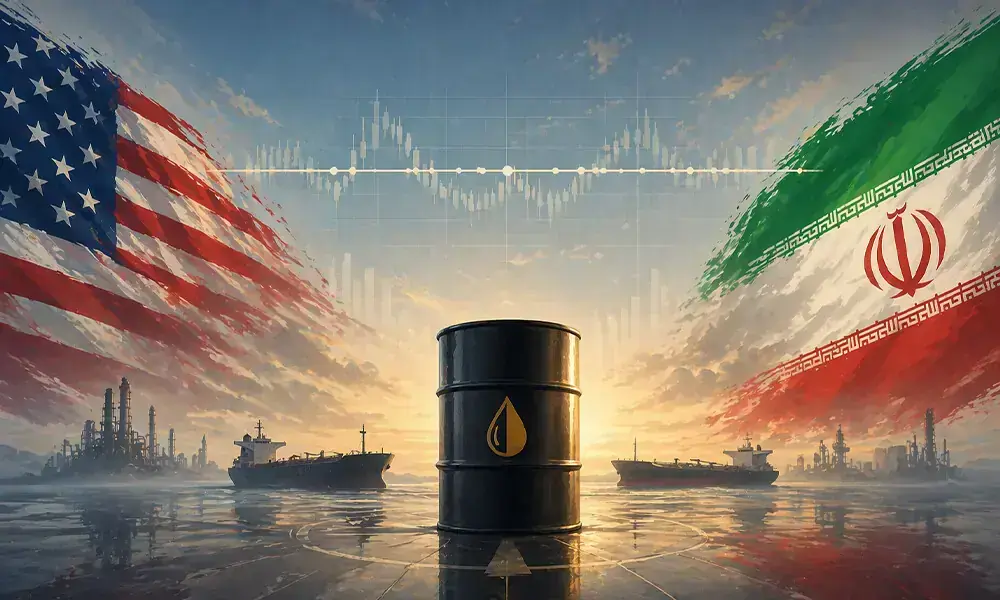
Singapore: Global oil prices rose by more than two percent on Monday following fresh military strikes by US forces on an Iranian island in the Persian Gulf, triggering retaliatory attacks from Tehran as the conflict entered its sixth month.
Brent crude futures climbed USD 2.21, or 2.51 percent, to USD 90.31 a barrel by 04:36 GMT. Meanwhile, US West Texas Intermediate (WTI) crude reached USD 85.23 a barrel, marking an increase of USD 1.83, or 2.19 percent. Despite Monday’s gains, both benchmarks remain on track to register minor monthly losses for August, following a decline of over four per cent last week.
The price movement followed US strikes on Sunday targeting two military launchers on Iran’s Larak Island, located in the Strait of Hormuz. The engagement represents the first confirmed direct US military action inside Iran since late July. In response, Iranian media cited the Islamic Revolutionary Guard Corps (IRGC) stating that Tehran launched attacks against two US air bases in Jordan on Monday.
The escalation comes amid ongoing diplomatic deadlock. Negotiations aimed at resolving the conflict remain stalled while international mediators attempt to secure the reopening of the Strait of Hormuz. Prior to the outbreak of hostilities at the end of February, the narrow waterway handled roughly one fifth of global oil consumption.
Shipping data released on Monday indicated that the number of visible commodity vessels navigating the strait fell to five per day over the weekend, reflecting heightened commercial caution. On Sunday, UK Maritime Trade Operations confirmed that a commercial tanker was hit by a projectile while inbound through the corridor on Saturday.
Commenting on the market outlook, Suvro Sarkar, head of energy research at the Development Bank of Singapore, noted that analysts expect a contained confrontation rather than sustained escalation, though each flare up delays the timeline for reopening the strait. He added that crude prices are expected to remain rangebound between USD 85 and 95 per barrel until greater clarity emerges.
In related policy developments, US Treasury Secretary Scott Bessent stated on Sunday that Washington intends to implement new secondary sanctions against Iran on a weekly basis. Additionally, US President Donald Trump stated that crude oil secured from a recent agreement with Venezuela will be allocated to replenish the US Strategic Petroleum Reserve, which currently sits near its lowest level in 44 years.